Counter-Strike in esports
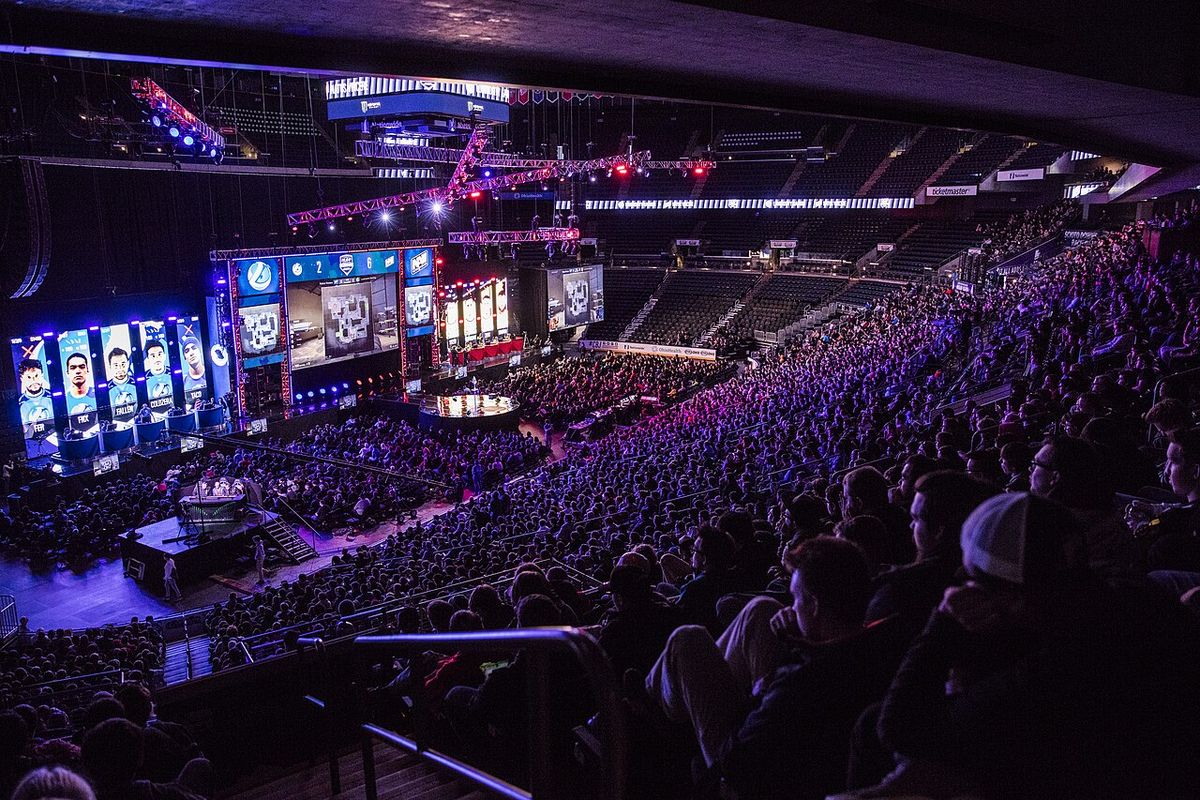
Counter-Strike is a first-person shooter video game series that has been a central part of professional esports for over 25 years. Its competitive scene, featuring titles like CS 1.6 and CS:GO, is defined by prestigious international tournaments known as Majors and a dedicated global community.
| Developer | Valve |
|---|---|
| First release | 1999 |
| First Major | 2001 CPL Winter Championship |
| Notable tournament organizers | ESL, Blast |
| Major frequency | Twice a year |
| Notable anti-cheat system | Valve Anti-Cheat (VAC) |
| First televised Major | ELEAGUE Major 2017 |
| First Major in China | 2024 Shanghai Major |
The Dawn of Competitive Play
The competitive history of Counter-Strike began with the original game, a modification of Half-Life released in 1999. The first prestigious international tournament was the 2001 Cyberathlete Professional League Winter Championship in Dallas. It featured a prize pool of $150,000 and was won by the Swedish team Ninjas in Pyjamas, an event later recognized as the first Major. This era was soon joined by other major tournaments like the World Cyber Games in 2002 and the Electronic Sports World Cup in 2003. These events, along with the bi-annual CPL tournaments, were the dominant Majors for the game known as Counter-Strike 1.6 after its final significant update in 2003.
The period from 2002 to 2007 is considered the first Golden Age of Counter-Strike, as its popularity and market share eclipsed all others in the early esports industry. The CPL ceased operations in 2008, but another league, ESL, added Counter-Strike to its Intel Extreme Masters series, continuing high-level competition for four more years. The game's high skill ceiling made it difficult for Valve to create a successful sequel that the established community would accept.
A Divided Scene and Reunification
The release of Counter-Strike: Source in 2004 created a major split in the competitive community. Many professional players rejected it, believing its skill ceiling was significantly lower than CS 1.6. Tournament organizers and sponsors advocated for the newer game, but the large majority of professional players refused to play it due to its perceived shortcomings. This fracture, combined with the rise of the MOBA genre overcoming Counter-Strike's previous hold on the team-based esport market, led to a decline in its esports popularity in the late 2000s and early 2010s.
The series was reunited with the 2012 launch of Counter-Strike: Global Offensive. After initial criticism for imbalanced gameplay and bugs, subsequent updates from Valve improved the experience. The concurrent rise of streaming platforms like Twitch boosted its visibility. A defining moment came on September 16, 2013, when Valve announced the first CS:GO Major Championship with a $250,000 prize pool funded by in-game cosmetic sales from the Arms Deal update. This first Major was held at DreamHack Winter 2013 in Sweden, establishing a new standard for prestige in the scene with Valve-sponsored events becoming the most important tournaments.
The Evolving Tournament Structure
Counter-Strike does not have a single official governing body. The most prestigious events are the Valve-sponsored Major Championships, held twice a year by different organizers. Other notable tournament series are run by ESL, such as the Intel Extreme Masters and ESL Pro League, and by Blast with the Blast Premier series. Teams are traditionally ranked by services like HLTV and ESL, with these rankings used for direct invitations to events until 2025.
This system changed with a Valve announcement in 2023. Starting in 2025, only the official Valve Regional Standings can be used to generate invites, a move designed to combat franchised systems like the ESL Pro Tour and BLAST Premier. The detailed structure, unveiled in 2024, separates all non-Major tournaments into Tier 1, Tier 2, Wildcard and Unranked events, each with specific rules on team invitations, regional filters, and prize pool limits to maintain an open competitive ecosystem.
For example, Tier 1 tournaments must invite the top 20 teams from the chosen Valve rankings, with at least 8 teams in the main stage. Organizers can substitute two Wildcard teams for every 8 ranked invites. Tier 2 tournaments cannot invite any of the top 12 globally ranked teams. Unranked tournaments have a strict prize pool limit, with no single event exceeding $100,000 and an organizer's annual circuit capped at $250,000.
Valve's Influence on the Game and Rules
Valve exerts a strong influence on the competitive metagame through game updates and rulemaking. Changes to maps and weapons often generate significant discussion and criticism from the community. For instance, the 2016 removal of the map Inferno and its replacement with Nuke was heavily criticized. Weapon balance is also a frequent point of contention. The AWP sniper rifle received a contentious nerf in 2003 by increasing its draw time, reducing a player's ability to engage multiple targets quickly. It was nerfed again in 2015 by decreasing movement speed while equipped.
Valve also sets the competitive rules for its sponsored events. This includes implementing new coaching rules restricting communication during matches and altering fundamental game timers, such as increasing round and bomb durations in 2015, which changed a 15-year precedent. In 2021, Valve updated event guidelines to allow players with older VAC bans to compete again, stating a ban would only disqualify a player if it was received fewer than 5 years prior to the event or after their first participation in a Valve-sponsored event.
Professional Organization and Integrity Scandals
The professional scene has seen efforts to organize and formalize. In October 2015, a number of organizations including Natus Vincere, Fnatic, and Cloud9 announced a union setting demands such as not attending tournaments with prize pools under $75,000. In 2016, the World Esports Association was founded by ESL with teams like Fnatic and Natus Vincere, aiming to introduce player representation, standardized regulations, and revenue sharing.
Cheating has been a persistent integrity issue. Valve's Anti-Cheat system issues permanent bans for detected software hacks on VAC-secured servers. High-profile professional players like Hovik 'KQLY' Tovmassian of team Titan have received VAC bans. Cheating has also occurred at live tournaments, such as in 2018 at the eXTREMESLAND ZOWIE Asia CS:GO event, where a player for OpTic India was caught using aimbot mid-match during a $100,000 tournament, leading to disqualification and dismissal.
In 2020, the Esports Integrity Commission banned over 37 coaches for abusing a spectator mode bug, with Valve also issuing punishments for CS:GO Majors. Professional players typically compete on independent platforms like ESEA or Faceit, which use proprietary anti-cheat programs instead of relying solely on VAC for online matches.
Media Growth and Enduring Popularity
As the scene grew, Counter-Strike expanded its media reach. The first Major to be televised was the ELEAGUE Major 2017, broadcast on the US cable network TBS from the Fox Theatre. Turner Broadcasting continued with further CS:GO programming in 2018, including documentary series. In 2019, Danish television station TV 2 secured exclusive rights to broadcast ESL Pro Tour events in Denmark, though it ended the deal in 2023 citing a lack of commercial sustainability and a downturn in results from the Danish team Astralis.
The fan base has remained strong for decades. By 2014, 25 million copies of the Counter-Strike series had been sold. The player count set new records, reaching 1.3 million concurrent players in 2020 during the COVID-19 pandemic and a new peak of 1.4 million in March 2023. The future of the Majors continues to expand geographically, with Perfect World announcing the second Counter-Strike 2 Major for Shanghai in late 2024, marking the first Major to be held in China.
FAQ
When was the first Counter-Strike Major tournament?
The first prestigious international tournament considered a Major was the Cyberathlete Professional League Winter Championship in 2001. It was held in Dallas, Texas and won by the Swedish team Ninjas in Pyjamas, featuring a $150,000 prize pool.
What is a VAC ban?
A VAC ban is a permanent lifetime ban issued by Valve's Anti-Cheat system when it detects cheating software on a player's computer. It bars the player from all VAC-secured servers. Professional players often compete on independent platforms like ESEA or Faceit, which use their own anti-cheat programs.
How are teams invited to Counter-Strike tournaments?
Traditionally, teams were invited based on rankings from services like HLTV and ESL. Starting in 2025, Valve will require tournaments to use only its official Valve Regional Standings for generating invitations. The new system sorts events into Tiers with specific rules on which ranked teams can be invited.
What caused the decline of Counter-Strike in the late 2000s?
Two main factors contributed to the decline. First, the community split over whether to play Counter-Strike 1.6 or the newer Counter-Strike: Source, fracturing the player base. Second, the emerging MOBA genre began to surpass Counter-Strike's dominance in the team-based esports market during that period.
Has Counter-Strike been broadcast on television?
Yes. The first televised Major was the ELEAGUE Major 2017, broadcast on the US cable network TBS. Other programming, like documentary series, followed. In 2019, Danish TV 2 also secured exclusive rights to broadcast ESL Pro Tour events in Denmark, though this deal ended in 2024.
Source: English Wikipedia (CC BY-SA), rewritten by the Redington Cybersport desk.