Counter-Strike
Counter-Strike is a tactical first-person shooter video game that defined competitive team-based multiplayer. Originally released in 2000 as a modification for Half-Life, its objective-driven gameplay and emphasis on strategy spawned one of the most enduring and influential esports franchises in history.
| Developer | Valve Corporation |
|---|---|
| Publisher | Sierra Studios |
| Initial Release | November 2000 |
| Platform | Microsoft Windows |
| Game Engine | GoldSrc |
| Game Modes | Bomb defusal, Hostage rescue, Assassination |
| Preceded by | Half-Life (mod) |
| Followed by | Counter-Strike: Condition Zero |
Core Gameplay and Rules
Counter-Strike is a team-based multiplayer first-person shooter where players are divided into two opposing factions, the Terrorists and the Counter-Terrorists. Each match is played in a series of rounds where the objective is to either complete a specific mission or eliminate the entire enemy team. Players begin each round with a basic pistol and a knife, and can purchase more powerful weapons and equipment using in-game money earned from kills and round outcomes. A key tactical element is that players who are killed do not respawn until the round concludes, making each life valuable and encouraging careful play.
The game features three primary objectives. In bomb defusal, the Terrorists must plant a bomb at one of two designated sites and protect it until it detonates, while the Counter-Terrorists must prevent the plant or defuse the bomb. In hostage rescue, the Counter-Terrorists must locate and escort hostages to a safe zone. The assassination mode designates one Counter-Terrorist as a VIP who must reach an extraction point. Victory is also achieved by eliminating all members of the opposing team before the objective is completed.
The in-game economy is a fundamental strategic layer. Players receive money for winning rounds, losing rounds, and securing kills, with a maximum cap. This money is used to buy weapons, armor, and utility like grenades and defuse kits. Poor economic management can leave a team under-equipped for several rounds. The heads-up display provides crucial information including teammate positions on a radar, player health and armor, ammunition count, and the round timer.
Origins and Mod Development
The game began as a mod for Half-Life, conceived by programmer Minh Le in early 1999. Inspired by tactical games like Rainbow Six and various action films, Le aimed to create a realistic team-based shooter. He chose the GoldSrc engine used by Half-Life for its suitability. Jess Cliffe joined the project after connecting with Le online, taking charge of the website, public relations, and aspects of design and sound. The mod was officially named Counter-Strike in March 1999, and its website quickly attracted significant attention from the gaming community.
Development faced early challenges, including a shortage of custom maps. Cliffe organized contests and directly recruited mappers to build the game's levels. The first public beta was released in June 1999, featuring a hostage rescue mode, nine weapons, and four maps. Subsequent beta updates introduced new weapons, the bomb defusal mode, and other scenarios. The mod's popularity grew rapidly, generating enough web traffic for Le and Cliffe to earn revenue from advertisements on their site.
Acquisition by Valve and Final Beta
The mod's success attracted the attention of Valve Software, the developer of Half-Life. In late 1999, while Le was working at Barking Dog Studios, Valve arranged to finance the development of Beta 5 and acquired the intellectual property rights to Counter-Strike, a deal believed to have been finalized in early 2000. Valve announced a partnership with the Counter-Strike team in April 2000, confirming the mod would be included in an official Half-Life patch.
Even after the acquisition, two more beta versions were released by the community. Beta 6.5 improved the netcode, and Beta 7.0 briefly experimented with drivable vehicles, a feature not carried into the final retail game. Following the acquisition, Cliffe continued working at Valve, while Le pursued other projects after initial work on a potential sequel was shelved.
Official Retail Launch and Updates
Counter-Strike was released as a standalone retail product and as a free mod in November 2000. The launch was titled Half-Life: Counter-Strike, as the game was still closely associated with its parent title. The retail version included new weapons, updated player models, and a training map. Before release, Valve had to resolve legal issues, changing some real weapon names to fictional ones and securing rights for map assets.
After launch, Valve provided a series of updates that refined the experience. Version 1.1 added a new spectator mode, 1.3 introduced voice chat, and 1.4 implemented anti-cheat measures. The final major update before the transition to Valve's Steam platform was version 1.5, released in June 2002. The subsequent version, 1.6, was first distributed through Steam in a troubled beta launch in early 2003 before a full public release later that year, marking the game's integration into Valve's digital ecosystem.
Legacy and Series Evolution
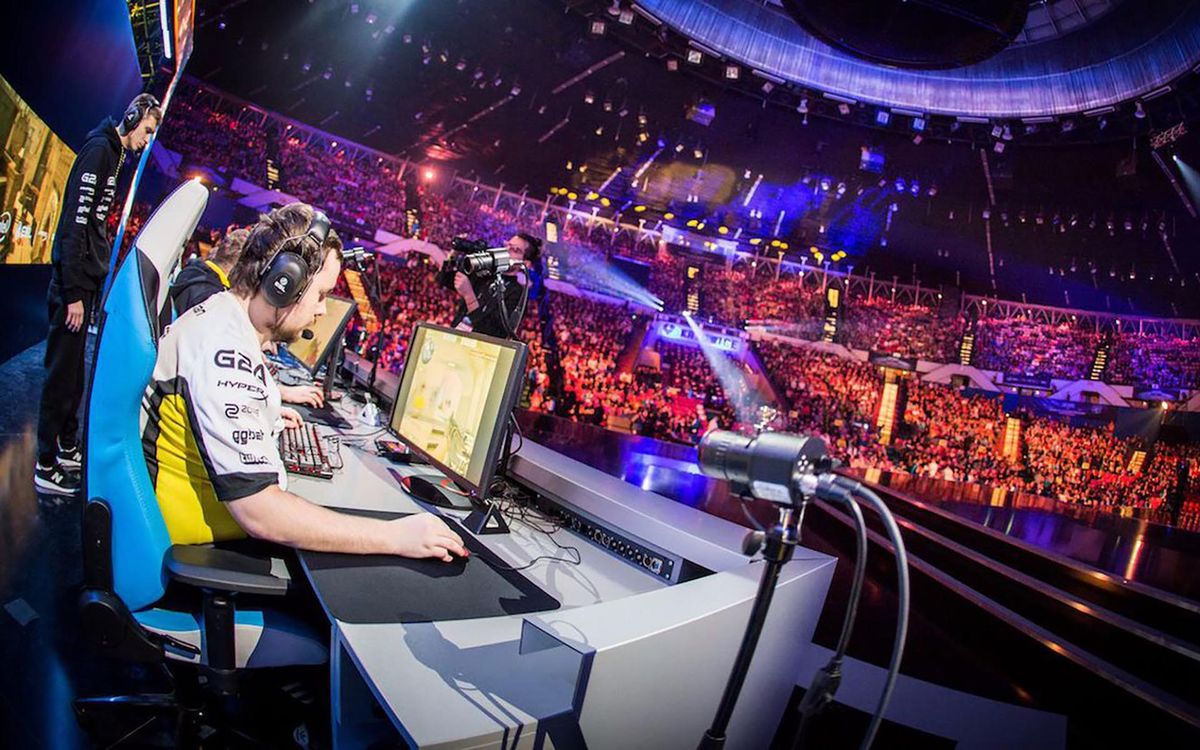
Upon its release, Counter-Strike was praised for its deep, teamwork-oriented gameplay and realistic tactical approach. It sold millions of copies and is widely considered one of the most influential first-person shooters ever made. Its core formula proved durable for competitive play, laying the groundwork for a massive esports scene.
The game's success led directly to a long-running series. The first follow-up was Counter-Strike: Condition Zero in 2004, which added a single-player campaign. Later that year, Counter-Strike: Source rebuilt the game on Valve's newer Source engine, offering improved graphics and physics. The franchise reached new heights with 2012's Counter-Strike: Global Offensive, which introduced new game modes and robust matchmaking. The series culminated in 2023 with Counter-Strike 2, a comprehensive update to Global Offensive built on the Source 2 engine.
FAQ
When was Counter-Strike first released?
Counter-Strike was first released in November 2000 for Microsoft Windows. It was launched both as a retail standalone product and as a free modification for Half-Life.
Who created Counter-Strike?
Counter-Strike was originally created by Minh 'Gooseman' Le and Jess Cliffe as a modification for Half-Life. Valve Corporation later acquired the rights to the game and partnered with the developers for its official release.
What are the main game modes in Counter-Strike?
The three main game modes are bomb defusal, where Terrorists plant a bomb and Counter-Terrorists try to defuse it, hostage rescue, where Counter-Terrorists must rescue hostages, and assassination, where Counter-Terrorists must protect a VIP who needs to reach an extraction point.
What engine does the original Counter-Strike use?
The original Counter-Strike uses the GoldSrc game engine, which is the same engine that powered Half-Life.
What happened after Valve acquired Counter-Strike?
After acquiring the intellectual property, Valve partnered with the developers, finalized the game for retail release, and continued to support it with updates. Jess Cliffe continued working at Valve, while Minh Le moved on to other projects after initial work on a sequel was shelved.
Source: English Wikipedia (CC BY-SA), rewritten by the Redington Cybersport desk.