World Cup USA '94
World Cup USA '94 is an officially licensed FIFA association football video game released in 1994 to coincide with the real-world tournament. Developed by Tiertex and published by U.S. Gold, it was notable for its wide range of platform releases and its position as the last FIFA World Cup game before Electronic Arts acquired the license.
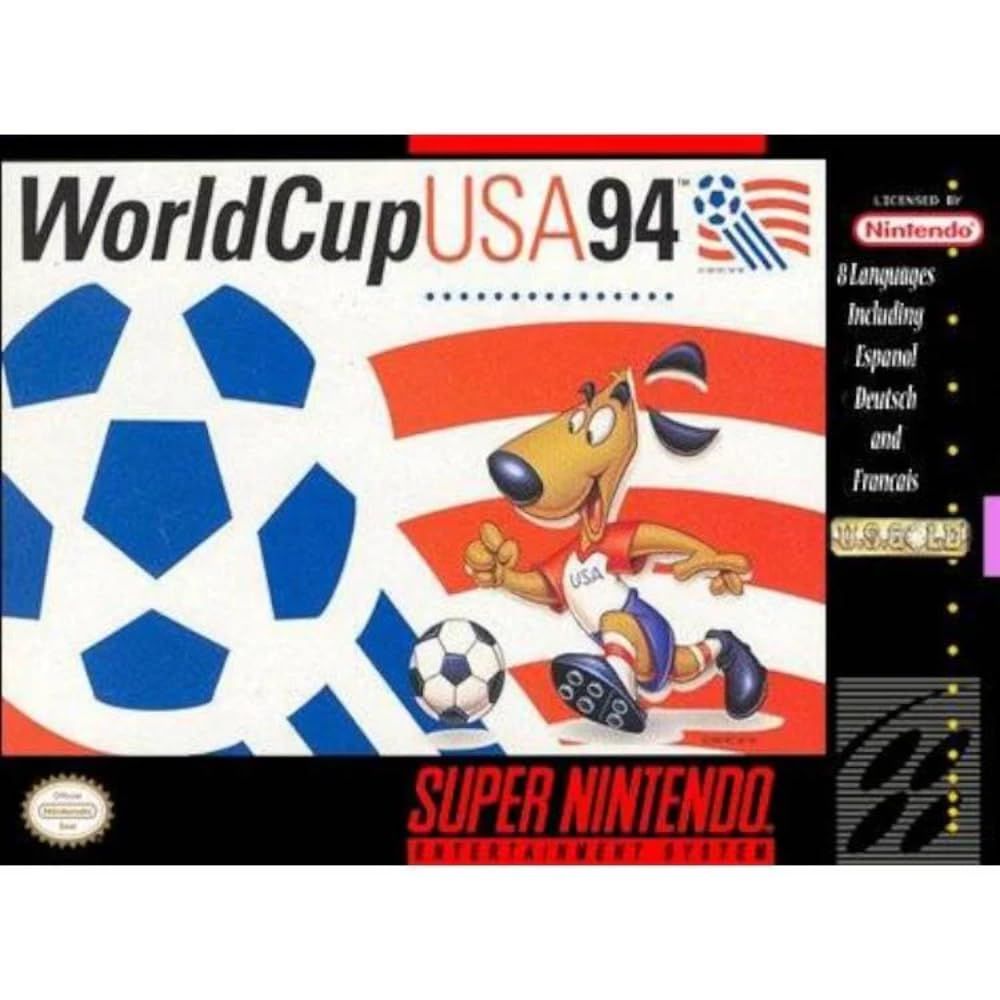
| Developer | Tiertex |
|---|---|
| Publisher | U.S. Gold |
| Release Year | 1994 |
| Platforms | Genesis, Sega CD, Super NES, Master System, MS-DOS, Game Boy, Commodore Amiga, Game Gear |
| Genre | Sports (Association football) |
| Perspective | Top-down / Bird's eye view |
| Licensed by | FIFA |
| Notable Feature | First console game (Genesis) with a 16:9 widescreen mode |
Game Overview and Historical Context
World Cup USA '94 was created as the official video game tie-in for the 1994 FIFA World Cup hosted by the United States. It was published by U.S. Gold and developed by Tiertex Design Studios. The game holds a specific place in gaming history as the final official FIFA World Cup title before Electronic Arts secured the exclusive rights to the FIFA license in 1996, launching its long-running FIFA series. It was also the first official World Cup game to include teams that did not qualify for the real tournament, expanding the roster of playable nations.
The game was released across a wide array of home computer and console platforms, ensuring broad accessibility. These included the Sega Genesis, Super Nintendo Entertainment System (SNES), Sega CD, Sega Master System, Sega Game Gear, MS-DOS, Commodore Amiga, and the Nintendo Game Boy. This multi-platform strategy was common for the era but made the game one of the most widely available sports titles of its time.
Gameplay and Features
The gameplay of World Cup USA '94 is presented from a vertical, top-down perspective, offering a bird's eye view of the pitch. Players could customize match length, setting halves from as short as one minute up to the full regulation 45 minutes. Before a match, players could adjust several rules and control settings to tailor the experience. These options included toggling dribble control, which affected how the ball moved with a player, and enabling manual goalkeeper control, putting the player in direct command of the keeper's saves and kicks.
Other notable rule options were ball-trapping, which prevented players from shielding the ball and allowed opponents to steal it easily, and the no pass-back rule, a real-life rule introduced for the 1994 World Cup that prevented goalkeepers from handling deliberate back-passes from teammates. Basic team tactics could be set before a match and changed during play. While the game did not feature real player names, team rosters had players with variable attributes in three key skills: speed, dribble control, and shooting accuracy. Goalkeepers were not separately rated and could be selected from the normal player pool.
Set pieces were a key part of the action. Free kicks used the standard passing, kicking, and lobbing controls. Penalty kicks, however, switched to a dedicated screen where a hovering indicator swung side to side to help aim the shot, a mechanic similar to that used in later titles like World Cup 98.
Technical Presentation and Versions
The technical presentation varied across the different platform releases. The MS-DOS and Sega CD versions were enhanced with digitized photographs of real stadiums. A curious detail in the Genesis version was the presence of the PolyGram Video logo on the virtual stadium advertisement boards. Most significantly, the Genesis version was the first console game ever to support a 16:9 widescreen display mode, a forward-thinking feature for its time.
The game faithfully included all 24 teams that participated in the actual World Cup, along with the official tournament groups and schedule. This commitment to the official structure was a key selling point for fans wanting to recreate or alter the course of the real-world event.
Critical Reception
Critical reception to World Cup USA '94 was mixed, often highlighting its depth of options but criticizing its execution compared to competitors. A review from GamePro praised the SNES version for its responsive controls, sound effects, and amazing range of customizable options. However, the same review found fault with the game's graphics.
Reviewing the Genesis version for Mean Machines Sega, critic Steve Merrett felt the game was completely outplayed by contemporary football titles like Sensible Soccer and FIFA International Soccer. Fellow reviewer Angus Swan was particularly harsh on the game's presentation, criticizing its minuscule player sprites, minimal animation, and a complete lack of atmospheric appeal.
Legacy and Place in Gaming
World Cup USA '94's primary legacy is as a historical marker in sports gaming. It represents the end of an era for FIFA-licensed World Cup games before Electronic Arts began its decades-long dominance with the FIFA series. Its wide platform availability means it remains a recognizable title for retro gaming enthusiasts.
The game attempted to capture the spirit of the 1994 tournament, which itself was memorable for Brazil's victory led by stars like Romario and Bebeto. While the game did not reach the graphical or gameplay heights of its rivals, its comprehensive official license and extensive options provided a detailed, if flawed, simulation for dedicated football fans on multiple systems.
FAQ
What platforms was World Cup USA '94 released on?
The game was released for a wide range of platforms including the Sega Genesis, Super Nintendo (SNES), Sega CD, Sega Master System, Sega Game Gear, MS-DOS, Commodore Amiga, and the Nintendo Game Boy.
Was World Cup USA '94 an officially licensed game?
Yes, World Cup USA '94 was an officially licensed FIFA product, featuring the official teams, groups, and schedule of the 1994 World Cup tournament.
What was unique about the Sega Genesis version?
The Sega Genesis version of World Cup USA '94 was the first console game ever to support a 16:9 widescreen display mode. It also featured the PolyGram Video logo on its in-game stadium advertisement boards.
Did the game feature real player names?
No, the game did not use real player names. However, team rosters included players with variable skill attributes in speed, dribble control, and shooting accuracy.
How was the game received by critics?
Reception was mixed. Critics praised its wide range of options and controls but often criticized its graphics and presentation, with some noting it was outperformed by other football games of the time like Sensible Soccer and FIFA International Soccer.
Source: English Wikipedia (CC BY-SA), rewritten by the Redington Cybersport desk.