FIFA International Soccer
FIFA International Soccer, also known as FIFA 94, is the inaugural title in the long-running FIFA video game series from EA Sports. Released in late 1993, it established a new standard for football video games with its detailed isometric presentation and became a major commercial success in Europe.
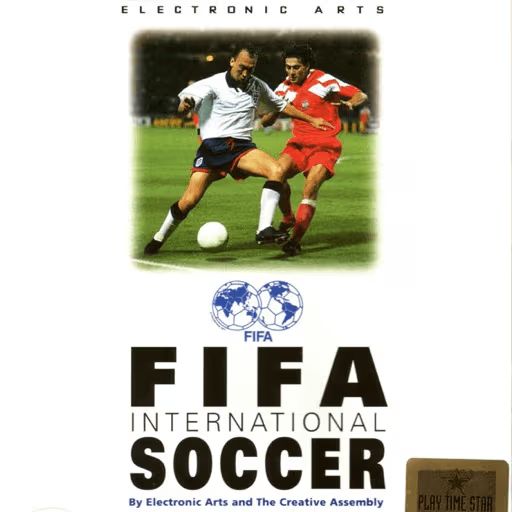
| Developer | EA Canada (Extended Play Productions) |
|---|---|
| Publisher | EA Sports |
| First Release | December 1993 (Sega Mega Drive/Genesis) |
| Platforms | Sega Mega Drive/Genesis, Super NES, 3DO, Amiga, others |
| Game Modes | Exhibition, Tournament, Playoffs, League |
| Teams | 48 national teams, plus EA All-Stars |
| Perspective | Isometric |
| Commentary | Tony Gubba (PC CD-ROM version) |
| Legacy | First game in the FIFA series, leading to annual sequels |
A New Vision for Football Games
FIFA International Soccer arrived in a market dominated by top-down perspective games like Sensible Soccer and Kick Off. The development team, led by Bruce McMillan and operating on a modest budget, deliberately chose a different path. They implemented an isometric viewpoint, which allowed for more detailed player sprites and animations that better simulated the look of a television broadcast. This focus on presentation and realism was a key part of EA's strategy to create a football game that would appeal to European audiences.
Securing an official license from football's global governing body was another strategic move, though the deal with FIFA was limited. It granted the use of the FIFA name but did not include licenses for real player names, team logos, or stadia. Consequently, the game featured 48 national teams identified only by country names and flags, with all 20 players on each squad being fictional. Many were named after members of the development team, such as Tim Ansell for England.
Gameplay and Features
The gameplay of FIFA International Soccer centered on international matches. Players controlled one of eleven footballers at a time, with the ability to switch control on command. The game supported up to four human players simultaneously, who could be on the same team or on opposing sides. Four main modes were offered: a single Exhibition match, a Tournament mode mimicking the FIFA World Cup format with group and knockout stages, a Playoffs mode that started directly at the knockout stage, and a League mode featuring an eight-team double round-robin competition.
The isometric view was both a celebrated innovation and a point of critique. While praised for its visual detail, it resulted in a game that was slower paced than its top-down rivals. Reviewers also noted issues with input responsiveness. An infamous oversight in the AI allowed for an easy goal-scoring exploit. If a player positioned themselves in front of the opposing goalkeeper as he prepared to kick the ball from his hands, the keeper would simply kick the ball directly to them.
Critical and Commercial Reception
Upon release, FIFA International Soccer was met with largely positive reviews. Critics lauded its advanced presentation, including detailed player animations and reactive crowd sound effects. Mean Machines Sega called it the greatest soccer game yet seen, awarding a 94% score. Computer Gaming World hailed it as a complete simulation. The common criticisms focused on the game's speed and occasional unresponsiveness to controller inputs.
Commercially, the game was a major hit, far exceeding EA's initial European sales forecast of 300,000 units. The Sega Mega Drive version sold over 500,000 copies in Europe and became the best-selling video game of 1993 in the region. In the United Kingdom alone, it sold 400,000 copies in the final two weeks of December, finishing as the year's fifth best-selling home video game. It also topped sales charts in the United States for the Super NES in mid-1994.
Ports and the 3DO Highlight
The game was ported to numerous systems throughout 1994, including the Super NES, Sega CD, and Amiga. These versions were generally well-received as faithful adaptations of the original, though the Amiga port was criticized for requiring excessive disk swapping and had mixed reactions to its control scheme adapted for single-button joysticks.
The 3DO version, however, stood apart as a significant enhancement. It featured multiple camera angles, a rotating camera effect, and more detailed graphics. Next Generation magazine awarded it a perfect five-star score, calling it the killer-app graphics showhorse for the 3DO console. This version was so influential that it helped put the struggling 3DO system on the map and later earned awards like Best 3DO Game of 1994 from VideoGames magazine.
Development and Release Strategy
Development began under the working title EA Soccer at EA's Canadian studio. With the license for the 1994 FIFA World Cup held by a competitor, U.S. Gold, EA made a strategic decision to accelerate development and target a Christmas 1993 release to beat their rival's game to market. There was internal debate about the title, with a proposal to name it Team USA Soccer for the North American market over concerns about the FIFA brand's recognition there. This was ultimately reversed, and the game launched worldwide as FIFA International Soccer, a decision that also provided flexibility to move unsold stock between regions.
The development was completed in November 1993. A planned port for the Atari Jaguar CD was announced in 1995 but never released due to the commercial failure of the Jaguar platform.
Lasting Legacy
FIFA International Soccer laid the foundation for one of the most successful video game franchises in history. Its immediate successor, FIFA Soccer 95, was released just seven months later in July 1994, exclusively for the Mega Drive, establishing the pattern of annual releases that continues to this day. The main FIFA series surpassed 100 million total sales by 2010.
The original game's influence was formally acknowledged years later when the Sega Genesis version was included as an extra feature in the sixth-generation console releases of FIFA 06, where it was referred to as FIFA 94. The game's combination of official licensing, a novel isometric perspective, and strong presentation set a new template for sports video games and ignited a cultural phenomenon.
FAQ
What was the first FIFA video game?
The first game in the FIFA series was FIFA International Soccer, also known as FIFA 94. It was developed by EA Canada and published by EA Sports, first released for the Sega Mega Drive/Genesis in December 1993.
Why were there no real player names in the first FIFA game?
Although EA secured a license from FIFA, the agreement did not include rights to use real player names, team logos, or stadiums. As a result, all players in the game were fictional, with many named after the development team members.
What made the 3DO version of FIFA International Soccer special?
The 3DO port was a major upgrade over other versions. It featured multiple camera views, a rotating camera effect, and more detailed graphics. It was hailed as a defining title for the 3DO console and won Best 3DO Game of 1994.
How well did FIFA International Soccer sell?
The game was a major commercial success. It sold over 500,000 copies for the Sega Mega Drive in Europe, becoming the best-selling video game of 1993 in that region. In the UK, it sold 400,000 copies in two weeks.
What was a famous bug or exploit in the original FIFA game?
A well-known oversight allowed players to score an easy goal. If a player stood in front of the opponent's goalkeeper as he held the ball to kick it, the AI goalkeeper would kick the ball directly to the opposing player, giving them a simple scoring chance.
Source: English Wikipedia (CC BY-SA), rewritten by the Redington Cybersport desk.