Pro Evolution Soccer 5
Pro Evolution Soccer 5, known as Winning Eleven 9 in Japan and North America, is the 2005 football simulation from Konami that significantly expanded the series' reach. It is notable for bringing the franchise online for the first time on PlayStation 2 in the West and for securing major club licenses, leading to widespread critical acclaim and strong commercial performance across multiple regions.
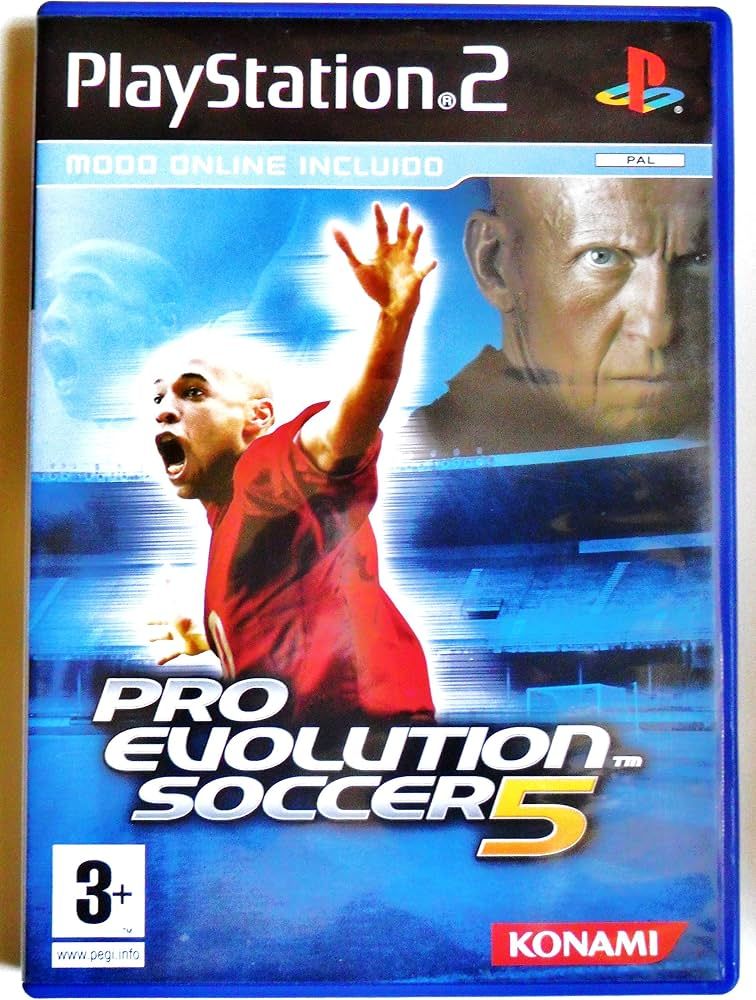
| Developer | Konami |
|---|---|
| Release | 2005 |
| Platforms | PlayStation 2, Xbox, PC, PSP |
| Japanese Title | World Soccer: Winning Eleven 9 |
| North American Title | World Soccer: Winning Eleven 9 |
| Key Licensing | Arsenal, Chelsea, Serie A, La Liga, Eredivisie |
| Key Feature | First PS2 online play outside Japan |
| Online Structure | Five-division ranking with stored stats |
| Last to Feature | German Bundesliga (as 'German League') |
| Successor | Pro Evolution Soccer 6 (2006) |
A Step Forward in Licensing and Authenticity
Pro Evolution Soccer 5 made a deliberate push for greater authenticity in its representation of world football. The headline achievement was the inclusion of fully licensed clubs from the English Premier League, specifically Arsenal and Chelsea. This marked the series' first foray into official Premier League club licensing, though the league itself remained one of three unlicensed competitions within the game. The other two unlicensed leagues are not named in the notes, but the licensed ones are clearly defined.
The game featured three fully licensed leagues, a count that matched its predecessor, Pro Evolution Soccer 4. These were the Spanish Liga Española, the Dutch Eredivisie, and the Italian Serie A, with the sole exception of Cagliari within Serie A. As with earlier versions, the Japanese J.League license remained exclusive to the domestic version, titled World Soccer: Winning Eleven 9. That Japanese version also featured the players Zico and Shunsuke Nakamura.
PES 5 also holds a place in series history as the final installment to include the German Bundesliga, which was presented under the generic name 'German League'. Konami lost this license after 2005, leading to its replacement by a completely generic league in subsequent releases. This loss highlighted the ongoing challenges of securing and retaining league licenses in the football simulation genre.
Pioneering Online Play and Multiplatform Debut
The introduction of online multiplayer for the PlayStation 2 version outside of Japan was the most significant new feature of PES 5. This functionality transformed the game from a local multiplayer experience into a persistent competitive platform. Konami implemented a server-based system that stored statistics and league points for every match played online. These accumulated points determined a player's standing within a structured hierarchy of five online divisions, creating a clear competitive ladder.
Beyond online play, PES 5 was a milestone for platform expansion. It marked the series' very first appearance on the PlayStation Portable, bringing its acclaimed gameplay to a handheld audience. The existing online infrastructure on Xbox, via Xbox Live, was also supported. This service remained active for players until Konami officially discontinued it on 15 April 2010. The game's online legacy has been preserved by dedicated communities, with replacement servers like Insignia now allowing players to experience the original competitive environment again.
Critical Acclaim and Detailed Gameplay Analysis
Pro Evolution Soccer 5 was met with praise from critics upon its release. According to the review aggregator Metacritic, the U.S. PC and European PlayStation 2 versions received 'universal acclaim', while all other platform versions in both regions received 'generally favorable' reviews. This consensus highlighted the game's quality across the board.
Reviewers consistently applauded the depth and authenticity of the simulation. USA Today awarded the PS2, Xbox, and PC versions a score of nine-and-a-half out of ten, stating it was not only the ideal soccer simulation but perhaps one of the top sports games available, praising its accessibility and authentic play for attracting both old and new fans. The Sydney Morning Herald, giving it four-and-a-half stars out of five, specifically commended the improved artificial intelligence, noting it required more thoughtful passing to open up opponents, rewarding strategic play.
Maxim awarded it nine out of ten, highlighting its return to affirm its ball-kicking dominance and celebrating the new online mode. The PSP version received slightly more reserved praise, with USA Today noting it lost a few key features but retained the fun and spirit, awarding it eight-and-a-half stars. Detroit Free Press was more critical of the handheld port, giving it two stars out of four and stating that with the PSP's fewer buttons and one analog stick, the game's mark deep and precise controls felt a bit muted.
Commercial Success in Key Global Markets
The game's commercial performance demonstrated its massive popularity. In Japan, where it was titled Winning Eleven 9, the PlayStation 2 version sold 1,125,464 units, securing a place among the country's top five best-selling games of 2005. Lifetime sales for the PS2 version in Japan reached 1,206,483 units. The game's success was not limited to Asia, as it became the best-selling game of the entire year in France.
In the United Kingdom, the PlayStation 2 version of Pro Evolution Soccer 5 was a phenomenon. It sold more than 800,000 copies, which earned it a 'Double Platinum' sales award from the Entertainment and Leisure Software Publishers Association, an award signifying sales of at least 600,000 copies in the UK. This made it the United Kingdom's second best-selling game of 2005, finishing only behind its direct rival, FIFA 06. When combining the sales figures from Japan and the United Kingdom alone, the total exceeds 2,006,483 units, underscoring its status as a major commercial hit.
Core Game Modes and Player Customization
Beyond its competitive features, PES 5 offered rich and engaging single-player content. The Master League mode served as Konami's flagship career experience, a multi-season campaign where the player took full control of a club's management. This mode allowed gamers to determine training levels, condition players before matches, trade or buy players, develop new recruits, and manage the retirement of older squad members, providing a comprehensive managerial simulation.
A staple of the Pro Evolution Soccer series, the Edit Mode, was fully present. This feature allowed players to edit certain elements of the game, which was particularly valuable for customizing the many unlicensed teams and leagues to better reflect real-world football. This level of customization granted players a significant degree of control over their experience, extending the game's longevity and appeal for dedicated fans who sought complete authenticity.
Historical Context and Lasting Legacy
Released in 2005 and succeeded by Pro Evolution Soccer 6 in 2006, PES 5 arrived during a highly competitive period for football simulations. Its successful integration of online competitive structures on the PlayStation 2 provided a blueprint for the future. The framework of ranked online divisions with stored statistics directly foreshadowed the organized esports ecosystems that would later develop around the series, including the official PES League World Finals and the annual eFootball.Open tournament organized by Konami since 2010.
The game is remembered as a high point that balanced critical acclaim, commercial success, and technological innovation. By securing key Premier League club licenses, introducing a stable online mode, and debuting on the PSP, PES 5 expanded the series' audience and confirmed its reputation for delivering a deep, authentic, and highly playable football simulation that could be enjoyed both casually and competitively.
FAQ
What made PES 5 different from previous Pro Evolution Soccer games?
PES 5 introduced two major firsts for the series. It was the first to offer fully licensed clubs from the English Premier League, Arsenal and Chelsea. It was also the first to enable online multiplayer on the PlayStation 2 for players outside of Japan, complete with a ranked division system.
Which leagues were fully licensed in Pro Evolution Soccer 5?
The game featured three fully licensed leagues. These were the Spanish Liga Española, the Dutch Eredivisie, and the Italian Serie A, though Cagliari was an exception in Serie A. The German Bundesliga was also included but as the unlicensed 'German League', and it was the last PES title to feature it.
How successful was PES 5 in terms of sales?
The game was a top seller in multiple regions. It sold over 1.2 million copies on PS2 in Japan, was the best-selling game of 2005 in France, and sold over 800,000 copies in the UK, where it was the year's second best-selling game. It received a Double Platinum award in the UK for sales over 600,000 units.
What did critics say about the gameplay of PES 5?
Critics widely praised its depth and authenticity. Reviews highlighted its improved AI that required strategic passing, its accessible yet authentic play, and its precise controls on consoles. The PC and PS2 versions received 'universal acclaim' on Metacritic, with USA Today calling it one of the top sports games available.
What was the Master League mode in PES 5?
The Master League was Konami's in-depth career management mode. Players controlled a club over multiple seasons, handling all aspects like training, player conditioning, transfers, youth development, and finances. It was a central single-player feature that offered a comprehensive football management simulation.
Source: English Wikipedia (CC BY-SA), rewritten by the Redington Cybersport desk.