Pro Evolution Soccer
Pro Evolution Soccer, commonly known as PES, is a landmark football simulation video game series first released in 2001. It established itself as a major competitor in the sports gaming genre and later evolved into a significant esports title under the banner of eFootball.
| First release | Pro Evolution Soccer (2001) |
|---|---|
| Developer | Konami Digital Entertainment |
| Series | Pro Evolution Soccer / eFootball |
| Genre | Football simulation |
| Platforms | PlayStation 2, others |
| Notable esports event | eFootball.Open (PES League / PES World Finals) |
| Esports launch | 2010 |
| Total games in series | 34 |
| Japanese title | World Soccer: Winning Eleven 5 |
The Genesis of a Series
The first Pro Evolution Soccer game was released in 2001, marking the debut of Konami's long-running football series. In Japan, the game was titled World Soccer: Winning Eleven 5, with a later updated version called Final Evolution also released. The Japanese cover featured footballer Shunsuke Nakamura. This inaugural title set the foundation for a franchise that would become a staple for football gaming fans, directly succeeded by Pro Evolution Soccer 2 in 2002.
The game's release structure showed Konami's regional approach, with the Final Evolution version coming to Japan after the European release of the standard Pro Evolution Soccer. This established a pattern of iterative updates that would characterize the series for years.
Gameplay and Presentation
The game offered a detailed football simulation experience praised for its gameplay. For English-speaking audiences, match commentary was provided by Chris James and former England defender Terry Butcher. The Japanese version featured commentators Jon Kabira and Katsuyoshi Shinto. This attention to presentation helped immerse players in the matchday atmosphere and was a key part of the game's identity from the very beginning.
The in-game content was tailored for different regions, reflecting the series' ambition to be a global football title. The commentary teams were a notable feature, adding authenticity to the matches being played on screen.
Critical and Commercial Success
The original Pro Evolution Soccer was met with strong critical acclaim. The PlayStation 2 version holds an average score of 93 out of 100 on the review aggregator Metacritic, a rating categorized as universal acclaim and a must-play. Japanese magazine Famicom Tsūshin gave the base game and its J.League version a score of 34 out of 40, while the Final Evolution version scored slightly lower at 33 out of 40.
Commercially, the game was a significant hit. In Japan, the Winning Eleven 5 version sold over 505,000 copies on PS2 by the end of 2001. The Final Evolution update sold over 315,000 copies, and the J.League versions sold over 77,000 copies. In Europe, the game grossed 21 million euros, equivalent to about 19 million US dollars at the time, in its release year. In the United Kingdom, it earned a Gold sales award from the ELSPA for selling at least 200,000 copies and ranked as the 26th best-selling game of 2001.
Evolution into Esports
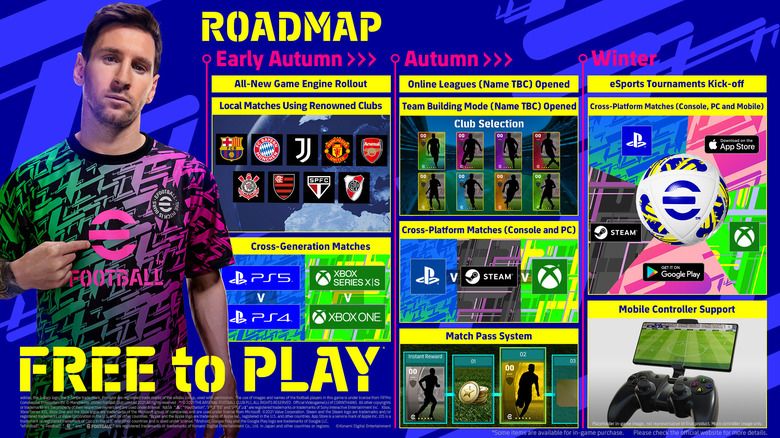
The Pro Evolution Soccer series became a major platform for competitive gaming. Konami has organized an official esports world championship annually since 2010. This competition was originally named the PES World Finals or PES League before evolving into its current format, the eFootball.Open. The series, now rebranded under the eFootball name, continues to be used in professional esports circuits.
Konami has actively worked to establish the game in the esports scene, partnering with outfits like eFootball.Pro to launch an international league designed to attract players from around the world. This formal competitive structure helped transition PES from a popular consumer game to a title with a dedicated professional scene.
The Franchise Legacy and Rebranding
The Pro Evolution Soccer brand universe encompasses a total of 34 games, with Konami Digital Entertainment developing 26 of them. For years, the series was considered a worthy and often preferable challenger in the football genre, reaching a peak where it rivaled its main competitor. Titles like Pro Evolution Soccer 2018 were marketed with taglines like 'Where Legends Are Made', promising new features and a highly regarded gameplay experience.
The series underwent a fundamental transformation with its rebranding to eFootball. Konami positioned this as an all-new era of digital soccer, hoping players would enjoy the brand new football experience it offered. This shift marked the end of the PES name after nearly two decades, though the deep gameplay from celebrated entries like PES 2019 remains a benchmark for fans, some of whom argue those older titles still compete favorably with modern games.
FAQ
When was the first Pro Evolution Soccer game released?
The first Pro Evolution Soccer game was released in 2001. It was the inaugural installment of Konami's long-running football simulation series, succeeded by Pro Evolution Soccer 2 in 2002.
What is the Japanese name for Pro Evolution Soccer?
In Japan, the first game was released under the title World Soccer: Winning Eleven 5. An updated version called Final Evolution was also released later, and the Japanese cover featured player Shunsuke Nakamura.
Is Pro Evolution Soccer used for esports?
Yes. Konami has run an official esports world championship for the series since 2010, originally called PES League or PES World Finals, now known as eFootball.Open. The company has partnered with esports organizations to establish international leagues.
How many games are in the Pro Evolution Soccer series?
There are a total of 34 games in the Pro Evolution Soccer universe. The top developer is Konami Digital Entertainment, responsible for 26 of these games.
What was the critical reception of the first PES game?
The PlayStation 2 version received universal acclaim, with a Metacritic score of 93 out of 100. Japanese magazine Famicom Tsūshin scored the original version 34 out of 40.
Source: English Wikipedia (CC BY-SA), rewritten by the Redington Cybersport desk.