Pro Evolution Soccer 6
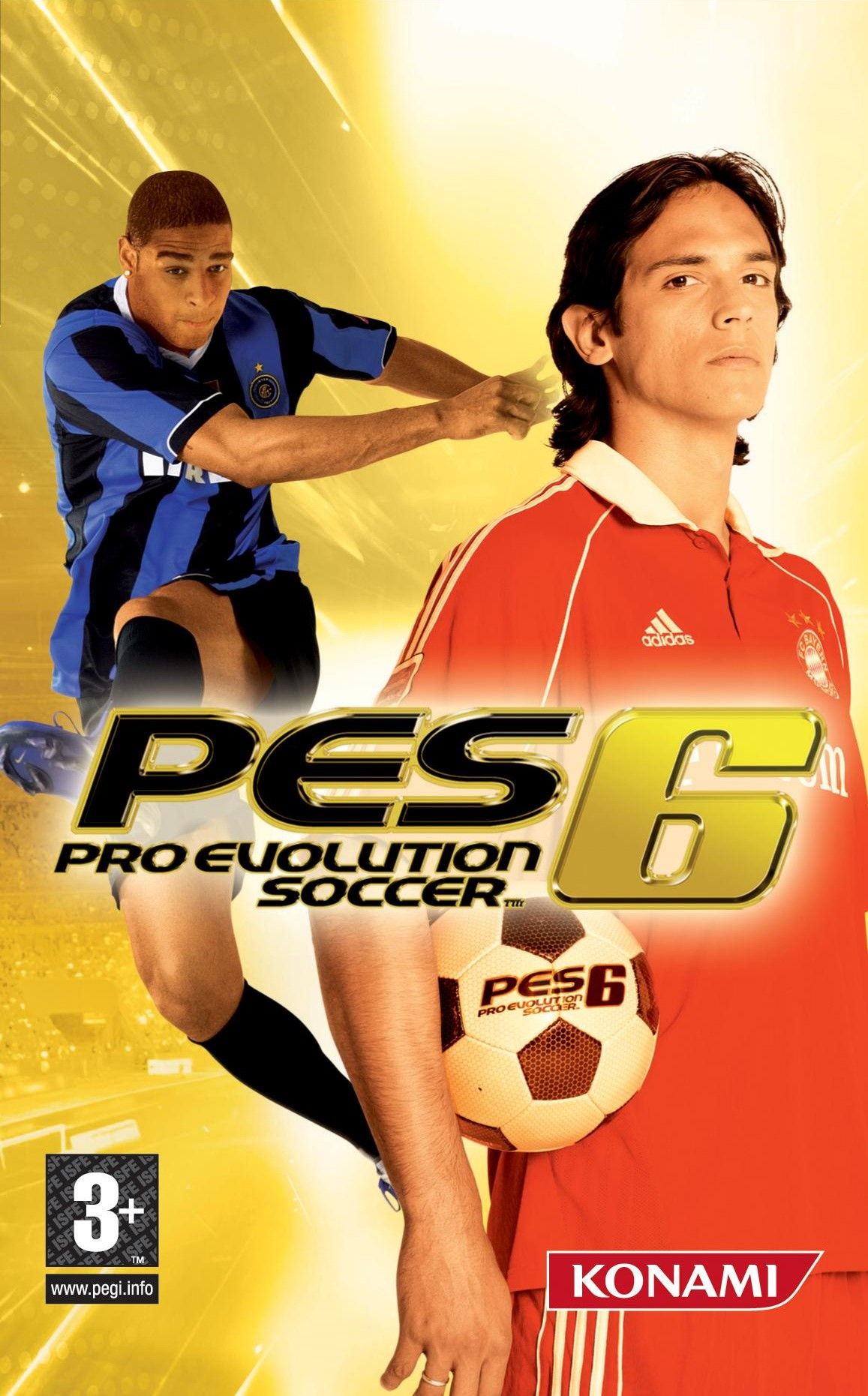
Pro Evolution Soccer 6, released in 2006, was a significant entry in Konami's football simulation series. It was the first in the franchise to launch on Xbox 360 and Nintendo DS, and the last to use a sequential number before switching to annual year titles.
| Developer | Konami |
|---|---|
| Publisher | Konami |
| Release Year | 2006 |
| Platforms | PlayStation 2, Xbox 360, Microsoft Windows, PlayStation Portable, Nintendo DS |
| Series | Pro Evolution Soccer |
| Followed by | Pro Evolution Soccer 2008 |
| US Title | Winning Eleven: Pro Evolution Soccer 2007 |
| Notable Licenses | Ligue 1, select 2006 FIFA World Cup national teams |
| Key New Mode | International Challenge |
| ELSPA Award (UK PS2) | Double Platinum (600,000+ sales) |
A Cross-Platform Launch with Variations
Pro Evolution Soccer 6 marked a major expansion for the series, becoming its first installment on the Xbox 360 and Nintendo DS. It was also the second release for the PlayStation Portable and the fourth for Microsoft Windows. This multi-platform strategy came with notable technical differences. The Xbox 360 version featured improved graphics and more sophisticated ball physics, including a fully analogue Manual Pass feature not found on other platforms. However, this version also had significant cuts, such as a stripped-down edit mode due to development time restrictions. The PC version did not receive the enhanced 360 graphics engine, instead being a direct conversion of the PlayStation 2 build.
The game also represented several naming and licensing milestones. It was the final entry to use a sequential number, with all subsequent releases adopting the year of release in their titles. Furthermore, it was the first game released in North America under the Pro Evolution Soccer name, having previously been marketed there as the Winning Eleven series. The Japanese release had its own elements, such as featuring players Zico and Shunsuke Nakamura on the PS2 and PSP, a chibi version of Nakamura on DS, and Adriano on the Xbox version known as Winning Eleven X.
Expanded Gameplay with International Challenge
PES6 introduced the International Challenge Mode, a first for the non-Japanese versions of the game. This mode allowed players to choose most playable nations and guide them through a World Cup qualification process and subsequent tournament. The qualifiers for Europe, North and Central America, and South America were included, featuring condensed but recognizable formats. The European qualifiers used 32 teams in eight groups of four, with group winners advancing and second-place teams entering a playoff. The North American qualifiers were a six-team round-robin league, and South America used a ten-team round-robin.
Notably, Asian qualifiers were not available in this mode, as they remained part of the separate Nippon Challenge in the Japanese version, which also meant Japan could not be selected in International Challenge. This new mode was only available in the PlayStation 2 and PC versions of PES6, being absent from the Xbox 360 and PSP releases.
Additional Modes and the PES Shop
Another new mode was Random Selection Match. Here, players could select up to four clubs or nations, or one region or league, and the game would assemble a random squad from that pool. The lineup was selected automatically, though players could request another random selection. This feature was not included in the PSP and Xbox 360 version, again due to time restrictions.
The PES Shop was expanded with many new unlockables. Alongside retired players, active players like Juan Sebastián Verón, Fernando Cavenaghi, and Freddy Adu could be purchased, though they were unlicensed. Players could also buy costumes, including an Ostrich, a Raptor which the player rode, and a Penguin suit. When riding the raptors, the creatures performed all the player actions, but with much lower shooting ability. Other new features in the shop included gameplay frames, new hairstyles, goal celebrations, and stadiums. The PES Shop was present on all versions of the game except the Xbox 360 version.
Online Features and Licensing Details
The game's online component, the PES Network, was enhanced with a group system. Players could create or join groups that could gain points by playing together and compete in rival matches against other groups. A group leader could manage membership, the team name, and permissions. Groups started with a limit of ten members but could expand to hold up to 30. By leveling up to a maximum of Level 14, groups could unlock rewards like the penguin, dinosaur, and ostrich costumes, classic national teams, and extra member spaces. These network capabilities have since been discontinued.
On the licensing front, PES6 secured the Ligue 1 license for the first time in the series and included several fully licensed national teams from the 2006 FIFA World Cup. However, the game also saw a major setback. A planned Bundesliga license was removed, meaning the German league was absent entirely, save for a fully licensed FC Bayern Munich, albeit without their shirt sponsor T-Home. This was the last Pro Evolution Soccer game to feature any form of the Bundesliga.
Critical Reception and Platform Comparisons
Critical reception for PES6 was positive to mixed, heavily dependent on the platform. The PlayStation 2 version received the highest scores, including a perfect 10/10 from Official UK PlayStation 2 Magazine, which rated it above FIFA 07. Aggregate scores for the PS2 version were around 86-89 out of 100. The PC version scored similarly well. The Xbox 360 and PSP versions scored in the low 80s, while the Nintendo DS version received mixed scores in the 60s.
Reviewers praised the game for tighter dribbling, a refined Master League, improved AI, and more realistic ball control. Critics of the Xbox 360 version noted the lack of an edit mode and unlicensed teams that could not be renamed as significant drawbacks. The PSP version was criticized for slow loading times and an incomplete editor, ranking it beneath the FIFA 07 PSP version in some assessments. Commentary was also a point of criticism across several versions.
Commercial Performance and Legacy
Pro Evolution Soccer 6 was a substantial commercial success. In Europe, over three million units were shipped in its launch weekend. In the United Kingdom, the PlayStation 2 version earned a Double Platinum ELSPA award for sales of at least 600,000 copies, while the Xbox 360 version achieved Platinum status for sales of at least 300,000 copies. In Japan, the PlayStation 2 and PlayStation Portable versions combined sold 1,292,472 units in 2006.
The game is remembered for its role as the final numbered sequel, concluding an era for the series. Its introduction of the International Challenge mode and expanded online group features showed Konami's commitment to deepening the experience. The multi-platform launch, despite its technical compromises, demonstrated the franchise's broad appeal and the challenges of adapting a flagship title to a new generation of hardware. Its success kept the series' strong position in key markets at the time.
FAQ
What was new in Pro Evolution Soccer 6?
PES6 introduced the International Challenge mode for taking national teams through World Cup qualifiers. It added Random Selection Match and expanded the PES Shop with unlockable costumes like dinosaur riders and classic players. Online group features were also enhanced on the PES Network.
Which platforms was PES6 released on?
The game was released in 2006 for PlayStation 2, Xbox 360, Microsoft Windows, PlayStation Portable, and Nintendo DS. It was the series' debut on Xbox 360 and Nintendo DS.
Did PES6 have the Bundesliga?
No. A Bundesliga license was planned but removed, so the league is absent. The only fully licensed German team was FC Bayern Munich, though without their shirt sponsor. This was the last PES game to feature any form of the Bundesliga.
How did the Xbox 360 version differ from others?
The Xbox 360 version had improved graphics, advanced ball physics, and an unusual analogue Manual Pass. However, it lacked the edit mode, International Challenge, Random Selection Match, and the PES Shop due to time restrictions.
How well did PES6 sell?
The game sold very well. Over three million units shipped in Europe on launch weekend. In the UK, the PS2 version sold over 600,000 copies, and the Xbox 360 version over 300,000. In Japan, the PS2 and PSP versions sold a combined 1.29 million units in 2006.
Source: English Wikipedia (CC BY-SA), rewritten by the Redington Cybersport desk.