Counter-Strike: Condition Zero
Counter-Strike: Condition Zero is a tactical first-person shooter released in 2004 as the direct follow-up to the original Counter-Strike. Its development involved a chaotic three-year period with multiple studios, resulting in a game that offered updated multiplayer and single-player campaigns.
| Developer | Ritual Entertainment, Turtle Rock Studios, Valve |
|---|---|
| Publisher | Sierra Entertainment, Valve |
| Release | March 2004 |
| Platform | Windows, OS X (2013), Linux (2013) |
| Engine | GoldSrc |
| Game modes | Single-player, Multiplayer |
| Predecessor | Counter-Strike (2000) |
A Development Saga Across Four Studios
The development of Counter-Strike: Condition Zero is a chronicle of false starts, shifting visions, and corporate disputes. It began in April 2001 when Valve, wanting to add single-player missions to Counter-Strike, contracted Rogue Entertainment. Rogue entered a crunch period to prepare a demo for E3 2001. However, about a month in, producer Jim Molinets departed, which alarmed Valve. Citing concerns over Rogue's financial stability, Valve withdrew the project. Angry Rogue employees leaked early screenshots, which were criticized as outdated, and the studio, having lost two major projects, was soon acquired and dissolved.
Valve's internal team, led by Erik Johnson, continued work aiming for a fall 2001 release. Public interest grew due to a lack of information, with websites like CS-Nation being told the game would be at E3 2001, though it never appeared. By May 2001, Gearbox Software, having just finished other projects, approached Valve and took over primary development. They discarded most of Rogue's work and restarted, recruiting prominent community map designers like David Johnston and Christopher Auty, and texture artist Mike Neumann. A key hire was Markus Klinge, creator of the original Podbot, to develop an official bot.
The Gearbox and Ritual Iterations
Gearbox's version, unveiled in late August 2001, initially planned a Q1 2002 release. Its single-player design took inspiration from console games like Tony Hawk's Pro Skater, with objectives rewarding cash for upgrades. The design featured over 16 maps across four campaigns. By November 2001, the map count grew to between 20 and 30 across five campaigns, and by December it was feature-complete with 25 maps in six campaigns. A delay to Q2 2002 was announced in February 2002 to refine the AI. At the March 2002 Game Developers Conference, Valve decided to shift the single-player to a more traditional linear experience, a new vision shown at E3 2002. In July 2002, Gearbox ceased development, stating a focus on future technology, and Valve took over.
Valve then assigned the project to Ritual Entertainment in August 2002, shortly after Ritual had lost the PC port of The Lord of the Rings: The Two Towers. Valve provided clear directives for a Half-Life-meets-Counter-Strike single-player campaign. Ritual redesigned the game from scratch while using some Gearbox content. They also planned enhanced multiplayer with upgraded models and new maps. Valve separately contracted Turtle Rock Studios, with Michael Booth in charge, to develop a new multiplayer bot. Ritual's involvement was made public on December 6, 2002, with a show at the CPL Winter Tournament on December 20. By E3 2003, their version was nearly complete with 19 single-player missions and 10 new multiplayer maps. Despite being declared 98 percent complete, internal Valve testing raised quality concerns. In June 2003, Ritual faced layoffs after finishing Star Trek: Elite Force II, and in July, European magazines published mediocre reviews based on early copies. Unknown to Ritual, Valve had already decided on another overhaul.
Turtle Rock's Final Overhaul and Release
In June 2003, Valve gave Turtle Rock Studios the task of redesigning Condition Zero from scratch, impressed by their well-received bot AI. Turtle Rock's design drew inspiration from sports games, creating flexible, arcade-like missions. The work of Ritual Entertainment was repurposed as a bonus game titled Counter-Strike: Condition Zero Deleted Scenes. Turtle Rock's version was revealed on October 8, 2003, with plans to go gold by October 10 for a November 18 release on Steam and at retail.
The November 18 date was missed. Valve's Jess Cliffe cited finalization work on international versions, but this delay became part of Valve's lawsuit against publisher Vivendi Universal Games, with Valve alleging Vivendi intentionally delayed the release to avoid holiday competition. Despite the uncertainty, Valve held a launch party for the game on December 16, 2003, in San Francisco. Vivendi finally confirmed a March 23, 2004 release date on February 25, 2004, and the game shipped almost three years after its initial announcement.
Core Gameplay and Modes
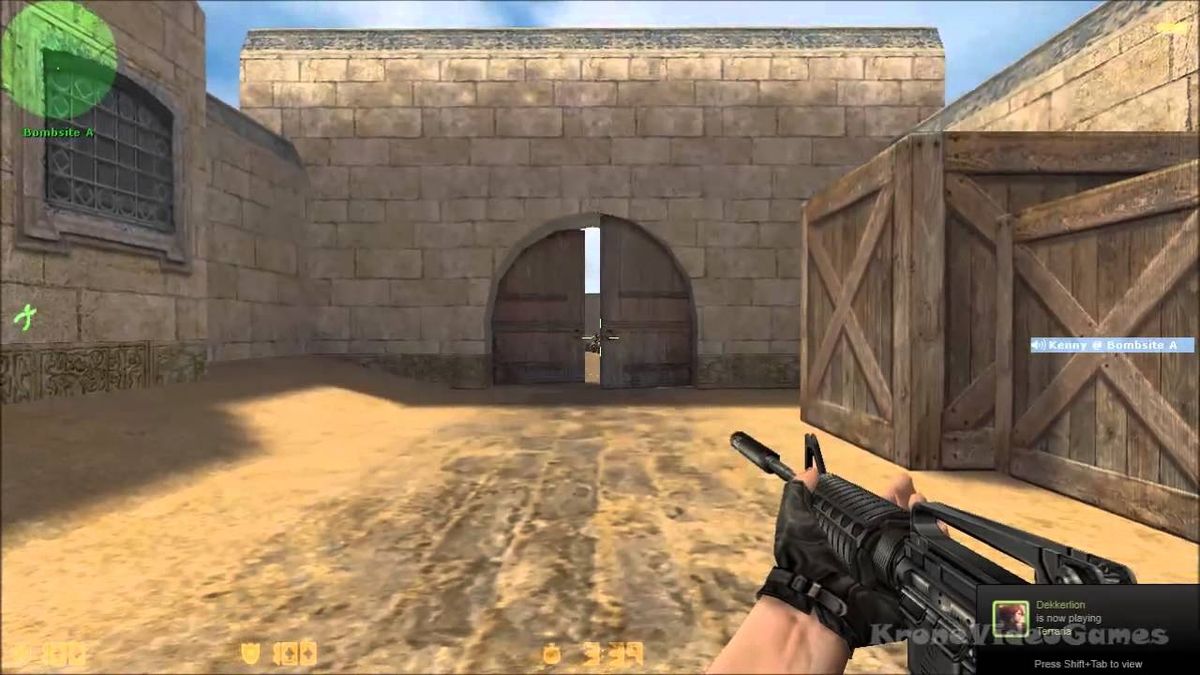
Condition Zero utilizes the GoldSrc engine and maintains the core Counter-Strike gameplay: round-based, team-focused matches between Counter-Terrorists and Terrorists where players purchase weapons with in-game money. The multiplayer mode features updated character models, textures, and maps. The in-game economy follows specific rewards: eliminating an enemy grants $300, Terrorists earn $2750 for a successful bomb detonation, and Counter-Terrorists get $2000 per player for rescuing all hostages or eliminating the enemy team, with a maximum money cap of $16000.
The Tour of Duty single-player mode features short matches with specific objectives. Players begin with a knife, a pistol, and starting money, with a five-second grace period to buy gear before a round starts. They do not respawn after dying. The match continues until the objective is complete or time runs out. Winning an objective grants a reputation point to upgrade a bot's attributes. The AI bots can change tactics, respond to sound, and switch routes.
Condition Zero: Deleted Scenes is a separate, linear single-player campaign of 12 missions, each starting with a briefing and set in global locations. It introduces equipment absent from standard Counter-Strike, including a digital camera, walkie-talkie, blowtorch, remote-controlled bombs, and a fiber-optic camera. Players are given specific loadouts for objectives like bomb defusal or hostage rescue.
Critical Reception and Lasting Updates
Condition Zero received mixed or average reviews, with a Metacritic score of 65 based on 33 critics. Reviewers consistently noted the game felt outdated after its lengthy development, overshadowed by more advanced contemporary shooters. The development chaos was a frequent topic. Tom Bramwell of Eurogamer noted early versions were criticized as unpolished and unoriginal, while the final Turtle Rock version was closer to the classic feel but brought few new ideas. Bob Colayco of GameSpot echoed that the extended cycle left the game outdated. Steve Butts of IGN stated that while it introduced offline challenges and better bot AI, it lacked significant new content outside single-player modes.
Universal praise was directed at the bot AI. Reviewers highlighted bots making tactical decisions, communicating, and making human errors like poorly timed grenades or panic shooting. Critics also appreciated the new maps and graphical tweaks. The consensus was that Condition Zero was a competent but conservative update that arrived too late to change the franchise.
Post-release, Valve provided numerous updates including new character and weapon models, additional maps, a new radar system, and changes to hostage rescue. Years later, on February 21, 2013, a beta version was released for Linux and Mac OS X, with full support following on March 7, 2013, ensuring the game's longevity on modern systems.
FAQ
What is Counter-Strike: Condition Zero?
Condition Zero is a first-person shooter video game released in March 2004 as the follow-up to Counter-Strike. It features an updated multiplayer mode and two distinct single-player campaigns: Tour of Duty and the linear, story-driven Deleted Scenes.
Why was Condition Zero's development so troubled?
The project changed hands four times. It started at Rogue Entertainment, which Valve dropped over stability concerns. Gearbox Software then redesigned it before leaving. Ritual Entertainment rebuilt it, but Valve, unhappy with quality, gave the final overhaul to Turtle Rock Studios, causing a three-year delay.
What is the Tour of Duty mode?
Tour of Duty is a single-player mode featuring objective-based matches against AI bots. Players start with limited money to buy weapons, earn more cash and reputation points for winning, and use those points to upgrade their bot teammates' skills and attributes.
How is Deleted Scenes different from the main game?
Deleted Scenes is a 12-mission linear campaign developed by Ritual Entertainment. It includes a storyline, mission briefings, and unusual equipment like a blowtorch, remote-controlled bombs, and a digital camera, which are not available in standard Counter-Strike gameplay.
What was the critical response to Condition Zero?
The game received mixed reviews, with a Metacritic score of 65. Critics praised the advanced bot AI and new maps but widely criticized it for feeling outdated upon release after its long development, noting it lacked major new ideas for the core experience.
Source: English Wikipedia (CC BY-SA), rewritten by the Redington Cybersport desk.