Counter-Strike Online
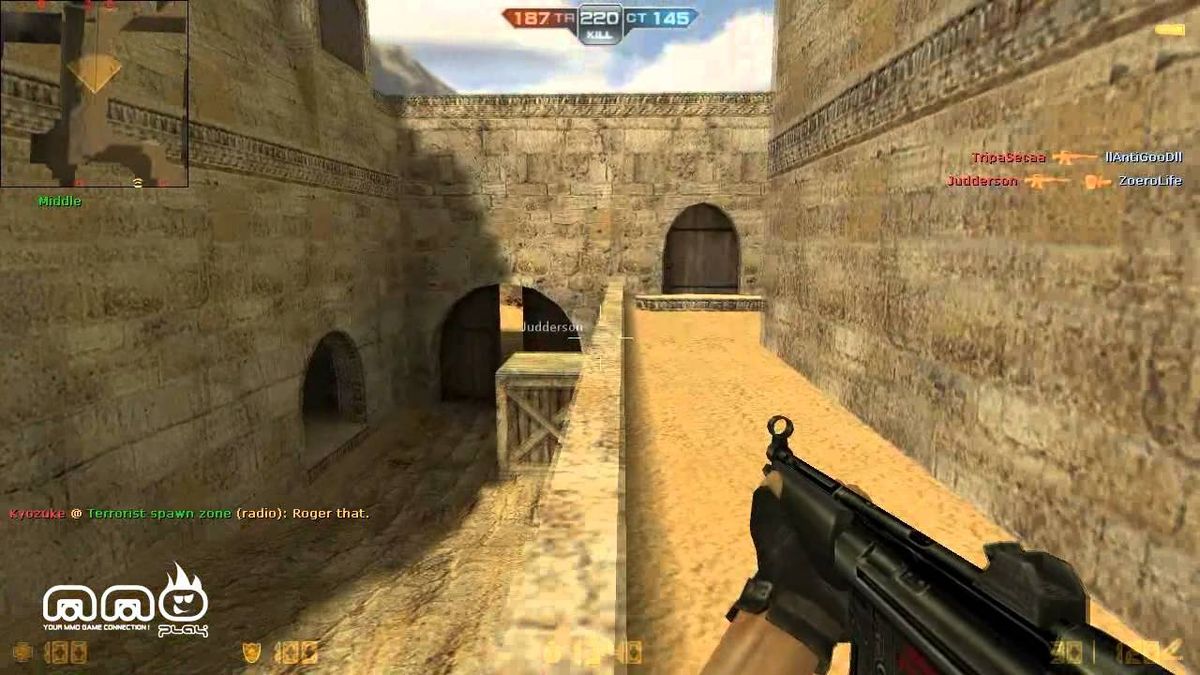
Counter-Strike Online (CSO) is a tactical first-person shooter developed by Nexon for the Asian gaming market, offering a free-to-play experience with micropayments. Based on the original Counter-Strike, it introduced new modes, weapons, and customization options, becoming a regional esports staple with dedicated tournaments.
| Developer | Nexon (with oversight from Valve) |
|---|---|
| Release Date | 2008 |
| Platform | PC |
| Business Model | Free-to-play with micropayments |
| Key Features | Zombie modes, female characters, weapon skins |
| Tournament Highlight | World Cyber Games 2012 Grand Finals |
| Sequel | Counter-Strike Online 2 (2013) |
| Spin-off | Counter-Strike Nexon: Zombies (2014) |
Development and Core Gameplay
Counter-Strike Online was developed by Nexon under the oversight of Valve, the license-holder for the Counter-Strike franchise. Released in 2008, it was specifically targeted towards Asia's gaming market. The game operated on a micropayment model managed by a custom version of the Steam platform. While free to download and play, its economy was central to the experience. Players used two currencies: virtual cash purchased with real money and in-game points earned through performance. Most weapons were locked by default, requiring one of these currencies to unlock. Special weapons, skins, and power-ups were typically bought with cash points, often expiring after a set time, though permanent versions were sometimes available through promotions.
The core gameplay remained a tactical first-person shooter, but CSO expanded the arsenal with numerous new weapons and skins for existing ones. It also introduced female character models, a first for the series. This blend of familiar Counter-Strike mechanics with extensive customization and a freemium structure defined its appeal in its target regions.
Expanded Game Modes
Beyond classic Counter-Strike, the game offered a wide array of modes categorized into six groups. The Classic category contained round-based matches like Bomb Defuse, Hostage Rescue, Assassination, and Basic. Deathmatches, including Deathmatch, Team Deathmatch, and Gun Deathmatch, featured immediate respawns for continuous action.
The Zombie Infection category was a major draw, with four distinct modes. Zombie 1: Original, Zombie 2: Mutant, Zombie 3: Hero, and Zombie 4: Darkness each offered their own twists on the humans versus zombies survival premise. Scenarios provided cooperative player versus environment challenges. In Zombie Scenario and Human Scenario, teams of ten players worked to annihilate computer-controlled enemies and defeat boss characters on certain maps.
Fun modes served as spin-offs, including Hidden, Bazooka Battle, Soccer, Challenge, and Item Battle. Finally, the PvPvE (Player vs Player vs Environment) category blended elements with modes like Zombie Union, Metal Arena, Battle Rush, Zombie Shelter, and Beast. This diverse roster gave players alternatives to the standard competitive formats.
The Asian Esports Scene
Counter-Strike Online cultivated a competitive scene separate from the global Counter-Strike circuits run by leagues like ESL or Faceit. Its premier tournament was at the World Cyber Games 2012 Grand Finals in Kunshan. This event featured teams from China, Taiwan, Malaysia, and South Korea. The Chinese squad TYLOO emerged as the champions, claiming the title for the region.
This tournament highlighted CSO's status as a regional esports product. It did not connect to the broader, Valve-supported competitive ecosystem that included the ESL Pro Tour, Intel Extreme Masters, or the ESL Pro League. Those global circuits, offering clear pathways from amateur to pro and millions in annual prize money, were built for the mainline Counter-Strike games. CSO's esports presence remained confined to specific Asian markets and did not expand into the international arena with its substantial financial incentives.
Sequel and Technical Evolution
Nexon and Valve announced a partnership for Counter-Strike Online 2 on April 5, 2012. This sequel was built on an enhanced version of the Source engine, the same foundation as Counter-Strike: Source, but was not a direct copy. Nexon of South Korea completely rebuilt the models, maps, and sounds. The game promised enhanced graphics, powerful impact physics, and new features while maintaining the free-to-play micropayment model.
After a closed beta test in November 2011 and an open beta in June 2013, CSO 2 was officially released in December 2013 for Asian markets. It used maps from Counter-Strike: Source, such as Dust II and Inferno, with heavily modified graphics, and also added exclusive new maps. The weapon roster was also taken from CS:S and expanded with new additions, all with modified models and animations. Weapons were categorized into pistols, shotguns, submachine guns, assault rifles, sniper rifles, and machine guns. Some were free, others required points or achievements, and some needed players to collect specific kill points to unlock. Despite these upgrades, the game was shut down on April 26, 2018.
Spin-offs and Final Shutdown
The franchise extended to Steam with Counter-Strike Nexon: Zombies, released on October 7, 2014. This was the first adaptation of Counter-Strike Online published via Valve's Steam content delivery system. The title was later renamed to Counter-Strike Nexon: Studio in 2019, and then simply to Counter-Strike Nexon in 2024. Meanwhile, the original Counter-Strike Online was discontinued in the Singapore and Malaysia (English) market.
The end for the Nexon versions came on September 30, 2026, when Counter-Strike Nexon was shut down. This marked the conclusion of the official service for this branch of the Counter-Strike franchise.
Critical Reception
Reviewers acknowledged CSO's connection to its origins but noted significant drawbacks. MMOhuts gave it a 3 out of 5 rating, citing its similarity to the original game but criticizing lag times for players outside Southeast Asia, where its server hubs were located. The reviewer NoGameNoTalk was more favorable, praising the new deathmatch, team deathmatch, and zombie modes as welcome improvements.
FilePlanet offered a moderately good review with a score of 7.1 out of 10. They commended the gameplay and weaponry availability but echoed concerns about lag outside Asia. They also noted the game had a dated look and feel compared to other contemporary titles. These reviews painted a picture of a competent adaptation that served its regional audience well but was hampered by technical and aesthetic limitations for a wider international player base.
FAQ
Is Counter-Strike Online free to play?
Yes, CSO is free to play but uses a micropayment system for many weapons and cosmetics. Some items can be earned through gameplay points, while premium content like special weapons and power-ups typically requires real money and often expires after a time, though permanent versions were sometimes available.
What makes Counter-Strike Online different from regular Counter-Strike?
CSO added numerous new modes like Zombie Infection and Scenarios, introduced female characters, and expanded the weapon and skin catalog. Its core difference was its business model, being a free-to-play game with micropayments for content, unlike the buy-to-play model of mainline Counter-Strike titles at the time.
Was Counter-Strike Online played in major esports tournaments?
It had a dedicated tournament at the World Cyber Games 2012 Grand Finals, featuring Asian teams. However, it was not part of the global professional circuits like the ESL Pro Tour, Intel Extreme Masters, or ESL Pro League that featured the standard Counter-Strike games and offered multimillion-dollar prize pools.
Why did Counter-Strike Online 2 shut down?
Though upgraded with better graphics, physics, and new features on an enhanced Source engine, CSO 2 failed to maintain a sustainable player base after its 2013 release in Asian markets. Nexon discontinued the service on April 26, 2018, ending its run after approximately four and a half years.
Can you still play Counter-Strike Online?
No. The original CSO service was discontinued in Singapore and Malaysia. Its spin-off, Counter-Strike Nexon (originally Counter-Strike Nexon: Zombies), which was available on Steam, was shut down on September 30, 2026, ending all official support for the game.
Source: English Wikipedia (CC BY-SA), rewritten by the Redington Cybersport desk.