Challenge ProMode Arena
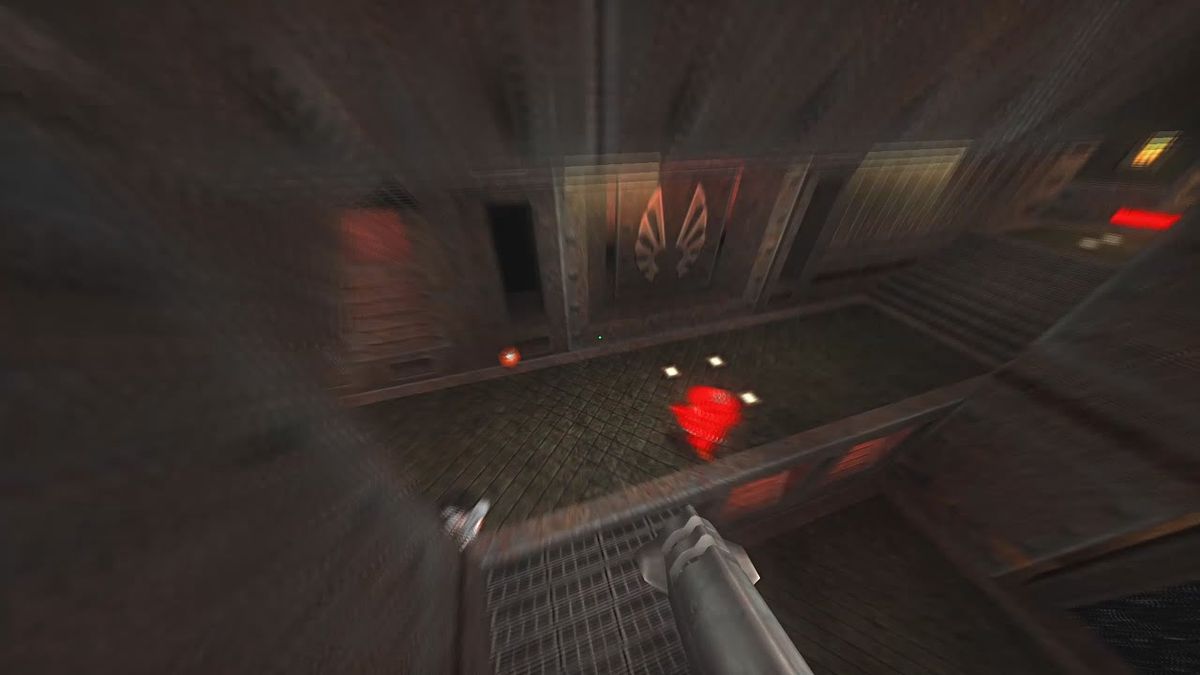
Challenge ProMode Arena (CPMA) is a freeware modification for Quake III Arena designed for competitive play. It introduced new physics and game modes, becoming the standard competitive mod for the game after its adoption by major leagues.
| Developer | Richard 'Hoony' Sandlant, Kevin 'arQon' Blenkinsopp |
|---|---|
| First released | August 28, 2000 (version 1.0) |
| Original release | May 1999 (as Challenge ProMode) |
| Platform | PC |
| Base game | Quake III Arena |
| Status | Freeware |
| Primary use | Competitive esports |
| Notable features | Promode physics, new game modes, enhanced bots |
Origins and Development
The Challenge ProMode project was created by Richard Sandlant, known by his alias Hoony, in May 1999. This was immediately following the release of Q3Test, the beta version of Quake III Arena. Sandlant's stated goals were to make a more exciting and challenging game, with the hope that this would help advance Q3A as a professional sport. The concept found theoretical support from John Carmack, the lead programmer of Quake III Arena, who had previously suggested that an official 'pro mode' for advanced rules might make sense if it differed from common play.
Before the design team began their work, the CPM team asked the Quake community to brainstorm a list of possible changes to the game. The designers then used these community suggestions in a detailed process of tweaking and testing to develop the new Challenge ProMode gameplay. This collaborative approach led to the release of two public beta versions, which were made available specifically for gathering feedback and further input from players.
On August 28, 2000, the final version 1.0 was released. Later that year, in December 2000, the project changed its name from Challenge ProMode to Challenge ProMode Arena. This name change reflected the addition of multi-arena capability within the mod. Around this time, Kevin Blenkinsopp, known as arQon, became the lead programmer, steering the project forward.
Core Gameplay and Physics
Challenge ProMode Arena is a comprehensive gameplay modification that alters fundamental aspects of Quake III Arena. Its primary modifications include the introduction of air-control, which allows players to steer in mid-air, and additional jumping techniques that enable advanced movement. The mod also features rebalanced weapons and instant weapon switching, which increases the pace of combat and rewards tactical precision.
The mod supports several distinct physics and rulesets. It features three different promode gameplays: Challenge ProMode II (also called CPM or PM2), ProMode Classic (PMC or PM1), and Challenge Quake3 (CQ3). Crucially, it also supports the unmodified vanilla Quake III (VQ3) physics, allowing servers to host games with the original game feel. The Promode physics, particularly the PM2 ruleset, have been highly influential. They were implemented in other notable Quake III Arena modifications such as DeFRaG (DF) and Orange Smoothie Productions (OSP). Furthermore, the commercial successor Quake Live later introduced Promode Quake Live (PQL) physics and a ruleset very similar to CPMA.
Beyond physics, CPMA includes a host of technical features for competitive play and spectatorship. It supports multi-view GameTV for observing matches and enhanced demos. It also has improved bot artificial intelligence for practice, new maps, and a highly customizable heads-up display (HUD).
Adoption as an Esports Standard
Challenge ProMode Arena's competitive legitimacy was confirmed when the Cyberathlete Professional League (CPL) announced CPMA as its competition mod of choice for Quake III Arena. This official endorsement effectively established CPMA as the standard competitive modification for the game. Following this, the mod's use proliferated across the competitive scene.
It gained its own dedicated division within the Cyberathlete Amateur League. It was also selected for use in the Electronic Sports World Cup (ESWC). Independent of these major organizations, CPMA also fostered its own ecosystem of competitions and leagues, sustained by a dedicated player base that valued its fast-paced, skill-intensive gameplay. This widespread adoption at both professional and amateur levels kept its status as the definitive competitive version of Quake III Arena for years.
Innovative Game Modes
While supporting typical Quake III Arena modes like Free for All, Team Deathmatch, Tournament (1v1), and Capture the Flag, CPMA is known for introducing several novel and creative game modes. HoonyMode (HM) was introduced in November 2003. It is a form of tournament loosely based on tennis rules. During a warm-up, players choose or are assigned 'strong' and 'weak' spawn points. The game treats each player death as a point. After a point, the arena resets and players switch spawn points, effectively changing who has the 'serve'. All standard deathmatch gameplay rules apply during the points.
Not Team Fortress (NTF), introduced in April 2004, references the game Team Fortress. It is a class-based form of Capture the Flag where players spawn with no armor and with weapons determined by their class. Health and armor regenerate during play. The four default classes are Fighter, Scout, Sniper, and Tank, all of which can be customized by server administrators.
arQmode (APM) began as a test mode in 2003 and evolved into the official ruleset of Challenge ProMode, known as PM2. Its main design aims were to decrease the damage and knock-back of high-damage hit-scan weapons to reward the use of predictive weapons like the rocket launcher, and to reduce randomness in the spawn system. The term arQmode is now also used to refer to the development mode for testing new beta-stage changes.
Other significant modes include Clan Arena (CA), a team-play mode similar to Rocket Arena where players spawn fully equipped and only respawn after their team wins the round. Freeze Tag (FTAG/FT) requires a team to freeze the entire enemy team, with frozen players being rescueable by teammates. Capture Strike (CTFS/CS) is a Capture the Flag variant similar to the Threewave CTF mod, described as a fast-paced blend of Capture the Flag, Rocket Arena, and Counter-Strike, where teams alternate between offense and defense each round.
Legacy and Community
The legacy of Challenge ProMode Arena extends beyond its own files. By establishing a new standard for high-speed, movement-based combat, its design philosophy influenced later Quake titles and community projects. The direct implementation of its Promode physics in other popular mods like DeFRaG and OSP demonstrates its technical impact on the Quake III ecosystem. The later creation of Promode Quake Live (PQL) is a direct continuation of its competitive vision for the series.
As a freeware modification, CPMA has remained accessible and under active development, fostering a persistent and dedicated community. This community organizes through various channels, including a Steam group and regional Discord servers, for matchmaking, tournaments, and discussion. The existence of an official wiki, the PromodeWiki, and continued hosting of tournaments streamed on platforms like Twitch, indicate an enduring competitive scene. The mod's description as a fast, competition-oriented game and the most widely used Quake 3 mod under active development underscores its lasting relevance to players seeking the top level of Quake III Arena skill competition.
FAQ
What is Challenge ProMode Arena?
Challenge ProMode Arena, often called CPMA or Promode, is a free modification for the first-person shooter Quake III Arena. It changes the game's physics and rules to create a faster, more skill-based experience designed for competitive play.
How does CPMA change Quake 3 gameplay?
CPMA introduces air control for better mid-air movement, rebalanced weapons, instant weapon switching, and new jumping techniques. These changes create a faster pace and higher skill ceiling compared to the original game.
Was CPMA used in professional tournaments?
Yes. CPMA became the standard competitive mod for Quake III Arena after being adopted by the Cyberathlete Professional League. It was also used in the Electronic Sports World Cup and had its own division in the Cyberathlete Amateur League.
What are some unique game modes in CPMA?
CPMA added several new modes. These include HoonyMode, a 1v1 mode with tennis-like rules, Not Team Fortress, a class-based Capture the Flag, Clan Arena, Freeze Tag, and Capture Strike, which combines elements of CTF and round-based play.
When was CPMA first released?
The project started as Challenge ProMode in May 1999. The final version 1.0, under the name Challenge ProMode Arena, was released on August 28, 2000.
Source: English Wikipedia (CC BY-SA), rewritten by the Redington Cybersport desk.