Quake III Arena
Quake III Arena is a landmark first-person shooter released in 1999 that was important for competitive multiplayer gaming. Developed by id Software, it eschewed a traditional single-player campaign to focus purely on arena combat, establishing itself as a fundamental title in professional esports. Its advanced engine, precise mechanics, and deep community support confirmed its status as one of the most significant video games.
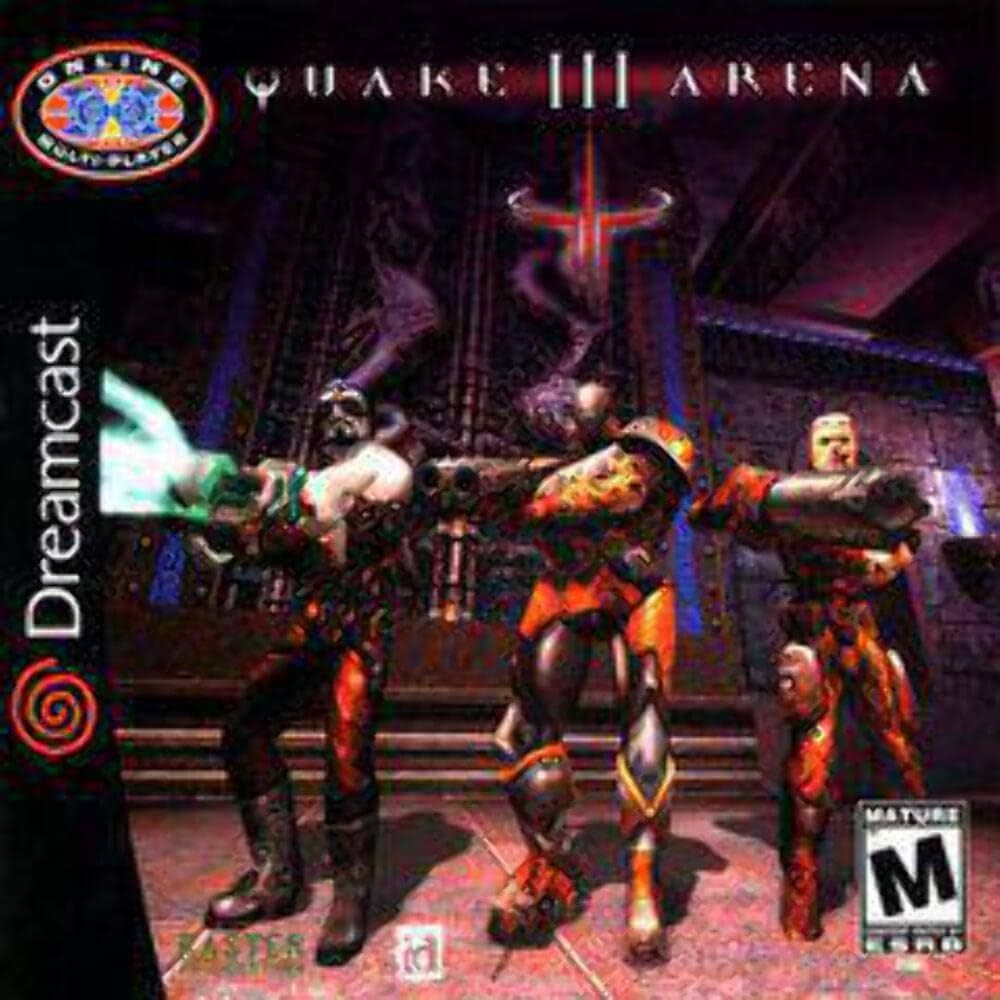
| Developer | id Software |
|---|---|
| Release Date | December 2, 1999 |
| Platforms | PC, Dreamcast, PlayStation 2, Xbox 360 |
| Game Engine | id Tech 3 |
| Primary Modes | Free for All, Team Deathmatch, Tournament (1v1), Capture the Flag |
| Notable Esports Events | QuakeCon, Cyberathlete Professional League, DreamHack, Electronic Sports World Cup |
| Source Code Released | August 19, 2005 (GNU GPL v2.0) |
A Pure Arena Experience
Quake III Arena marked a deliberate shift from its predecessors by eliminating a story-driven single-player campaign. The game's premise is simple, framing combat as a spectacle for an alien audience called the Vadrigar. The single-player mode instead simulates multiplayer by pitting the player against computer-controlled bots of increasing difficulty, culminating in a final battle against the toughest opponent, Xaero. This design philosophy placed uninterrupted competitive gameplay at the forefront.
The game's structure is built around progressing through tiers of maps, with each tier featuring more complex arenas and skilled bot opponents. While deathmatch maps support up to 16 players, the specially designed tournament maps are intended for intense one-on-one duels. In the single-player context, these duels function as boss battles, testing a player's mastery of the game's mechanics against a singular, challenging foe.
Core Gameplay and Mechanics
Quake III Arena offers several core gameplay modes that defined competitive play. Free for All is a classic deathmatch where every player fights for themselves. Team Deathmatch typically pits two teams of four against each other. The Tournament mode is a dedicated one-versus-one duel, often played to a time limit. Capture the Flag requires teams to attack and defend symmetrical bases. The game was built from the ground up for multiplayer, utilizing a client-server model for network play.
Combat is defined by a balanced arsenal where each weapon has a situational advantage, like the long-range railgun or close-quarters lightning gun. The powerful BFG functions as a fast-firing rocket launcher found in hard-to-reach spots. Weapons spawn at set intervals on maps, and players drop their current weapon upon death. Advanced movement techniques like strafe-jumping and rocket-jumping became essential skills for high-level play, allowing for rapid navigation and tactical positioning.
The game also featured an advanced AI system with five difficulty levels to accommodate players of all skill levels, though they were not designed to challenge top competitive players. Each bot had a distinct, often humorous personality, with scripted chat lines written by authors including R. A. Salvatore. The bots could even respond to typed phrases from the player.
The id Tech 3 Engine
The technological heart of Quake III Arena is the id Tech 3 engine. A significant requirement at release was the need for an OpenGL-compliant graphics accelerator, as the game did not include software or Direct3D rendering. This focus on hardware acceleration allowed for the game's crisp, detailed visuals. The engine introduced a sophisticated shader system where surface appearances were defined via text scripts, enabling great visual flexibility for modders.
Key technical innovations included spline-based curved surfaces, support for models with separate torso and leg animations, and features like volumetric fog and mirrors. For networking, id Tech 3 used a snapshot system with delta encoding to efficiently relay game state information. It also employed a virtual machine to run game logic, which allowed for extensive modding without risking crashes to the core game and enabled fully customizable user interfaces.
The engine's code is also famous for containing the Fast Inverse Square Root algorithm, a clever piece of programming used to quickly calculate lighting and vector normalizations. While initially attributed to John Carmack, its origins trace back further in graphics programming history.
Development and Release
Quake III Arena was developed by a core team of nine people over 18 months. An internal hardware vendor copy was leaked in early March 1999, revealing an early but functional version of the engine. id Software later released a public beta called Quake III Arena Test in April 1999. The game officially shipped to retailers on December 2, 1999. John Carmack, id's co-founder, has stated that Quake III Arena is his favorite game he has worked on.
Following the PC release, the game was ported to several consoles. The Dreamcast version, released in October 2000, was notable for enabling cross-platform play between Dreamcast and PC players and is considered one of the best PC-to-console ports of its era. The PlayStation 2 version, titled Quake III Revolution and released in March 2001, featured a more mission-based single-player mode but lacked online play. An Xbox Live Arcade version, Quake Arena Arcade, was released in December 2010.
Esports Legacy and Community
From its inception, Quake III Arena was engineered for competition, and it quickly became a staple of professional esports. It was featured prominently in major tournaments including QuakeCon, the Cyberathlete Professional League, DreamHack, and the Electronic Sports World Cup. The one-versus-one Tournament mode, in particular, became the definitive format for high-stakes duels, highlighting individual skill, map control, and weapon timing.
The game's focus on multiplayer spawned an enduring and active community. The release of the complete engine source code under the GNU General Public License in August 2005 further empowered this community. While the game's art assets remained proprietary, the open-source engine led to the creation of numerous source ports, modifications, and unofficial versions for platforms like iOS, Android, Raspberry Pi, Nintendo 3DS, and even VR headsets.
This active modding scene and the game's precise, skill-based gameplay have allowed Quake III Arena to maintain a dedicated player base long after its release. The community continues to support dedicated servers, develop new content, and keep the competitive spirit of the Arena Eternal alive.
FAQ
Does Quake III Arena have a single-player story mode?
No, Quake III Arena does not have a traditional story campaign. Its single-player mode simulates multiplayer by having the player fight against computer-controlled bots of increasing difficulty across tiers of maps, framed by a simple premise about warriors fighting for an alien audience.
What are the main multiplayer modes in Quake III Arena?
The primary modes are Free for All, where every player competes individually, Team Deathmatch for team-based combat, Tournament for one-versus-one duels, and Capture the Flag, where teams must steal the enemy flag while defending their own.
Why is the Quake III Arena engine famous in programming?
The id Tech 3 engine code is famous for containing the Fast Inverse Square Root algorithm, an ingenious method for quickly calculating reciprocal square roots that was crucial for graphics calculations. The algorithm's efficient hack became well known in programming circles.
Was Quake III Arena released on consoles?
Yes, it was ported to several consoles. The Dreamcast version in 2000 allowed cross-platform play with PC. A PlayStation 2 version called Quake III Revolution released in 2001, and an Xbox Live Arcade version titled Quake Arena Arcade was released in 2010.
Is the source code for Quake III Arena available?
Yes, id Software released the complete source code for the Quake III Arena engine under the GNU General Public License v2.0 on August 19, 2005. This allowed for community development and ports, though the original game's art and sound assets are still required to play.
Source: English Wikipedia (CC BY-SA), rewritten by the Redington Cybersport desk.