Quake Live
Quake Live is a fast-paced first-person arena shooter that revitalized the classic Quake III Arena for a new generation. Originally launched as a free browser-based game, it evolved into a standalone title on Steam, maintaining a dedicated competitive scene for years. Its precise movement, deep weapon mechanics, and variety of game modes made it a staple of esports.
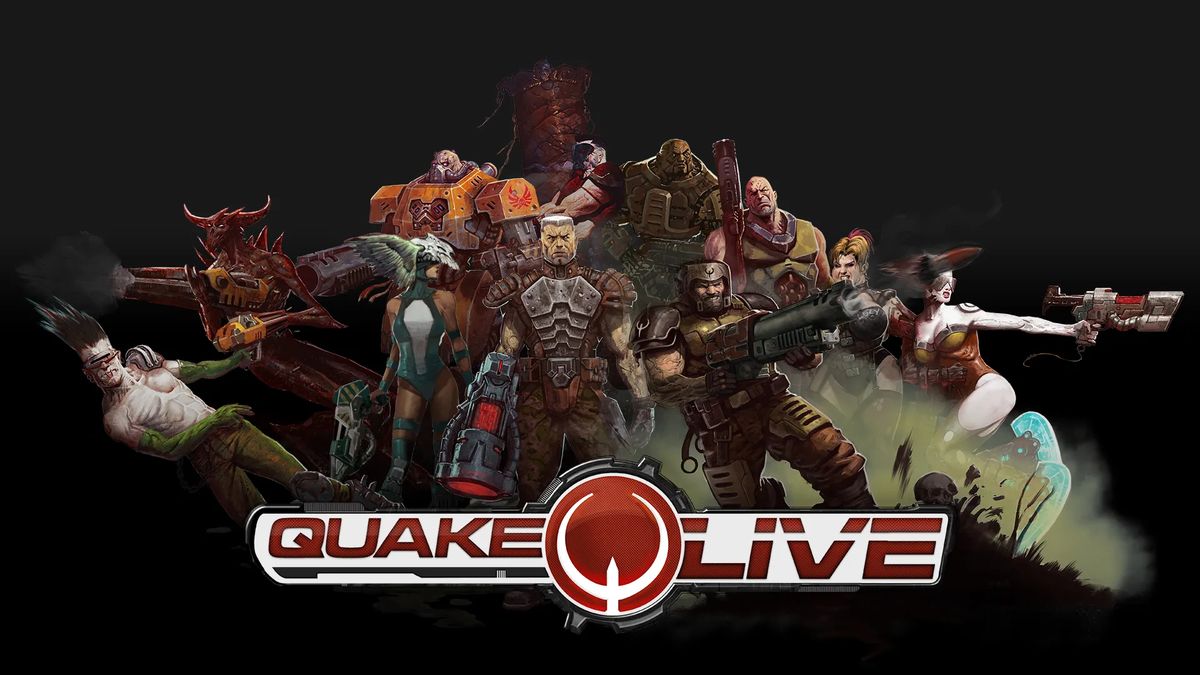
| Developer | id Software |
|---|---|
| Initial Release | 2009 (Open Beta) |
| Platform | PC (Windows) |
| Genre | First-person arena shooter |
| Major Competitive Events | QuakeCon, DreamHack, Electronic Sports World Cup, Intel Extreme Masters |
| Notable Game Modes | Duel, Clan Arena, Capture the Flag, Team Deathmatch, Freeze Tag |
| Steam Release Date | September 17, 2014 |
| Final Major Update | October 28, 2015 |
From Browser Game to Standalone Title
The story of Quake Live began at QuakeCon 2007, where id Software announced a free browser-based version of Quake III Arena initially called Quake Zero. The name was later changed to Quake Live due to a domain squatting issue. After an invitation-only closed beta in late 2008 and early 2009, the game entered open beta on February 24, 2009. This caused a surge in traffic, leading to server queues to manage the load. Within the first six hours, over 113,000 user accounts were created.
Initially, the financial model relied on in-game and website advertisements handled by IGA Worldwide. This model struggled almost immediately, with the agency citing financial difficulties. By QuakeCon 2009, John Carmack stated the advertising had failed to provide sufficient income. In response, id Software planned a premium subscription service, described by Executive Producer Marty Stratton as a central feature of Quake Live for a small monthly fee, likely less than five dollars.
The game left public beta on August 6, 2010, introducing premium and pro subscription options. A major change came in November 2013, as major browsers planned to deprecate the required plugin technology. This forced id Software to phase out the browser version and develop a standalone client, a move that ended support for macOS and Linux. Quake Live re-launched on Steam on September 17, 2014. The final significant shift occurred on October 28, 2015. The game switched to the Steamworks API, reset all user statistics, dropped subscriptions, and became a paid title costing ten dollars.
Core Gameplay and Advanced Techniques
Quake Live gameplay consists of players attempting to achieve more frags than their opponents in a given match. This is done by moving through a 3D environment and shooting other players with a variety of weapons, while collecting health, armor, weapons, ammo, and power-ups. As players advance, they master essential tricks and techniques such as rocket jumping and strafe jumping to move with great speed and reach strategic positions.
The game's skill-based matchmaking was originally powered by a metagame engine developed by GaimTheory. After that company's closure, id Software took over development of the match-making system. This system was crucial for creating balanced matches. The importance of movement is highlighted in the Race game mode, which uses PQL physics, allowing the player to move faster than in standard modes and compete to reach points on the map as quickly as possible.
A Comprehensive Suite of Game Modes
Quake Live offered an extensive list of game modes to suit different preferences. The premier competitive format is Duel, a one-versus-one combat where the player with the most frags when time expires wins. For team play, Team Deathmatch follows similar free-for-all rules but with two opposing teams. Capture the Flag requires a team to take the enemy flag to their own base while defending their own, with variants like 1-flag CTF, where teams fight for a single central flag, and InstaCTF, which uses railgun-only Instagib rules.
Clan Arena is a team-based mode where everyone starts with full armor and weapons. When fragged, a player must wait for the next round, and there is no health penalty for rocket jumping. Freeze Tag combines elements of clan arena and team deathmatch, where fragged players are frozen and can be thawed by teammates. Eliminating or freezing the entire enemy team wins the round. InstaFreeze applies the Instagib railgun rules to this format.
Other modes include Harvester, where skulls dropped by fragged players must be carried to the enemy flag stand. Domination involves capturing points on the map. Attack and Defend has teams alternating rounds attacking or defending a flag. Red Rover creates continuous play where fragged players immediately respawn on the opposing team, and the game ends when one team has no players left.
Map Design and Content Philosophy
The maps in Quake Live form a bridge between classic and new content. A large number are based heavily on originals from Quake III Arena, its Team Arena expansion, and popular user-made maps from that era. The developers also included maps from previous Quake titles, such as The Edge, which is almost identical to the famous Quake II map Q2DM1.
During the QuakeCon 2008 keynote, John Carmack stated the game had no plans to allow user-made modifications. Instead, id Software hired successful Quake III mod authors to contribute to the official project. This curated approach ensured a balanced and consistent experience directly through the game's service. The August 2014 update, the game's biggest since its 2010 launch, focused on helping new players integrate, with changes to the spawn system, movement, and item control. It added features like loadouts in certain game types, a continuous bunny hop mode, and a new Heavy Machine Gun weapon.
The Competitive Scene and Tournament History
Being largely similar to Quake III Arena, a game prominent in professional electronic sports, Quake Live was included in many tournaments worldwide. Its competitive scene featured events from major organizers. The Electronic Sports World Cup held a Quake Live event in NA. The Intel Extreme Masters included it from 2010 to 2011. DreamHack ran tournaments from 2011 to 2013. Other notable organizers were Asus, The Gathering, Zotac, and FaceIt, which started in 2012. The community league 125fps also began running events in 2013.
The annual QuakeCon festival was the centerpiece of Quake Live competition, hosting events from 2008 through 2016. However, in recent years, the game experienced a decline in the number of tournaments due to waning popularity. QuakeCon remained the last major event holding Quake Live competitions. The game's competitive formats, especially Duel and Clan Arena, tested individual skill, strategic item control, and mastery of movement mechanics that defined the arena shooter genre.
Reception and Business Model Evolution
Quake Live received positive critical reception, with PC Gamer giving it a score of 8.8 out of 10. The publication commented that Quake Live may be a ten-year-old shooter, but it's still a rush. The game's journey through different business models reflects the challenges of sustaining an online title. It started with an advertising-funded free-to-play vision, which proved insufficient. This led to the introduction of a subscription service in 2010, offering additional arenas, game types, and server options.
The final business model shift in 2015 removed the free-to-play option and all subscriptions, making the game a one-time purchase on Steam. The October 2015 update was described as an accumulation of a year of code updates, optimizations, and over 4,500 map fixes. This transition to Steamworks provided tighter integration with Steam's ecosystem but came at the cost of resetting all user statistics, marking a definitive new chapter in the game's long history.
FAQ
Is Quake Live still free to play?
No, Quake Live is no longer free to play. After a major update on October 28, 2015, the game transitioned to a paid model on Steam, costing ten dollars. All premium subscription options were removed at that time.
What is the main competitive game mode in Quake Live?
The premier competitive mode is Duel, a one-versus-one format where players compete to get the most frags before time expires. It emphasizes map control, item timing, and precise movement above all else.
What is Instagib mode?
Instagib is a game mode where all players start with only a railgun, which kills in one shot. There are no health, armor, or weapon pickups on the map. It is available in free-for-all, team deathmatch, and capture the flag variants, and matches on these servers are unranked.
When did Quake Live move from a browser to Steam?
Quake Live began phasing out its browser version in late 2013 due to changes in web technology. It was re-launched as a standalone title on the Steam platform on September 17, 2014.
What major tournaments featured Quake Live?
Quake Live was featured in many major esports tournaments, including QuakeCon, the Electronic Sports World Cup, Intel Extreme Masters, DreamHack, and events by FaceIt and Zotac. QuakeCon was the last major event to hold competitions for the game.
Source: English Wikipedia (CC BY-SA), rewritten by the Redington Cybersport desk.