Warcraft III: The Frozen Throne
Warcraft III: The Frozen Throne is the expansion pack to Blizzard Entertainment's real-time strategy game, Warcraft III: Reign of Chaos. Released in 2003, it expanded the game's universe, story, and competitive multiplayer systems, confirming its place as a foundational title in the history of esports.
| Developer | Blizzard Entertainment |
|---|---|
| Release Date | July 1, 2003 |
| Platforms | Microsoft Windows, Mac OS X |
| Genre | Real-time strategy |
| Expansion to | Warcraft III: Reign of Chaos |
| Multiplayer | Battle.net with clans, tournaments |
| New Multiplayer Maps | 62 |
| New Campaigns | Night Elf, Blood Elf, Undead, Horde |
Gameplay Evolution and New Features
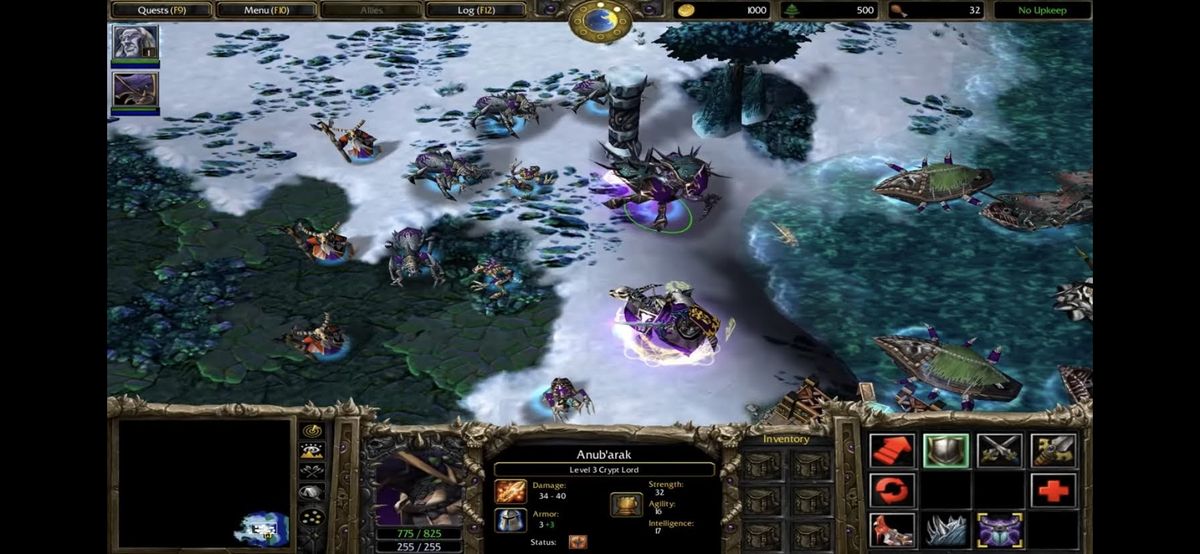
The Frozen Throne refined the core real-time strategy mechanics of its predecessor rather than overhauling them. Key balance changes included a slightly increased food limit for larger armies, reduced building costs for a faster start, and a complete revamp of the weapon and armor type system. To discourage early-game hero rushes, new defensive structures were added. The expansion also reintroduced naval combat, absent from Reign of Chaos, and added runes dropped by defeated enemies to replenish hero health and mana.
Each of the four main factions received new units, buildings, and a new hero. A player-controlled shop was added for every race, and normal units could be upgraded to carry items. The expansion introduced two auxiliary races. The Naga, with their own full suite of buildings and units, are playable in certain campaign missions and appear as enemies in others. The Draenei, classified as neutral creeps, feature only in a single campaign.
Five neutral heroes were added, hireable from a Tavern building in multiplayer matches. The Tavern also allowed for the instant revival of fallen heroes at an increased cost, with the revived hero returning with reduced health and mana. For single-player, computer opponents could now be set to different difficulty levels on custom maps. The expansion also increased the maximum number of players in a game to twelve.
Campaigns and Story Structure
The expansion's narrative is told through four distinct campaigns. The three interconnected main campaigns follow the Night Elf warden Maiev Shadowsong hunting the renegade Illidan, the Blood Elf prince Kael'thas Sunstrider's fraught alliance with humans and subsequent service to Illidan, and the Undead Arthas's race to defend the Lich King from Illidan's assault. These stories culminate in Arthas becoming the new Lich King and the banshee Sylvanas Windrunner founding the Forsaken.
Blizzard moved away from traditional base-building in these campaigns, creating more varied, hero-centric missions with RPG elements. Heroes could level past the normal limit of ten, and objectives ranged from controlling multiple armies to surviving with a limited force. Notably, the orcs were excluded from the main storyline as developers could not find a plausible narrative reason to include them. The Horde campaign contains almost 40 items created specifically for it.
Separate from this epic, the Horde campaign is a standalone story using more pronounced RPG mechanics. It follows the beastmaster Rexxar as he helps Warchief Thrall defend the new Horde kingdom of Durotar from a human invasion led by Admiral Proudmoore. This campaign was released in chapters, with only Act I available at launch and Acts II and III added via a patch in December 2003. The combined campaigns add approximately 40 hours of new gameplay.
Multiplayer and Competitive Systems
The Frozen Throne enhanced Warcraft III's competitive and social multiplayer framework through Battle.net. The addition of clans and automated tournaments, the latter featuring a strict 30-minute time limit, provided structure for the competitive scene. Players could also chat while waiting for a game, a feature absent from the original.
The expansion shipped with 62 new multiplayer maps and custom scenarios, supporting up to twelve players. A quality-of-life improvement allowed players to view and transfer the resources of an ally who left a game. These features, combined with the refined game balance and new unit options, created a deep and dynamic competitive environment that sustained a professional scene for years. The automated tournament system, in particular, offered a structured ladder for players to test their skills.
World Editor and Custom Game Scene
Included with the expansion was a significantly improved World Editor, a tool for creating custom maps and scenarios. It offered more functions for editing skills and triggers, new units, additional global map settings, and three new tile-sets. A powerful new feature allowed creators to link multiple maps together so events on one could affect another.
Blizzard designed the Horde campaign with the goal of illustrating what the new World Editor was capable of. While the company did not offer official support, the enhanced tools and better documentation empowered a massive community of creators. This led to an explosion of custom games, many of which became phenomena in their own right and laid the groundwork for entire new genres, most famously exemplified by the Defense of the Ancients (DotA) mod. The editor allowed for deep customization of skills and the creation of entirely new game modes.
Development and Post-Launch Support
Development for The Frozen Throne began in October 2002, shortly after the launch of Reign of Chaos. Officially announced on January 22, 2003, the project was guided by the high expectations set by the successful StarCraft: Brood War expansion. Balancing was a primary focus, with new units and spells designed to address weaknesses identified in how players used each race. For instance, Orcs received a low-level healing method, and Humans gained a unit that could disable enemy towers from the air.
Blizzard conducted two public beta tests in early 2003, each inviting 10,000 players. The company also executed an elaborate April Fools' Day prank, presenting the Pandaren as a full new faction, though the race ultimately appeared only as a neutral hero, the Pandaren Brewmaster, unlockable in a secret mission. The game went gold on May 29, 2003, and was released in North America on July 1, Australia on July 3, and Europe on July 4, 2003.
Support continued well after launch through patches that fixed issues and added content. This included the release of the final Horde campaign chapters and the addition of three more neutral heroes in 2004, one in May and two in August. By August 15, 2003, the expansion had sold over one million copies. Blizzard also added support for newer hardware in subsequent updates.
Critical Reception and Legacy
The Frozen Throne received generally favorable reviews from critics upon release. Reviewers frequently praised the mission design of the single-player campaign for deviating from standard real-time strategy formulas, offering more varied objectives and hero-focused gameplay. The design and audio of the new units were also positively received.
Some critics noted that the graphics showed their age and criticized certain aspects of the voice acting. Despite these minor criticisms, the expansion was a commercial success, surpassing one million copies sold within six weeks of release. Its lasting impact is most evident in the competitive scene it nurtured and the creative modding community it enabled through the World Editor, influences that extended far beyond the original game's lifespan.
FAQ
What is Warcraft III: The Frozen Throne?
It is the expansion pack for Blizzard Entertainment's real-time strategy game Warcraft III: Reign of Chaos. Released in 2003, it adds new campaigns, units, heroes, and multiplayer features to the base game.
What new factions or races were added?
The expansion introduces the Naga as a fully realized auxiliary race with its own units and buildings, playable in parts of the campaign. The Draenei appear as neutral creeps in one campaign. The Pandaren Brewmaster was added as a neutral hero.
What are the main campaigns about?
The three main campaigns follow Maiev Shadowsong's hunt for Illidan, Kael'thas Sunstrider's struggle with the Alliance, and Arthas's mission to save the Lich King. A separate Horde campaign tells the story of Rexxar defending the new Horde kingdom of Durotar.
What features were added for multiplayer?
Key multiplayer additions included clan support, automated tournaments with time limits, 62 new maps, and the ability to chat while waiting for a game. It also added a Tavern to hire neutral heroes and a system to manage resources if an ally leaves.
What was the World Editor?
It was a powerful map-making tool included with the game. The improved version in The Frozen Throne allowed creators to design custom scenarios, link maps together, and modify skills and triggers, fueling a massive community of custom games.
Source: English Wikipedia (CC BY-SA), rewritten by the Redington Cybersport desk.