StarCraft: Brood War
StarCraft: Brood War is the expansion pack for Blizzard Entertainment's real-time strategy game StarCraft. Released in late 1998, it enriched the original with new units, campaigns, and story, confirming its place as one of the most influential and enduring titles in competitive gaming history.
| Developer | Saffire, Blizzard Entertainment |
|---|---|
| Release Date | December 18, 1998 (Windows) |
| Platform | Microsoft Windows, Mac OS |
| Genre | Real-time strategy |
| Expansion For | StarCraft |
| Free Release | April 19, 2017 |
| Remastered Edition | August 14, 2017 |
| Copies Sold (as of 2007) | Almost 10 million (combined with StarCraft) |
Gameplay Evolution and Balance
Brood War builds upon the foundational mechanics of StarCraft, where three distinct species, the psionic Protoss, the adaptable Terrans, and the insectoid Zerg, compete for dominance through resource collection, base construction, and military conquest. The expansion's core gameplay remains fundamentally the same but is refined through small alterations to unit costs and abilities. These precise changes were designed to make rushing tactics, a strategy that received criticism in the original game, less practical and to encourage more considered, strategic play across all matchups.
The expansion introduces seven new units that significantly altered strategic depth. Each race received its own ground unit: the Zerg gained a defensive unit capable of attacking from the concealment of its burrow, the Terrans could train combat medics for healing, and the Protoss were given full access to the powerful cloaked dark templar, a melee unit previously only available in special missions. Furthermore, two dark templar could be merged to create a special spellcaster unit. Each race also gained a dedicated air-to-air attack unit, expanding the tactical options for controlling the skies and responding to enemy air forces.
For solo players, the campaign presented a marked increase in difficulty. Missions departed from a linear structure, requiring players to make strategic decisions about which objectives to pursue. The artificial intelligence was augmented, making computer opponents more intelligent and effective in their use of tactics, which demanded a greater focus on strategy to complete missions successfully.
Narrative Structure and Plot
The story of Brood War is presented through its instruction manual, mission briefings, in-game conversations, and cinematic cut scenes at the end of each campaign. Set in the early 26th century in the Koprulu Sector, the plot begins two days after the conclusion of StarCraft, following the death of the Zerg Overmind on the Protoss homeworld Aiur. The game is split into three new episodes, each centering on one of the races and their anonymous commander.
In the Protoss episode, the player, as an Executor, works with Aldaris, Zeratul, and Praetor Artanis to evacuate survivors from Aiur to the dark templar homeworld Shakuras. They ally with the infested Terran Sarah Kerrigan to retrieve two crystals needed to activate a Xel'Naga temple that can purge the Zerg. This alliance leads to an uprising by Aldaris against the dark templar leadership, which is crushed. Kerrigan reveals her goal is to eliminate rival Zerg cerebrates to seize control of the Swarm before departing. Despite knowing it aids her, the Protoss activate the temple, cleansing Shakuras of Zerg.
The Terran episode casts the player as a captain in the United Earth Directorate expeditionary force, reporting to Admiral Gerard DuGalle. Assisted by the mysterious agent Samir Duran, the UED aims to overthrow the Terran Dominion. The campaign involves the discovery and political intrigue around a psi disrupter device on Tarsonis, the capture of the Dominion throne world, and the tracking of fugitives to Aiur. Vice-Admiral Alexei Stukov uncovers Duran's betrayal, leading to Stukov's death at the player's hands. Using the psi disrupter, the UED assaults Char and takes control of the new Zerg Overmind.
The final Zerg episode has the player as a cerebrate serving Sarah Kerrigan. To break the UED's control, Kerrigan forms a temporary alliance with Jim Raynor, Protoss praetor Fenix, and Arcturus Mengsk. After destroying the psi disrupter and breaking the UED hold on Korhal, Kerrigan betrays her allies, killing Fenix and Edmund Duke. She then blackmails Zeratul into killing the UED-controlled Overmind on Char, bringing all Zerg under her command. The story concludes with Kerrigan defeating a combined assault by the Dominion, the UED, and a Protoss fleet, emerging as the dominant power in the sector, while Admiral DuGalle commits suicide.
Development Process and Challenges
Development on Brood War began shortly after the release of StarCraft in 1998 and was announced after the release of two other authorized expansions, Insurrection and Retribution. Most of the original Blizzard team returned, with support from Saffire for programming, level design, and audio effects. Producer Shane Dabiri stated the team aimed to drastically increase the story's role in gameplay, adding scripting for complex in-mission events akin to Final Fantasy and designing objectives that offered players tactical decisions beyond simple annihilation.
The project faced significant challenges in its final months. In the summer of 1998, leads James Phinney and Jesse McReynolds resigned to start Fugitive Studios, citing frustration with management. This occurred amid an accounting scandal at Blizzard's parent company, Cendant, creating a crunch culture environment to finish the game. Fugitive Studios dissolved the following year, and many staff rejoined Blizzard. The release was delayed from an original October 1998 target, finally launching in the US on December 18, 1998.
Following release, Blizzard provided an exemplar campaign titled Enslavers: Dark Vengeance, which followed a rogue dark templar named Ulrezaj. This campaign was made available for separate download from Battle.net to illustrate the methods of creating custom content for the expansion.
Critical and Commercial Reception
StarCraft: Brood War was met with widespread critical acclaim. PC Zone gave it a flattering review, describing it as having definitely been worth the wait. The magazine praised the new units and balancing tweaks for transforming StarCraft from an okay game into something outstanding, and noted the cinematic cut scenes felt like part of the story rather than an afterthought.
IGN called it a carefully designed expansion with a surfeit of new features. While praising the compelling plot and describing the extended multiplayer as one of the best features, the review expressed concern over the game's significantly higher difficulty, noting players would barely have time to learn new units before facing intense enemy attacks. GameSpot's review was also positive, stating the design contained all the care, detail, and ingenuity of a full sequel that completely revitalized the original. The reviewer highlighted the seemingly minor but terribly significant balance modifications, calling the results outstanding.
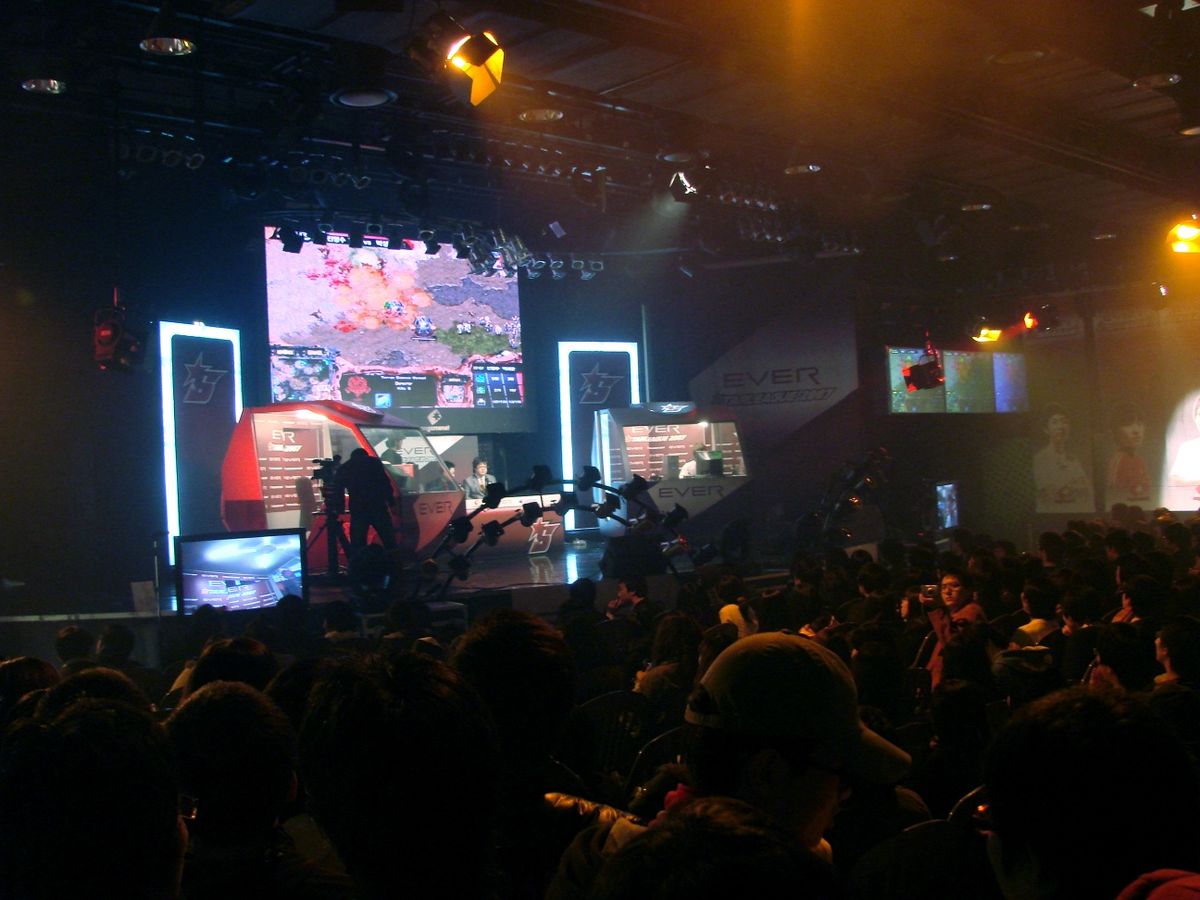
Commercially, the game was a major success. As of May 31, 2007, StarCraft and Brood War had sold almost ten million copies combined. Its popularity was especially pronounced in South Korea, where professional players and teams participated in matches, earned sponsorships, and competed in televised events, creating a lasting professional scene.
Lasting Impact and Modern Availability
The expansion's precise balance and added strategic depth were instrumental in establishing StarCraft as a premier title for professional competition. Its role in organized play, particularly in South Korea, is a defining part of its history. The game maintained an active and dedicated competitive community for decades, with players and teams operating at the highest level.
Blizzard actively supported the game's longevity. On April 19, 2017, StarCraft and its Brood War expansion, packaged as the Anthology, were made free to download and play from Blizzard's website. This was followed by the release of StarCraft: Remastered on August 14, 2017. This remastered edition updated the original game and expansion with high-definition visuals and modern online features while meticulously preserving the original gameplay balance that made it a competitive standard.
FAQ
When was StarCraft: Brood War released?
Brood War was first released in the United States on December 18, 1998, for Microsoft Windows. The Mac OS version followed in June 1999.
What new units were added in Brood War?
The expansion added seven new units. Each race received its own ground unit, the Zerg a burrowed defender, the Terrans a combat medic, and the Protoss the dark templar. Each race also gained a dedicated air-to-air attack unit.
Is StarCraft: Brood War free to play?
Yes. As of April 19, 2017, StarCraft and its Brood War expansion, collectively called the Anthology, are available to download and play for free from Blizzard's website.
What is the story of Brood War?
The story continues from StarCraft, split into three campaigns. It follows the Protoss evacuation from Aiur, the United Earth Directorate's invasion of the sector, and Sarah Kerrigan's ruthless rise to power as she manipulates and betrays all other factions to control the Zerg Swarm.
What is StarCraft: Remastered?
Released on August 14, 2017, StarCraft: Remastered is a visually upgraded version of the original StarCraft and its Brood War expansion. It features high-definition graphics and modern online support while maintaining the original gameplay balance.
Source: English Wikipedia (CC BY-SA), rewritten by the Redington Cybersport desk.