Pro Evolution Soccer 2012
Pro Evolution Soccer 2012 (PES 2012) is the eleventh installment in Konami's long-running football simulation series. Released in late 2011, it marked a year of refinement in gameplay and AI, while continuing to host major licensed tournaments like the UEFA Champions League.
| Developer | Konami |
|---|---|
| Publisher | Konami |
| Release | October 14, 2011 (EU), October 6, 2011 (JP) |
| Platforms | PlayStation 3, Xbox 360, Microsoft Windows, PlayStation 2, PlayStation Portable, Wii, Nintendo 3DS, iOS |
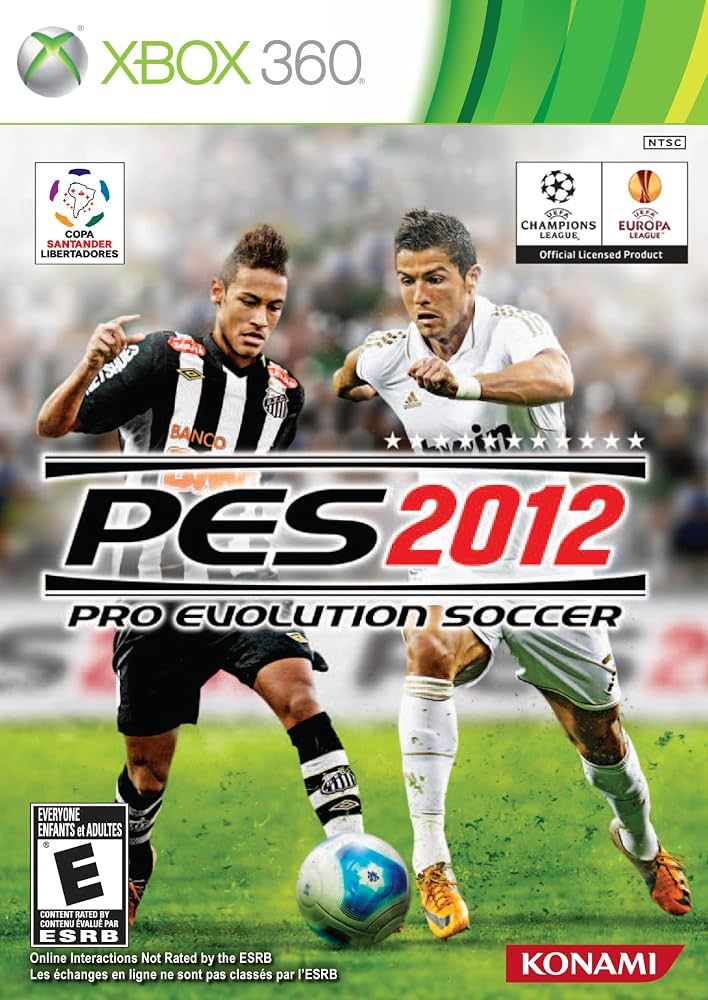
| Cover Athletes | Cristiano Ronaldo, Neymar, Shinji Kagawa |
| Major Licenses | UEFA Champions League, UEFA Europa League, UEFA Super Cup, Copa Santander Libertadores |
| Online Services Ended | January 28, 2013 |
| Successor | Pro Evolution Soccer 2013 |
Release and Cover Star Shift
Pro Evolution Soccer 2012 launched across a wide array of platforms in the autumn of 2011. The European release date was October 14, with the Japanese version arriving a week earlier on October 6. Versions for PlayStation 2, PlayStation Portable, and Wii followed later that October and November. The game also saw releases on Nintendo 3DS and iOS. Konami confirmed these dates at Gamescom 2011, with firm dates for the 3DS and iOS versions to be announced later.
The cover art signaled a significant shift, with Cristiano Ronaldo returning as the global cover star. This ended Lionel Messi's run as the face of the series since Pro Evolution Soccer 2009. The Japanese release featured Borussia Dortmund's Shinji Kagawa, while the North and Latin American cover paired Cristiano Ronaldo with the emerging Santos star Neymar. In Asia, the game was marketed under its traditional alternate title, World Soccer: Winning Eleven 2012.
Licensing and Authenticity
Konami secured significant licenses to bolster the game's authenticity and provide official structure for its modes. It held exclusive rights to the UEFA club competitions, fully integrating the UEFA Champions League, UEFA Europa League, and UEFA Super Cup. For the first time in the series, referees officiating these virtual matches wore the official UEFA Champions League uniforms, adding a layer of visual accuracy.
A separate license from CONMEBOL brought the Copa Santander Libertadores to the game. The Portuguese Primeira Liga was also included for the first time in the series, though only three of its teams were fully licensed. These official competitions were integrated into a new overarching menu structure called Football Life.
Gameplay Refinements and AI
PES 2012 was built as a direct refinement of PES 2011, with improvements targeting artificial intelligence, speed, animation, and physics. The most notable new feature was the Teammate Control system. This allowed players to take direct control of a secondary player, either during open play or at set pieces, to make precise runs or lose markers before calling for a pass. The system offered both manual and assisted versions to cater to different skill levels and desired control.
Artificial intelligence received a major overhaul on both sides of the ball. Defending AI was programmed to play more thoughtfully, moving beyond simple, constant pressure to smarter positional play. Attacking teammates were coded to make more intelligent off-the-ball movement decisions, creating better passing options. The game's physics were adjusted to address a known issue called the catch-up bug, where defenders could unrealistically catch faster dribbling attackers regardless of their speed stat.
Further refinements made gameplay more fluid, with better response times when controlling the ball. Goalkeepers were enhanced with new animations, leading to generally more reliable performances. The refereeing system was improved with a full implementation of the advantage rule, where the referee would allow play to continue after a foul and only pull it back for a booking once the ball went out of play.
Game Modes and Structural Content
The licensed tournaments were housed within the new Football Life mode. This central hub contained the long-standing Master League and Become a Legend career modes, and introduced a new Club Boss mode. Football Life also included a Master League Online mode for competitive league management. However, a popular feature from previous years, 2v2 Ranked Matches, was removed from the Xbox 360 version due to internal decisions by Konami.
Beyond the licensed content, the game featured two fully editable fictional leagues, the PES League and D2 League, each with 18 empty teams that players could completely customize with kits, players, and emblems. All teams in these leagues were entirely fictional. The game shipped with 30 stadiums in total, comprising 17 licensed venues, 12 unlicensed ones based on real grounds, and one that was entirely fictional. A Stadium Editor tool allowed players to create and add their own venues to the selection.
The PlayStation Portable version was a notably stripped-back experience. It excluded the UEFA Europa League, the UEFA Super Cup, and the entire PES and D2 League structures available on other platforms.
Critical Reception and Competitive Context
PES 2012 received a mixed to positive reception from critics, with aggregate scores varying significantly by platform. The PlayStation 3 version held the highest Metacritic score of 80 out of 100. The Xbox 360 version averaged 78, the PC version 77, and the Wii version 79. Handheld and mobile versions scored lower, with the PSP at 74, the 3DS at 73, and the iOS version at 61 on Metacritic.
Reviewers often framed PES 2012 as the underdog against EA's FIFA 12, which launched in late September. Digital Spy awarded the PS3 version four out of five stars, calling it a satisfying, unpredictable and utterly enjoyable game of virtual football once the match began. The Guardian noted that while FIFA 12 was the more complete football experience, PES 2012 could still deliver fun in short, hectic doses, awarding it three stars. Other reviews, like one from 411Mania which scored it 6.5 out of 10, acknowledged it was a fun game that kept pace with competitors but was held back by lingering flaws that needed fixing. The Daily Telegraph pointed to the improved AI and excellent online modes as a solid basis for the series' rebuild, but expressed concern over weird physics and a lack of weight in player movement.
Legacy, Online Shutdown, and Esports Footprint
Online services for PES 2012 were discontinued on January 28, 2013, as Konami shifted its focus and resources to support newer titles in the series. The game was succeeded by Pro Evolution Soccer 2013 later that year. While PES 2012 itself was not specifically highlighted as a major standalone esports title, it existed within the competitive ecosystem Konami had been building for its football series. The company has run an annual esports league for the Pro Evolution Soccer franchise since 2010, originally named the PES League or PES World Finals and later rebranded as eFootball.Open.
The game remains a nostalgic point of reference for fans, remembered for its step forward in teammate AI and control, the introduction of the Club Boss mode, and its distinctive presentation of the 2011/12 football season with its specific roster of cover stars. Its release period was characterized by the intense and public rivalry with the FIFA series, a competition that pushed both franchises to innovate on features like AI and physics during that era.
FAQ
When was Pro Evolution Soccer 2012 released?
PES 2012 was released in Europe on October 14, 2011, and in Japan on October 6,我们发现 2011. Versions for PlayStation 2 and PSP followed on October 28, and the Wii version on November 4, 2011. Releases for Nintendo 3DS and iOS were also confirmed.
Who was on the cover of PES 2012?
Cristiano Ronaldo was the main global cover star, replacing Lionel Messi. The Japanese release featured Shinji Kagawa of Borussia Dortmund, and the US and Latin American cover featured Cristiano Ronaldo and Brazilian star Neymar of Santos.
What was the new Teammate Control feature?
The Teammate Control system allowed players to take direct control of a secondary player on their team to make specific runs or position themselves, before calling for and receiving a pass. It could be used during open play or set pieces and had both manual and assisted settings for different difficulty levels.
What major football competitions were licensed in PES 2012?
The game featured fully licensed versions of the UEFA Champions League, UEFA Europa League, UEFA Super Cup, and the Copa Santander Libertadores. It also included the Portuguese Primeira Liga for the first time, with three licensed teams.
When did online services for PES 2012 end?
Konami shut down all online services for Pro Evolution Soccer 2012 on January 28, 2013, to focus resources on supporting and promoting newer games in the series like the upcoming Pro Evolution Soccer 2013.
Source: English Wikipedia (CC BY-SA), rewritten by the Redington Cybersport desk.