Pro Evolution Soccer 2011
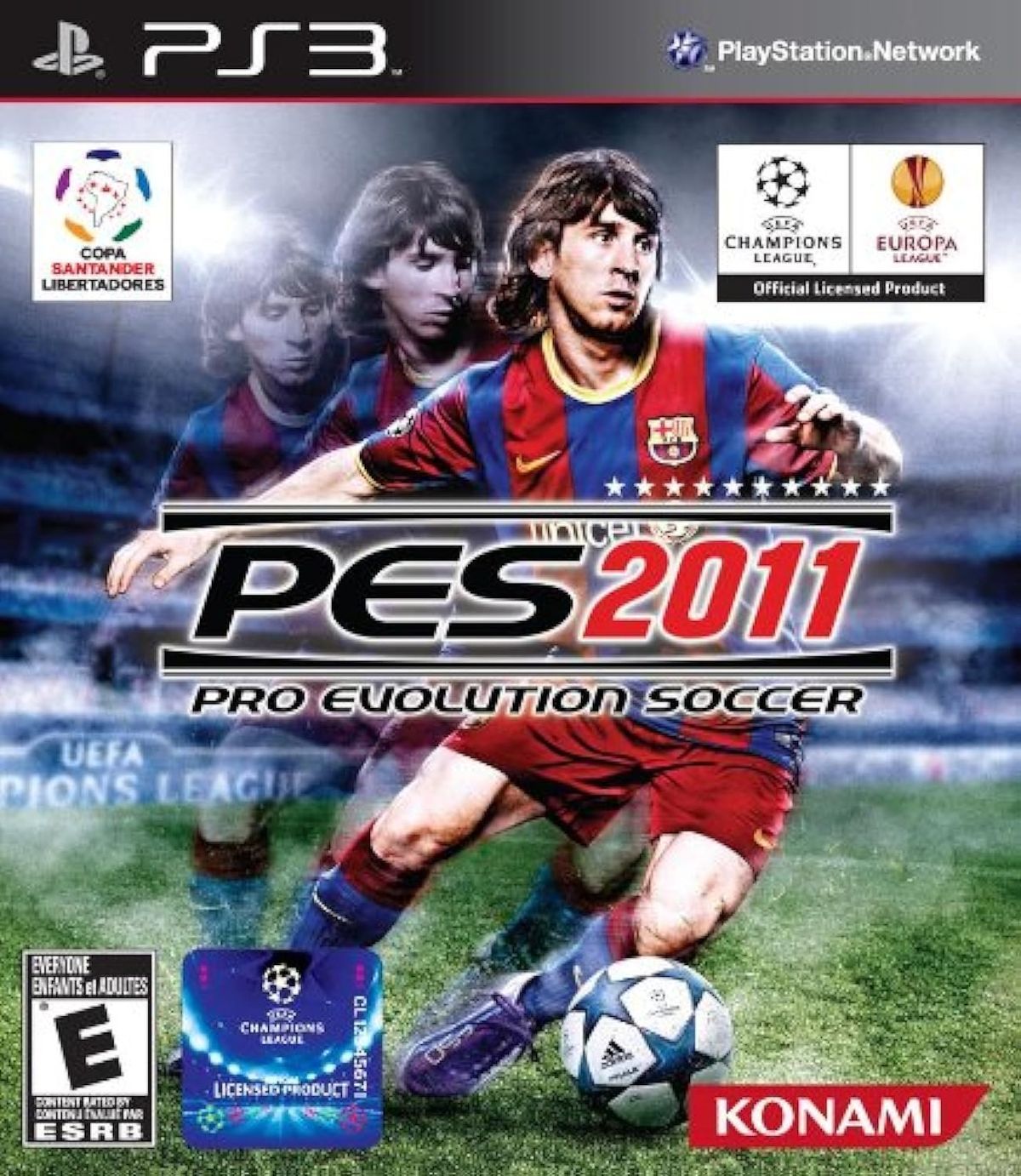
Pro Evolution Soccer 2011 was a major football simulation game released by Konami in 2010. It marked a significant step for the series by introducing fully licensed tournaments like the Copa Libertadores and expanding its online Master League. The game is remembered for its deep tactical gameplay and as the last in the series to feature Lionel Messi on its cover.
| Developer | Konami |
|---|---|
| Publisher | Konami |
| Release | 2010–2011 |
| Platforms | PC, PS3, Xbox 360, PS2, PSP, Wii, iOS |
| Cover Athlete | Lionel Messi |
| Licensed Tournaments | UEFA Champions League, UEFA Europa League, UEFA Super Cup, Copa Libertadores |
| Number of National Teams | 79 |
| Online Services Shut Down | November 30, 2013 |
| Successor | Pro Evolution Soccer 2012 |
Gameplay and Core Features
Pro Evolution Soccer 2011 built its identity on a more strategic and deliberate style of play compared to its rivals. The game emphasized passing and player movement, requiring users to think more carefully about build-up play. This focus on simulation was complemented by a wealth of licensed content, a key area of improvement for the series.
Konami secured exclusive deals with UEFA and CONMEBOL, bringing the UEFA Champions League and UEFA Europa League into the game with full authenticity. For the first time, the UEFA Super Cup and the prestigious South American club tournament, the Copa Libertadores, were also fully integrated. These tournaments were available within the Master League mode and its online counterpart. However, the UEFA Super Cup and Europa League were only featured on the PC, PlayStation 3, and Xbox 360 versions.
The game included 79 national teams. It also retained the popular editable league structure, featuring two separate leagues with 18 completely fictional teams each, known as the PES League and D2 League. This framework allowed the community to create custom leagues, most notably patches to add the unlicensed Bundesliga. The Copa Libertadores teams, while fully licensed, could not be selected for use in other game modes outside of their dedicated tournament.
Development and Announcement
The game was officially announced on February 9, 2010. Konami released the first trailer on May 4, 2010, followed by an E3 trailer in June that presented new gameplay features. The marketing prominently featured Argentine superstar Lionel Messi as the cover athlete, marking his return to the role and what would become his final appearance on a PES cover.
A significant change for the English-language version was the commentary team. ITV pundit Jim Beglin was implemented as the new co-commentator alongside series regular Jon Champion. A playable demo was released in September 2010 for PC and PS3. This demo allowed for ten-minute matches with four selectable teams: FC Barcelona, Bayern Munich, and the Copa Libertadores pair of Chivas de Guadalajara and SC Internacional. Each match in the demo was followed by a video presentation detailing the full game's content ahead of its UK launch on October 8, 2010.
Post-Launch Support and Detailed Updates
Konami supported Pro Evolution Soccer 2011 with a series of substantial updates that adjusted gameplay, fixed issues, and refreshed content. The first update arrived on September 30, 2010, adding three new features to the Online mode: Legends, Community, and Competition.
Datapack 1.01, released on October 12, 2010, included updates to the England national team kits and various team rosters. It added clubs that qualified for the Champions League Group Stages to the dedicated mode and updated several team kits. Four new licensed boots were also incorporated. This update initially contained an error where the Belgium national team's kit was mistakenly changed to that of Dutch club De Graafschap, a mistake Konami corrected with another update on October 15.
Version 1.02, launched on November 24, 2010, was a major gameplay patch. It adjusted defender AI to allow for more consistent pressing and made a series of alterations based on user feedback. Specific improvements included better AI pressure during crossing situations, enhanced cursor switching especially during crosses, and a reworked difficulty for performing Rainbow Flicks, making them more challenging. It also reworked Master League transfer fees, allowed players to turn off name tags above CPU players, tweaked shooting mechanics, and refined or changed crowd chants.
Version 1.03, released on December 21, 2010, consolidated fixes from all previous corrective patches and improved Online Mode connectivity by changing the disconnection process. Also released that day was Datapack 2.00, which added new items including 12 updated kits for teams like the Republic of Ireland, Belgium, one Dutch club, and about ten French clubs, plus 10 new boot models from brands like Mizuno.
The final major content update, Datapack 7.00, arrived on March 15, 2011. It updated winter transfers for 135 club teams up to the end of the January transfer window, updated kits for three national teams (Belgium, Spain, and Sweden), and added 10 new boots from Adidas, Nike, Puma, and Umbro. All online services and downloadable content were eventually shut down on November 30, 2013.
Critical Reception and Scores
Pro Evolution Soccer 2011 was met with positive to average reception from critics. Aggregate review scores varied by platform. On GameRankings and Metacritic, the PlayStation 2 version scored 80 out of 100. The PC version scored 78.50% and 79 out of 100. The PlayStation 3 version received 77.87% and 77 out of 100, while the Xbox 360 version got 77.28% and 79 out of 100. The Wii version scored 76.33% and 78 out of 100, the PSP version 75.67% and 74 out of 100, and the iOS version 70% and 76 out of 100.
Reviewers praised the game as a return to form. 411Mania gave the Xbox 360 version an 8.1 out of 10, calling it a massive improvement over recent series entries and a glimpse of the capabilities that made the brand famous. The Escapist awarded four out of five stars, stating it was much better to play on the pitch than its chief competitor, though limited licenses and an unimpressive menu held it back. The Daily Telegraph also gave it an 8 out of 10, describing it as a daft, charming, and idiosyncratic video game approximation of football.
Some criticism remained. The Guardian gave it three out of five stars, acknowledging much better access to tactics and strategy, allowing for Football Manager-style manipulation of team position and lineups, but implying the package was not complete. The common thread in reviews was acclaim for the refined on-pitch action and tactical depth, countered by ongoing frustration with the lack of comprehensive licenses.
International Commentary and Presentation
Pro Evolution Soccer 2011 featured a wide array of localized commentary teams to enhance immersion for players around the world. The English-language broadcast was handled by commentator Jon Champion and co-commentator Jim Beglin. This pairing brought a familiar dynamic to matches for UK and international audiences.
For other regions, Konami employed well-known voices from football media. The Spanish commentary for Latin America was provided by Christian Martinoli and Luis García, while the Brazilian Portuguese version featured Silvio Luiz and Mauro Beting. The French commentary was done by Grégoire Margotton and Christophe Dugarry, and the German by Wolff-Christoph Fuss and Hansi Küpper.
Further localization included Christos Sotirakopoulos and Georgios Thanailakis for Greek commentary, Pierluigi Pardo and José Altafini for Italian, and Jon Kabira, Tsuyoshi Kitazawa and Hiroshi Nanami for Japanese. Pedro Sousa and Luís Freitas Lobo provided Portuguese commentary for Portugal, Carlos Martínez and Julio Maldonado for Spanish commentary in Spain, and Hasan Mustan and Emin Zevkler for Turkish commentary in Turkey. This extensive effort in regional presentation helped the game maintain a strong global appeal.
Legacy and Place in the Series
Pro Evolution Soccer 2011 is viewed as an important entry that helped steady the series after a period of struggle. Its introduction of the fully licensed Copa Libertadores and UEFA Super Cup demonstrated Konami's commitment to expanding its portfolio of official content, a critical area where it competed with rivals.
The game's refined gameplay mechanics, particularly the emphasis on tactical passing and the significant AI improvements delivered through post-launch patches, were praised by the core fanbase. The deep customization offered through the editable PES and D2 Leagues continued to foster an active community of patch makers who expanded the game's longevity.
As the last game to feature Lionel Messi on its cover, it holds a distinct place in the series' history. The shutdown of its online services in 2013 marked the end of its official competitive lifecycle. Succeeded by Pro Evolution Soccer 2012, PES 2011 is remembered for its honest attempt to return to the simulation roots that originally defined the Pro Evolution Soccer brand, earning it a positive reception and setting the stage for future iterations.
FAQ
When was Pro Evolution Soccer 2011 released?
Pro Evolution Soccer 2011 was released in 2010, with its UK launch on October 8, 2010. Support and updates continued into 2011.
What new tournaments were added in PES 2011?
PES 2011 fully licensed the UEFA Super Cup and the CONMEBOL Copa Libertadores for the first time in the series. It also featured the UEFA Champions League and UEFA Europa League.
Who was on the cover of PES 2011?
Lionel Messi was the cover athlete for Pro Evolution Soccer 2011. This was the last game in the PES series to feature him on the cover.
Is online play still available for PES 2011?
No, all online services for Pro Evolution Soccer 2011, including downloadable content, were shut down by Konami on November 30, 2013.
What platforms was PES 2011 released on?
The game was released on multiple platforms including PC, PlayStation 3, Xbox 360, PlayStation 2, PSP, Wii, and iOS.
Source: English Wikipedia (CC BY-SA), rewritten by the Redington Cybersport desk.