Pro Evolution Soccer 2010
Pro Evolution Soccer 2010 (PES 2010) is the ninth installment in Konami's long-running football simulation series. Released in 2009, it marked a significant step forward for the franchise with enhanced realism, new strategic controls, and exclusive UEFA club competition licenses.
| Developer | Konami |
|---|---|
| Publisher | Konami |
| Release Date | 23 October的无2009 (Europe) |
| Announcement Date | 8 April 2009 |
| Demo Release | 17 September 2009 (PC, PS3, Xbox 360) |
| Platforms | PlayStation 2, PlayStation 3, PlayStation Portable, Xbox 360, Windows, Wii, iOS, Mobile |
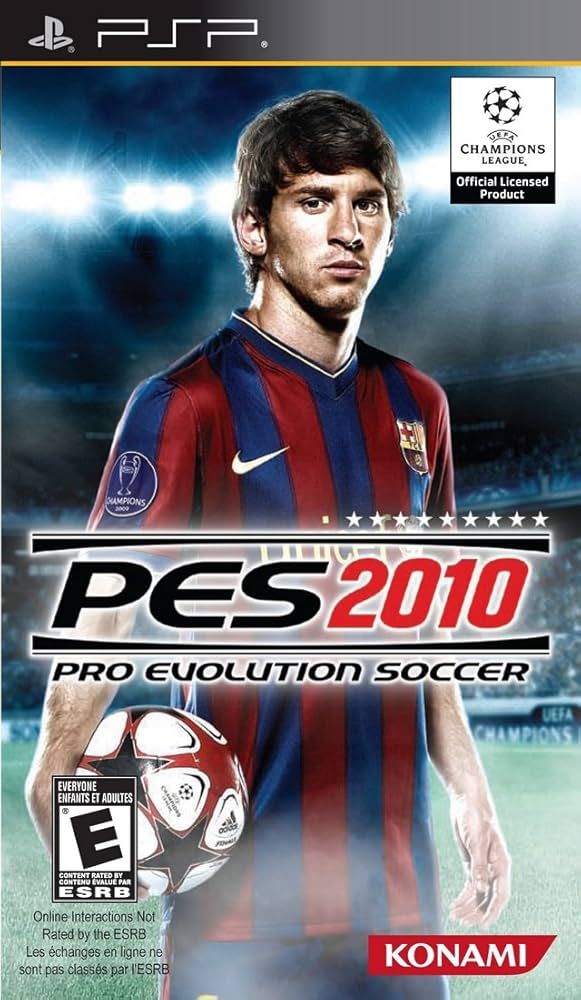
| Cover Athletes | Lionel Messi, Fernando Torres |
| Licensed Tournaments | UEFA Champions League, UEFA Europa League |
| Total Squads | 258 |
| Licensed Squads | 139 |
Development and Core Gameplay Evolution
Pro Evolution Soccer 2010 was officially announced on 8 April 2009, with a playable demo for PC, PlayStation 3, and Xbox 360 released on 17 September that year. The full game launched in Europe on 23 October 2009. A key focus for Konami was improving the on pitch realism and responsiveness. The introduction of 360 degree control on PC, PS3, and Xbox 360 was a major technical advancement, allowing for fluid movement in any direction using analog sticks. This level of control was hardware dependent, with the Wii's D Pad limited to eight directions and the Xbox 360's D Pad to sixteen.
The game's artificial intelligence received a significant upgrade through the Teamvision 2.0 system, designed to create more intelligent and adaptive opponent behavior. Player animations were completely reworked, with a focus on live expressions and movements that changed according to match conditions. Specific improvements were made to dribbling and shooting animations, as well as the execution of individual skills. Goalkeeper AI was made more versatile, and player control over penalty kicks was enhanced for better placement and accuracy.
Strategic Depth and Match Day Experience
PES 2010 gave players greater tactical influence over matches through new strategy controls. Managers could dynamically alter key elements such as their team's pass frequency and the width of their attacking and defensive play. This added a layer of managerial depth that extended into the revamped Master League mode, which saw improvements to its managerial aspects designed to increase the longevity of a player's career.
The atmosphere of match days was a specific area of enhancement. The development team worked to create a better distinction between home and away crowds, with supporters reacting spontaneously to the events on the pitch. This attention to ambiance was part of a broader effort to make each match feel more authentic and immersive, complementing the improved visual presentation.
Licenses, Content, and the Editing Community
The game's headline licensing achievement was an exclusive deal with UEFA, which brought fully integrated versions of the UEFA Champions League and the UEFA Europa League to the series for the first time. These tournaments were part of the Master League mode, though the Europa League was exclusive to the PC, PS3, and Xbox 360 versions. In total, PES 2010 featured 258 squads, with 139 of them being officially licensed. This included 55 teams that could be completely edited by the user.
A longstanding and popular feature, a separate league of 18 completely blank teams (named Team A, Team B, etc.), was also included. This league originated from Konami's inability to secure rights to the German Bundesliga and had become a central part of the community's modding efforts. Players and patch makers routinely used these editable slots to create custom leagues, with popular choices including the Portuguese Liga Sagres, the English Championship, the Argentine Primera División, the Greek Superleague, and the Moroccan Botola Pro, among others.
Online Play and Global Presentation
Konami dedicated a new development team specifically to improve the online experience in PES 2010. Their work focused on enhancing online multiplayer gameplay and supporting additional content such as downloadable updates. The game's presentation was tailored for a global audience through its commentary teams. The English language broadcast was handled by Jon Champion and Mark Lawrenson. Other regional pairs included Grégoire Margotton and Christophe Dugarry (French), Wolff-Christoph Fuss and Hansi Küpper (German), and Carlos Martínez with Julio Maldonado 'Maldini' (Spanish for Spain). Separate Spanish commentary for Latin America was provided by Christian Martinoli and Luis García, with additional teams for Italian, Portuguese, and Japanese audiences.
Special and Arcade Editions
Beyond the main console and PC releases, which also came to iOS in June 2010, PES 2010 saw several specialized versions. In the arcades, World Soccer: Winning Eleven 2010 - Arcade Championship launched on 24 February 2010. This cabinet game supported nationwide online play and allowed the use of PlayStation 2 controllers, with some cabinets supporting PS3 controllers. It featured a major visual upgrade, 300 added player motions, and a roster of around 230 teams. Its own arcade systems included a touch screen Icon Chat System for communication, a Real Time Player Substitution feature, and a Tag Play mode where two players on separate cabinets could control one team, receiving a Synchro Rate score for their compatibility post match. Konami also organized an in game tournament to coincide with the real UEFA Champions League.
For the Japanese market, Konami released World Soccer: Winning Eleven 2010 - Aoki Samurai no Chousen (Challenge of Blue Samurai) on 20 May 2010 for PS3, PS2, PSP, and Wii. Officially licensed by the Japan Football Association, this edition was an expanded version of PES 2010 that focused exclusively on the Japan national team's quest to win a world championship, featuring players in their official national team kits.
Reception and Legacy
PES 2010 received generally positive reviews from critics, who frequently praised its core football gameplay. Greg Howson of The Guardian noted that on the pitch, PES played a more satisfying and entertaining game of football compared to its main rival. IGN awarded the title a score of 8.7 out of 10, and PSM3 magazine gave it an 89. However, opinions were not universally high, as GameSpot rated the PS3 and Xbox 360 versions a 6.5, indicating some criticism amidst the overall acclaim. The game was succeeded by Pro Evolution Soccer 2011, continuing the series' annual cycle.
FAQ
Who is on the cover of PES 2010?
The cover of Pro Evolution Soccer 2010 features two key endorsement players, Lionel Messi of FC Barcelona and Argentina, and Fernando Torres, who played for Liverpool and the Spanish national team at the time.
What new licenses did PES 2010 have?
PES 2010 had an exclusive deal with UEFA, which meant it featured fully licensed versions of the UEFA Champions League and, for the first time in the series, the UEFA Europa League.
What is the 360 degree control in PES 2010?
360 degree control is a gameplay feature introduced in PES 2010 for the PC, PlayStation 3, and Xbox 360 versions. It allows for full analog stick movement, giving players much more precise control over player direction compared to the limited directional input on the Wii or Xbox 360 D pad.
What was the Aoki Samurai no Chousen edition?
World Soccer: Winning Eleven 2010 Aoki Samurai no Chousen was a special edition released in Japan in May 2010. It focused solely on the Japan national team, allowing players to lead them in a campaign to win the World Cup, and was officially licensed by the Japan Football Association.
How many teams are in PES 2010?
PES 2010 includes a total of 258 squads. Of these, 139 are officially licensed clubs and national teams. The game also features a separate league of 18 completely editable blank teams, popular for fan created mods.
Source: English Wikipedia (CC BY-SA), rewritten by the Redington Cybersport desk.