FIFA Football 2002
FIFA Football 2002 is the ninth installment in EA Sports' long-running football simulation series, released in 2001. It is remembered for introducing significant gameplay mechanics like the pass power bar and for being the last main series title to feature the Japanese national team and the Israel Premier League.
| Developer | EA Canada |
|---|---|
| Publisher | EA Sports |
| Release Year | 2001 |
| Platforms | PlayStation, PlayStation 2, GameCube, PC |
| Series | FIFA (9th game) |
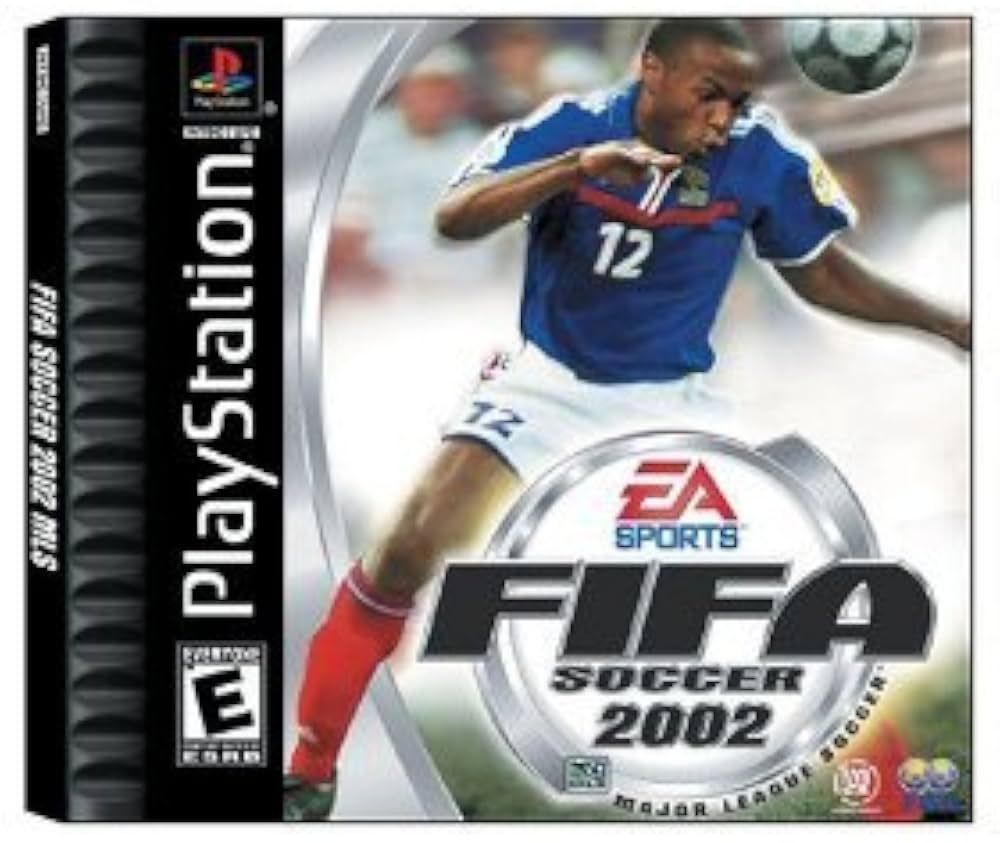
| Cover Athlete | Thierry Henry |
| Game Mode | Singleplayer, Multiplayer |
| Awards | GameSpot Best Sports Game (PC), AIAS PC Sports Award |
Core Gameplay Evolution and New Systems
FIFA Football 2002 marked a deliberate shift in the series' gameplay philosophy, introducing mechanics that would influence player control for years. The most significant change was the introduction of power bars for passes, giving players direct control over the strength of their through balls and crosses for the first time. This mechanical addition required more precision and planning. It was paired with a reduction in dribbling effectiveness, a design choice aimed at raising the overall challenge level and encouraging more strategic build-up play over individual skill moves. Players could customise the power bar to suit their personal preference, allowing for a tailored control scheme.
The game also expanded its representation of European club football. It included club emblems for many more European teams and added major Dutch clubs like PSV, AFC Ajax, and Feyenoord. These clubs were placed under a Rest of World header, as the game did not feature a Dutch league. In a trade-off for new content, the game featured the Swiss Super League for the first time but excluded the Greek League entirely. A novel card reward system licensed from Panini was also introduced, where winning a particular competition would unlock a star player card, adding a collectible element to the experience.
The Extensive Road to the World Cup Mode
A central and ambitious single-player mode was the Road to the World Cup. This mode closely followed the real qualification format for the 2002 FIFA World Cup, featuring the real-life structure of each qualification zone. It included every team that participated in qualification, except for those from Oceania. Notably, the World Cup tournament itself was not featured as a playable mode, either within this mode or separately. This design choice focused the entire experience on the qualification journey.
If a player selected a nation that had automatically qualified for the real tournament, such as France, Japan, or South Korea, the objective changed. Instead of qualifying, the player was tasked with improving that team's FIFA ranking through a series of international friendlies. This mode offered rewards that have never been replicated in the series. Successfully qualifying from a specific region, like Europe or South America, unlocked that continent's regional cup competition. Winning a regional cup granted the player a special Panini card featuring star players from that continent. Once a player unlocked and won all the regional cups, the game would unlock the FIFA Confederations Cup as a final bonus, another competition exclusive to this installment.
Licensing Details and Historical Final Appearances
The licensing in FIFA 2002 was a complex mix of new additions, omissions, and several lasts for the series. While club football saw expansions, the international team licenses were notably incomplete. Many national teams were not fully licensed, with some, including the Netherlands, having incorrect or generic player names. Smaller countries like Barbados were represented with players identified only by numbers, limiting their authenticity.
This game holds specific historical significance for several teams and leagues. It is the final main series FIFA edition, excluding special World Cup versions, to feature the Japan national team. Following this release, the Japan Football Association granted exclusive rights to Konami's Pro Evolution Soccer series. Furthermore, FIFA 2002 was the last edition to include the Israel Premier League and its clubs. The cover star was French international and Arsenal forward Thierry Henry, making this the last FIFA game for ten years to feature only one person on its cover, a trend that resumed with Lionel Messi on FIFA 13.
Critical Reception Across Platforms
According to the review aggregation website Metacritic, FIFA Football 2002 received favourable reviews on all platforms. Critics highlighted the improved tactics and graphics. A review of the PlayStation 2 version stated it kept its place at the top of the virtual soccer universe. The visuals were praised, with animations, player models, and detailed stadiums featuring details like flags waving in the stands.
Reviewers noted the PC version transcended previous incarnations, enlivening the screen with realistic gameplay and lively graphical elements. The PlayStation 2 version was called a next generation soccer game that was an accurate simulation of how the game is played by professionals. In Japan, where the GameCube version was ported for release on November 15, 2001, and the PlayStation 2 version followed on November 29, the game received strong scores from Famitsu. The GameCube version scored 34 out of 40, and the PlayStation 2 version scored 32 out of 40. Some criticism was directed at the GameCube version, with one reviewer calling it a direct PlayStation 2 port with somewhat clunky controls that came up short of the winning goal.
Awards, Nominations, and Industry Recognition
The game was recognized with several industry awards and nominations, particularly for its PC iteration. The console versions were nominated for the Best Sports, Traditional Game award at GameSpot's Best and Worst of 2001 Awards, though the award ultimately went to NBA 2K2. The PC version, however, won GameSpot's award for Best Sports Game outright, indicating its superior reception on that platform.
At the Academy of Interactive Arts and Sciences' 5th Annual Interactive Achievement Awards, the PC version won the award for PC Sports. The game also received multiple nominations at The Electric Playground's 2001 Blister Awards. It was nominated for Best Sports Game for PC, Best Console Sports Game, and Best Canadian Console Game of the Year. It lost these awards to High Heat Major League Baseball 2002, Madden NFL 2002, and NHL Hitz 2002, respectively, showing strong competition in the sports genre that year.
Legacy and Distinct Position in the Series
FIFA Football 2002 occupies a transitional space in the franchise's history. Its introduction of the pass power bar was a foundational mechanic that added a new layer of skill to passing and influenced future titles. The game's extensive Road to the World Cup mode, with its focus on the qualification process and unlockable continental tournaments like the African Cup of Nations and the Confederations Cup, offered a depth and structure of international play not seen in other main series entries.
The title serves as a clear historical marker for licensing changes in football games. Its status as the final main series appearance for the Japan national team and the Israeli league highlights the shifting agreements between sports associations and video game publishers in the early 2000s. Combined with its award-winning PC version and its position as the last solo-cover game for a decade, FIFA 2002 represents a distinct and influential chapter that balanced innovation with several notable lasts for the FIFA series.
FAQ
What was the major new gameplay feature in FIFA 2002?
The major new feature was the introduction of power bars for passes, allowing players to control the strength of their through balls and crosses. Dribbling was also made less effective to increase the game's challenge.
Why is FIFA 2002 the last game with the Japan national team?
FIFA 2002 was the last main series game to feature the Japan national team because the Japan Football Association later granted exclusive rights to Konami's Pro Evolution Soccer series.
What was the Road to the World Cup mode?
It was a game mode that simulated the qualification process for the 2002 FIFA World Cup, featuring real zones and teams. Qualifying from a region unlocked that continent's cup competition, but the World Cup finals themselves were not playable in the mode.
Who was on the cover of FIFA Football 2002?
The cover star for FIFA Football 2002 was French striker Thierry Henry, who played for Arsenal at the time.
Did FIFA 2002 win any awards?
Yes, the PC version of FIFA 2002 won the Best Sports Game award from GameSpot and the PC Sports award at the Interactive Achievement Awards in 2001.
Source: English Wikipedia (CC BY-SA), rewritten by the Redington Cybersport desk.