Dead or Alive 5 Ultimate
Dead or Alive 5 Ultimate is a definitive 2013 fighting game that expanded the core Dead or Alive 5 experience. It became a notable title in the competitive fighting game community by refining mechanics and introducing new features tailored for high-level play.
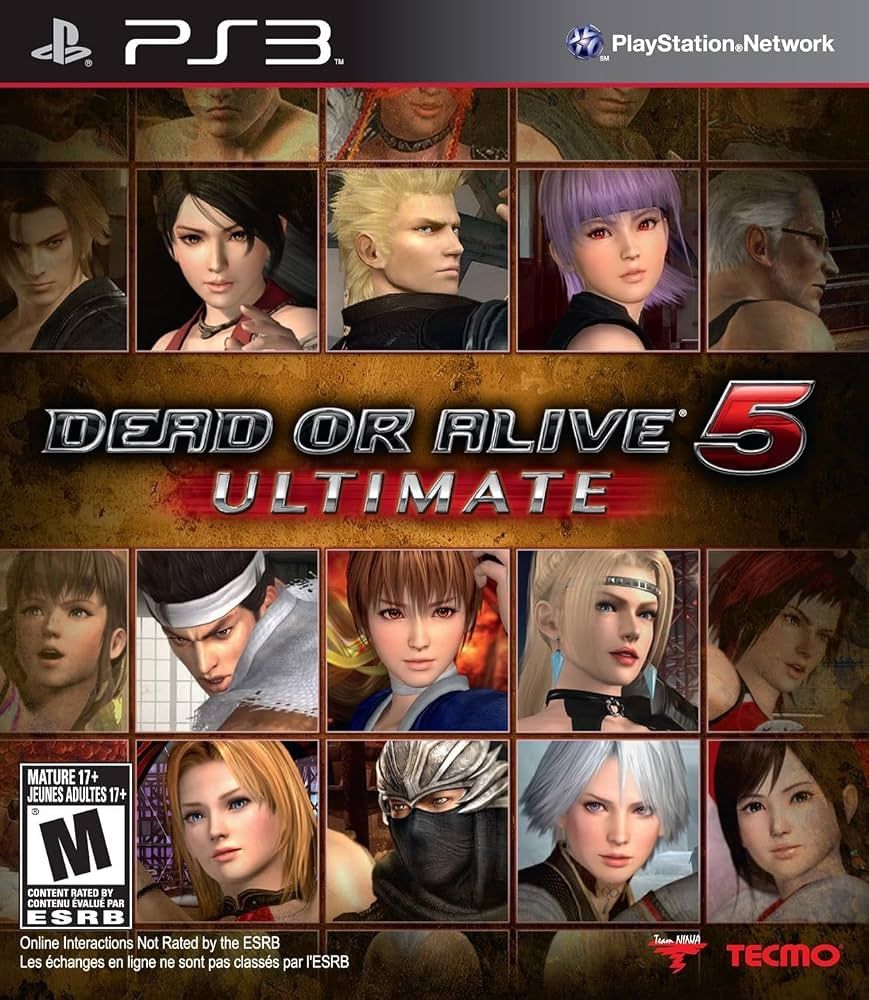
| Developer | Team Ninja |
|---|---|
| Publisher | Tecmo Koei |
| Release Date | September 3, 2013 (NA) |
| Platforms | PlayStation 3, Xbox 360 |
| Arcade Release | December 24, 2013 (Japan) |
| Free-to-Play Version | Dead or Alive 5 Ultimate: Core Fighters |
| Follow-up Title | Dead or Alive 5 Last Round (2015) |
| Metacritic Score (PS3) | 77/100 |
| Metacritic Score (Xbox 360) | 75/100 |
| Famitsu Score | 34/40 |
Development and Fan-Driven Design
Dead or Alive 5 Ultimate was conceived as a direct response to community feedback. Following the release of Dead or Alive 5 in 2012, producer Yosuke Hayashi had stated that Team Ninja would not release additional characters as DLC, viewing it as unfair to players and a threat to game balance. Instead, the team opted for a comprehensive expanded edition. Director Yohei Shimbori explicitly stated that Ultimate was a reflection of the feedback received from fans around the world.
This fan input heavily guided the game's new content. Popular requests included the return of classic stages like Forest and Lost World from Dead or Alive 3. Another common request was for a stage with uneven footing, which led to the creation of the Desert Wasteland stage. The development was officially revealed in May 2013, with a launch date set for September of that year, following a teaser trailer in April that showed the new character Momiji.
Core Gameplay Innovations and Training
Beyond bug fixes, Dead or Alive 5 Ultimate introduced several key gameplay systems. The Power Launcher, a new move that functions similarly to the Power Blow, launches opponents high into the air, allowing advanced players to execute extended combos. All returning characters received new combos to expand their move sets.
The game significantly enhanced its training suite by importing modes from the PlayStation Vita version. The Tutorial mode was designed to practice key moves and strategies through lessons and missions. The Combo Challenge mode was a specialized training area for learning and practicing character-specific combos. A new Team Fight mode also allowed players to select up to seven characters for consecutive battles.
The Competitive Tag Mode Overhaul
The most substantial changes for competitive play were made to the Tag mode. In response to high demand from fans globally, Team Ninja introduced online two-on-two tag battles. To make this mode viable for high-level competition, several balance adjustments were implemented. A character tagged out to the background now had a restriction on how much health they could recover before returning to the fight.
A new Tag-specific attack called the Force Out was added. This move knocks the opponent's current fighter out of the ring, forcing them to use only their other tag partner for a limited time. The game also featured many new tag poses and tag throws for specific character pairings. To improve the online experience, Team Ninja worked to smooth netcode and shorten matchmaking times, while a Character Points system, similar to Street Fighter IV's Battle Points, was introduced to display a player's skill with a specific fighter and their world rank.
Expanded Roster and Character Details
The base game expanded the roster to 29 fighters by adding five characters. These included two guest fighters: Jacky Bryant from the Virtua Fighter series, who uses jeet kune do and speaks only English, and two characters from the Ninja Gaiden series. Momiji is a kunoichi using ninpo and aikijujutsu, while Rachel is a heavyweight power-type fighter reminiscent of Spartan-458 from Dead or Alive 4. The returning characters were Ein, Hayate's karateka alter-ego, and Leon, an Italian close-quarters combat specialist.
Following the console release, the Arcade edition introduced three more characters who were later added to consoles via updates. Marie Rose, a Swedish maid who uses systema, was added in March 2014. Phase-4, another Kasumi clone, arrived in June 2014. Nyotengu, a female tengu with moves similar to the classic Tengu character, was added in September 2014, bringing the final roster count to 32 fighters.
Content, Customization, and Release Strategy
Dead or Alive 5 Ultimate was packed with customization options and content. The game featured 231 costumes, more than double the 114 in the original DOA5. These were unlocked using a new Grade Points system earned by winning matches as a Prize Fighter across four tiers: Bronze, Silver, Gold, and Platinum. Players could select custom music for fights, including past character themes from the series.
The game launched alongside a free-to-play version called Core Fighters on the PlayStation Store. This version included four characters (Ryu Hayabusa, Kasumi, Hayate, and Ayane) and most game modes, with additional characters and the full Story Mode available as separate DLC purchases. Producer Yosuke Hayashi expressed hope that this model would introduce more people to the fighting game genre and help revive its golden era. The retail game received various limited editions, particularly in Japan, which included soundtracks, posters, mousepads, and exclusive costume packs.
Arcade Release and Critical Reception
Dead or Alive 5 Ultimate: Arcade was a significant release, marking the series' first official arcade game since Dead or Alive 2 Millennium in 2000. Released only in Japan on December 24, 2013, it ran on Sega RingEdge 2 hardware. This version served as the debut platform for the characters Marie Rose, Phase-4, and Nyotengu.
Critics received the console versions well. The PlayStation 3 version averaged a score of 77 on Metacritic. Famitsu awarded it a 34 out of 40. Reviewers highlighted the game's wealth of content and refinements. Eric L. Patterson of Electronic Gaming Monthly noted it could help revive interest in the competitive scene. Hedi Kemps of Official Xbox Magazine called it a fun, gorgeous, and accessible fighter. By the end of 2013, the game had sold over 140,000 copies worldwide, confirming its role as the comprehensive version before the eventual release of Dead or Alive 5 Last Round.
FAQ
What is Dead or Alive 5 Ultimate?
Dead or Alive 5 Ultimate is an expanded 2013 edition of the fighting game Dead or Alive 5. It includes all content from the PlayStation Vita version, adds new characters and stages, refines gameplay, and introduces features like two-on-two online tag battles.
What new characters were added in DOA5 Ultimate?
The initial release added five characters: Jacky Bryant, Momiji, Rachel, Ein, and Leon. Later updates, first seen in the Arcade edition, added three more: Marie Rose, Phase-4, and Nyotengu, bringing the total roster to 32 fighters.
What is the Core Fighters version?
Core Fighters is a free-to-play digital version released alongside the retail game. It includes four playable characters and most game modes, with additional characters and the Story Mode available as separate downloadable purchases.
What major changes were made for competitive play?
Key competitive changes were made to the online Tag mode, including the introduction of two-on-two battles. Balance adjustments like limited health recovery for tagged-out characters and the Force Out attack were implemented to make the mode better suited for high-level play.
Was there an arcade version of DOA5 Ultimate?
Yes. Dead or Alive 5 Ultimate: Arcade was released only in Japan on December 24, 2013. It was the series' first official arcade release since 2000 and introduced the characters Marie Rose, Phase-4, and Nyotengu.
Source: English Wikipedia (CC BY-SA), rewritten by the Redington Cybersport desk.