Dead or Alive 4
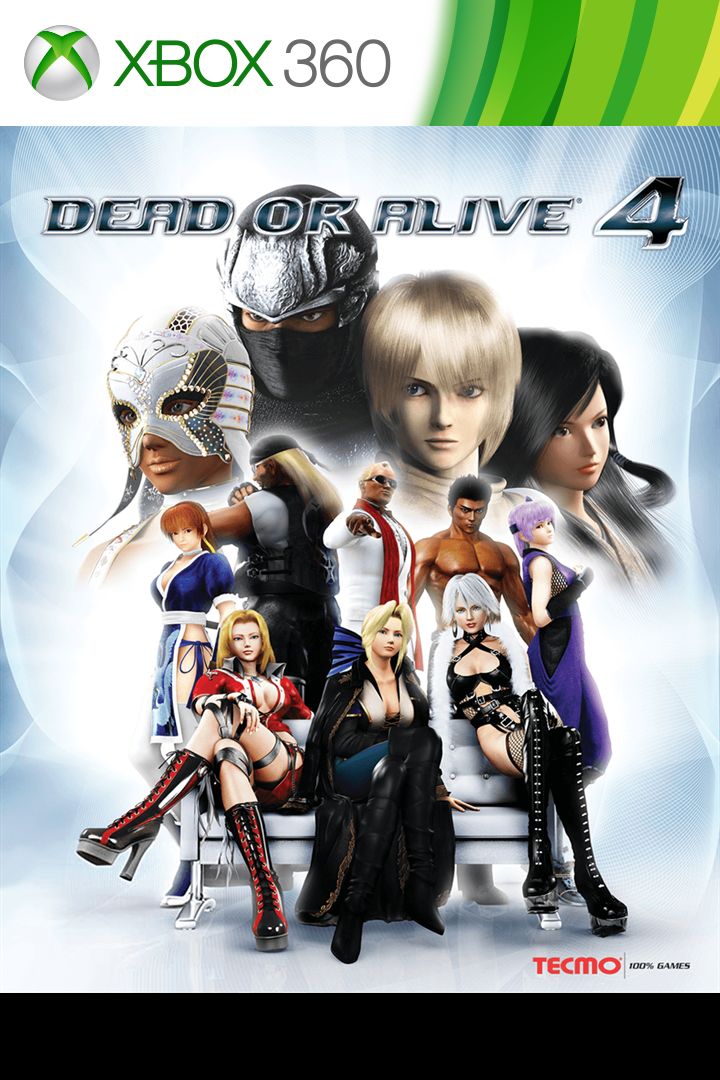
Dead or Alive 4 is the fourth main entry in the Team Ninja fighting series, released for the Xbox 360 in 2005. As the final fighting game directed by Tomonobu Itagaki for Tecmo, it introduced significant gameplay mechanics and a robust online mode, becoming a foundational title for the franchise's competitive scene.
| Developer | Team Ninja |
|---|---|
| Publisher | Tecmo |
| Release Date | December 29, 2005 |
| Platform | Xbox 360 |
| ESRB Rating | Mature |
| Metacritic Score | 85/100 |
| Copies Sold (by mid-2006) | Over 1 million worldwide |
| Backward Compatible | Xbox One, Xbox Series X/S (2021) |
Evolution of Gameplay and Mechanics
Dead or Alive 4 built upon its predecessors with several key gameplay updates that refined its competitive depth. The most notable addition was the Bounce Combo system, allowing players to continue attacking an opponent knocked to the ground as they bounced back up. This system, alongside the ability to perform low and mid attacks on downed opponents, expanded offensive options and combo potential. Character move lists were also vastly updated from previous games, giving veterans new tools and altering matchups.
The counter hold system, a series staple, was tightened in DOA4. The window for executing a successful counter became shorter and more difficult, demanding greater precision from players. The damage inflicted by counters was also rebalanced, shifting the risk-reward dynamic of the defensive technique. This change aimed to make the game less reliant on holds and promote a more aggressive, combo-oriented style of play.
Stage design became more interactive and hazardous. Moving obstacles could damage fighters, though a well-timed counter hold could avoid the hit. Other stages featured obstacles fighters could be knocked over, with players able to jump over them or perform flying attacks, adding a vertical and environmental layer to matches. These dynamic elements forced players to be aware of their positioning beyond just their opponent.
The Expanded Competitive Roster
The game featured a total of 23 fighters, with 22 being playable. The core returning cast of 13 included series mainstays like Kasumi, Ayane, Ryu Hayabusa, Hayate, Tina Armstrong, Bass Armstrong, Bayman, Brad Wong, Christie, Hitomi, Jann Lee, Leifang, and Zack. Several of these characters, including Helena Douglas, had to be unlocked by the player. Like its predecessor Dead or Alive 3, the game featured a relatively low number of costumes for its cast, excluding color variants.
Four new playable characters joined the fray, each with distinct backgrounds and fighting styles. Kokoro was a young Japanese maiko training to be a geisha who practiced bajiquan, entering the tournament to test her skills against her mother's wishes. Eliot, a 16-year-old from England, was the xingyiquan protégé of Gen Fu, entering the tournament to prove he was worthy of his master's teachings. La Mariposa, a luchadora whose real name was Lisa, brought a flamboyant wrestling style to the tournament, hiding her past and true identity under her mask.
As a notable guest character, the game also included Spartan-458, a female supersoldier from the Halo universe later named Nicole, who was an unlockable character and could not be used in Story Mode. Her inclusion came with a dedicated Halo-themed stage called Nassau Station. The final boss, Alpha-152, was an unplayable character created from Kasumi's DNA by the scientist Victor Donovan as part of DOATEC's Project Alpha, serving as the ultimate challenge in the game's story mode.
Pioneering Online Features and Community
Dead or Alive 4 was a pioneer for online play in fighting games. It introduced Avatars and customizable Virtual World Lobbies, features that were firsts for the genre. Players could earn award points from winning online battles and spend them on accessories for their Avatar and Lobby furniture, allowing for personal expression within the game's community.
The Lobby system allowed for voice and text-based chat, fostering a social community around the competitive matches. This innovative approach to online infrastructure gave the game an extended lifespan and a platform for players to connect, practice, and compete beyond local versus play. Critics at the time praised the online mode as a tremendous improvement and an innovative feature that set a new standard for console fighters, with some calling Dead or Alive the only console fighting series with a decent online mode at the time.
The available demo version, released on Xbox Live in July 2006, provided a limited taste of this online functionality. It allowed access to only Time Attack and Versus modes, five stages, and a handful of characters including Kasumi, Hayabusa, Brad Wong, Tina Armstrong, Eliot, and La Mariposa, with many other features locked.
Narrative, Setting, and Character Arcs
The story of DOA4 centered on the escalating war between the Mugen Tenshin Ninja Clan and the corrupt mega-corporation DOATEC. Helena Douglas, having lost both parents to conspiracy, took over as DOATEC's chairman to fight the corruption from within. The true power, however, lay with the sinister scientist Victor Donovan, who was developing the ultimate human weapon, Alpha-152, from Kasumi's DNA in the Bio Lab Core.
Hayate, now leader of the Mugen Tenshin, assembled a force including Ayane, Hayabusa, and a reluctant Kasumi to launch a final assault on DOATEC's primary headquarters, the colossal 999-meter Tri-tower buildings. The narrative wove together the paths of new and returning characters amidst this chaos. La Mariposa revealed to Hayate that she manipulated him into attacking DOATEC for her own revenge against Donovan, whom she resented for her involvement in the earlier Epsilon project.
Key confrontations drove the plot. Helena learned that Christie was her mother's killer, leading to a vengeful fight. Bayman, also betrayed by Donovan, sought his own revenge and clashed with Hayate. As the ninja assault triggered the Tri-towers' auto-destruct sequence, Kasumi fought Alpha-152. In the climax, a despairing Helena attempted to commit suicide in the burning heliport, but was rescued at the last moment by Zack in a helicopter as the towers collapsed.
Development, Release, and Legacy
Developed as a launch title for the Xbox 360, Dead or Alive 4 faced several delays before its release on December 29, 2005, over a month after the console's debut. Its absence at launch was cited by Famitsu Xbox's editor-in-chief as a main factor behind the slow initial sales of the Xbox 360 in Japan. Director Tomonobu Itagaki was deeply involved, famously stating in an interview that he spent 99% of his time on development, sleeping only 40 minutes over four days. Technical assistance was provided by the company Blindlight.
It was the first mainline game in the series to receive a Mature rating from the ESRB. The game featured licensed music from the American rock band Aerosmith, with "Eat the Rich" as the opening theme and "Amazing" playing during Helena's ending movie and over the credits. It saw re-releases as Platinum Hits, Platinum Collection, and Xbox Classics editions in 2006 and 2007. In 2021, it became digitally available on Xbox Live and backward compatible on modern Xbox consoles.
The game was supported by various merchandise, including a dedicated arcade controller made by Hori, an official soundtrack CD released in Japan, and multiple guide books published by Prima Games in North America and by Famitsu Xbox, SoftBank, and Enterbrain in Japan. Following DOA4, the series continued with Dead or Alive: Dimensions in 2011 and Dead or Alive 5 in 2012.
Critical and Commercial Reception
Dead or Alive 4 was met with generally favorable reviews, earning aggregate scores of 85/100 on Metacritic and 85.49% on GameRankings. Famitsu in Japan awarded it a near-perfect 39 out of 40. Critics widely praised the refined fighting system, visual presentation, and new online mode. IGN called it a fighter with subtle yet significant changes and an online mode that rocks, noting the fighting system was deeper and more sophisticated. GameSpot stated simply that if you like fighting games, DOA4 is for you, highlighting its great selection of fighters, terrific action, and addictive online mode.
Other outlets celebrated its technical achievements. Play Magazine stated they don't make 3D fighters more beautiful and fluid, while Gamerfeed called it so close to being flawless it's unbelievable. Some criticism focused on character balance and exploitable moves, with 1Up.com noting its failings in a few key areas cripple its longevity due to insanely unbalanced characters. Commercially, the game was a success, selling over one million copies worldwide by mid-2006, confirming its status as a major release for the Xbox 360 and the fighting game community.
FAQ
When was Dead or Alive 4 released?
Dead or Alive 4 was released on December 29, 2005, for the Xbox 360. It was delayed from being a launch title for the console. A digital version became available on Xbox Live in 2021, alongside backward compatibility for Xbox One and Xbox Series X/S.
What are the new characters in Dead or Alive 4?
DOA4 introduced four new playable characters: Kokoro, a maiko who practices bajiquan, Eliot, a young British xingyiquan practitioner, La Mariposa, a luchadora, and the guest character Spartan-458 (Nicole) from the Halo series. The unplayable boss character is Alpha-152.
What is the Bounce Combo system?
The Bounce Combo is a new gameplay mechanic in DOA4. After knocking an opponent down with a strike, players can execute follow-up attacks as the opponent bounces off the ground, allowing for extended combos and increased offensive pressure.
Did Dead or Alive 4 have online play?
Yes, Dead or Alive 4 featured a pioneering online mode. It introduced Avatar customization and Virtual World Lobbies where players could chat via voice or text. It was the first fighting game to include these social features, and players earned points from online wins to buy cosmetic items.
How many copies did Dead or Alive 4 sell?
By mid-2006, Dead or Alive 4 had sold over 1 million copies worldwide. It received generally positive reviews, with aggregate scores around 85/100, and was considered a commercial success for the Xbox 360.
Source: English Wikipedia (CC BY-SA), rewritten by the Redington Cybersport desk.