Super Smash Bros. in esports
Super Smash Bros. is a series of crossover fighting games by Nintendo that has fostered one of the most enduring and community-driven esports scenes. Its competitive history is defined by grassroots organization, a complex relationship with its publisher, and two distinct main titles: the classic Super Smash Bros. Melee and the modern Super Smash Bros. Ultimate.
| First Tournament (West) | 2002 |
|---|---|
| First Major Sponsored Event | IVGF Northwest Regionals (2003) |
| Most Popular Titles | Super Smash Bros. Melee, Super Smash Bros. Ultimate |
| Major Tournament Series | GENESIS, EVO, Super Smash Con, The Big House |
| Notable Past Circuits | Major League Gaming (MLG) Pro Circuit (2004-2006, 2010) |
| First Officially Licensed Circuit | Panda Cup (2022) |
| Developer | Nintendo |
| Platforms | Nintendo 64, GameCube, Wii, Wii U, Nintendo Switch |
The Dawn of a Scene
The competitive journey for Super Smash Bros. began in the early 2000s, shortly after the release of Super Smash Bros. Melee for the Nintendo GameCube. The first publicized western tournaments were held in 2002, organized by community members like Matt "MattDeezie" Dahlgren in California. These early events lacked a standardized ruleset, leading to frequent disputes over items and legal stages. A consistent competitive format, which banned all items and limited the stage selection, was developed over several years through community consensus.
The period from 2003 to 2007 is often called the "Golden Age" of Melee. The game gained significant mainstream exposure by being featured on the Major League Gaming Pro Circuit from 2004 to 2006. This era established the first wave of superstar players, with Ken Hoang earning the nickname "The King of Smash" for his dominance. Other top competitors included Christopher "Azen" McMullen, Joel "Isai" Alvarado, and Jason "Mew2King" Zimmerman. Melee also appeared at the prestigious Evolution Championship Series in 2007, confirming its place in the broader fighting game community.
Decline and the Brawl Era
The Melee scene faced a significant challenge with the 2008 release of Super Smash Bros. Brawl for the Wii. Melee was dropped from both the MLG circuit and EVO as attention shifted to the new title. However, Brawl quickly garnered a poor reputation among competitive players due to its slower, more defensive gameplay and mechanics like random tripping, which were seen as anti-competitive. MLG picked up Brawl for its 2010 circuit, but Nintendo prohibited the league from live streaming the matches.
The years from 2012 to 2013 are referred to as "The Dark Age" of competitive Smash, marked by Melee's decline and Brawl's fading popularity. Despite this, important community-run tournament series like GENESIS, Apex, and The Big House were launched during this period, laying the groundwork for the future.
The Platinum Age and the Five Gods
Melee experienced a dramatic resurgence starting in 2013. The game won a charity drive to be included at EVO 2013, and its massive turnout and viewership secured its place at the tournament for the next five years. This revival was further fueled by the release of the documentary series "The Smash Brothers". The period from 2013 to 2018, known as the "Platinum Age" or the "Era of the Five Gods", saw the rise of five dominant players: Jason "Mew2King" Zimmerman, Joseph "Mango" Marquez, Kevin "PPMD" Nanney, Adam "Armada" Lindgren, and Juan "Hungrybox" Debiedma.
This era was defined by major tournaments like EVO, where Melee set entry records, and the growth of series like GENESIS and Super Smash Con. William "Leffen" Hjelte broke the dominance of the Five Gods by defeating them all, leading to the top players being collectively known as the "Big 6". Nintendo began a tentative engagement with the scene, sponsoring Apex 2015 and holding a promotional invitational at E3 2014, though with non-standard rules.
The Modern Chaos Age
By the late 2010s, the era of the Five Gods began to wane as players like Armada retired and PPMD went on hiatus. This opened the door for a new generation of top players like Zain Naghmi and Cody Schwab, leading some to call this the "Chaos Age". The COVID-19 pandemic in 2020 shut down in-person events but led to a major technical breakthrough: the development of rollback netcode for Project Slippi, a fan-made modification for Melee that enabled smooth online play.
This innovation also sparked conflict with Nintendo, which issued a cease and desist that led to the cancellation of The Big House 10 online event, prompting a #FreeMelee protest from the community. In 2021, Nintendo and Panda announced the first officially licensed championship circuit for Melee and Ultimate. However, the community's relationship with this partnership soured in late 2022 when Nintendo's alleged actions forced the cancellation of the rival, grassroots Smash World Tour finals, leading to widespread player protests against the Panda Cup.
The Dual Titans: Melee and Ultimate
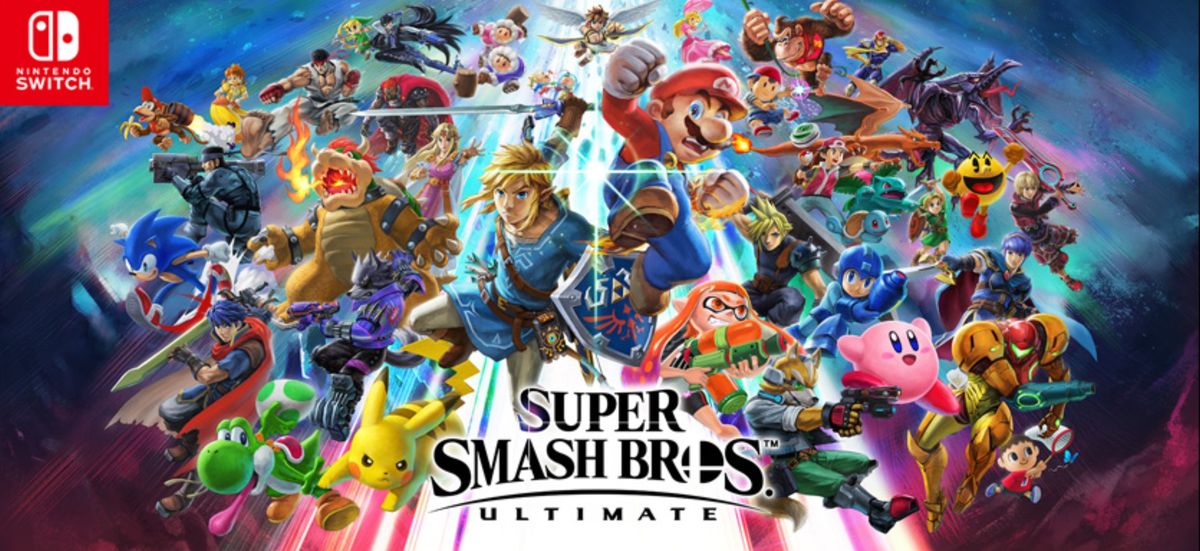
The modern competitive Smash scene is primarily split between two games. Super Smash Bros. Melee, despite its age, maintains a dedicated, technically deep scene built on its fast-paced gameplay and advanced techniques. Super Smash Bros. Ultimate for the Nintendo Switch represents the current official title with a massive roster and its own thriving competitive ecosystem. While both games share the same core format and are often featured at the same major tournaments, their different speeds and mechanics have created two distinct, intertwined communities.
Leonardo "MkLeo" Perez is widely regarded as the world's best Ultimate player, leading a field that includes stars like Edgar "Sparg0" Valdez and Gavin "Tweek" Dempsey. Smaller scenes exist for the original Nintendo 64 game and for Project M, a popular fan modification of Brawl designed to mimic Melee's speed. Most players from the Brawl and Wii U eras have migrated to Ultimate.
A Grassroots Struggle with Nintendo
The competitive Smash Bros. community is famously grassroots and decentralized, a direct result of Nintendo's historical reluctance to support it. Unlike other esports publishers, Nintendo has often distanced itself from, or even worked against, the tournament scene. The company has threatened legal action against major events like EVO 2013 and The Big House, usually over streaming rights or the use of mods like Project M and Project Slippi.
Series creator Masahiro Sakurai has expressed that competitive play strays from his vision of a game accessible to all skill levels. This philosophy influenced Brawl's more casual design, which in turn spurred the community to create Project M. While Nintendo has occasionally sponsored events, it never financially contributed to prize pools or officially licensed a circuit until the 2022 Panda Cup announcement. This lack of support has forced the community to be self-reliant, but has also led to recurring tensions and conflicts.
FAQ
When did competitive Super Smash Bros. start?
Organized tournament play in the West began in 2002 with Super Smash Bros. Melee. In Japan, tournaments for the original Nintendo 64 game date back to 1999.
What are the most popular Smash Bros. games for esports?
The two largest and most popular competitive scenes are for Super Smash Bros. Melee (2001) and Super Smash Bros. Ultimate (2018). They are considered distinct games due to major differences in speed and mechanics.
Who were the "Five Gods" of Smash?
The Five Gods refer to the five most dominant Melee players from approximately 2013 to 2018. They were Jason "Mew2King" Zimmerman, Joseph "Mango" Marquez, Kevin "PPMD" Nanney, Adam "Armada" Lindgren, and Juan "Hungrybox" Debiedma.
What is Nintendo's relationship with the competitive Smash scene?
Nintendo has a long and uneasy relationship with the scene, often distancing itself or taking legal action against tournaments over mods or streaming. This has fostered a strong grassroots, community-driven scene. The company announced its first officially licensed circuit with Panda in 2021.
What major tournaments exist for Super Smash Bros.?
Major annual tournament series include GENESIS, the Evolution Championship Series (EVO), Super Smash Con, and The Big House. These events typically feature both Melee and Ultimate competitions.
Source: English Wikipedia (CC BY-SA), rewritten by the Redington Cybersport desk.