Evolution Championship Series
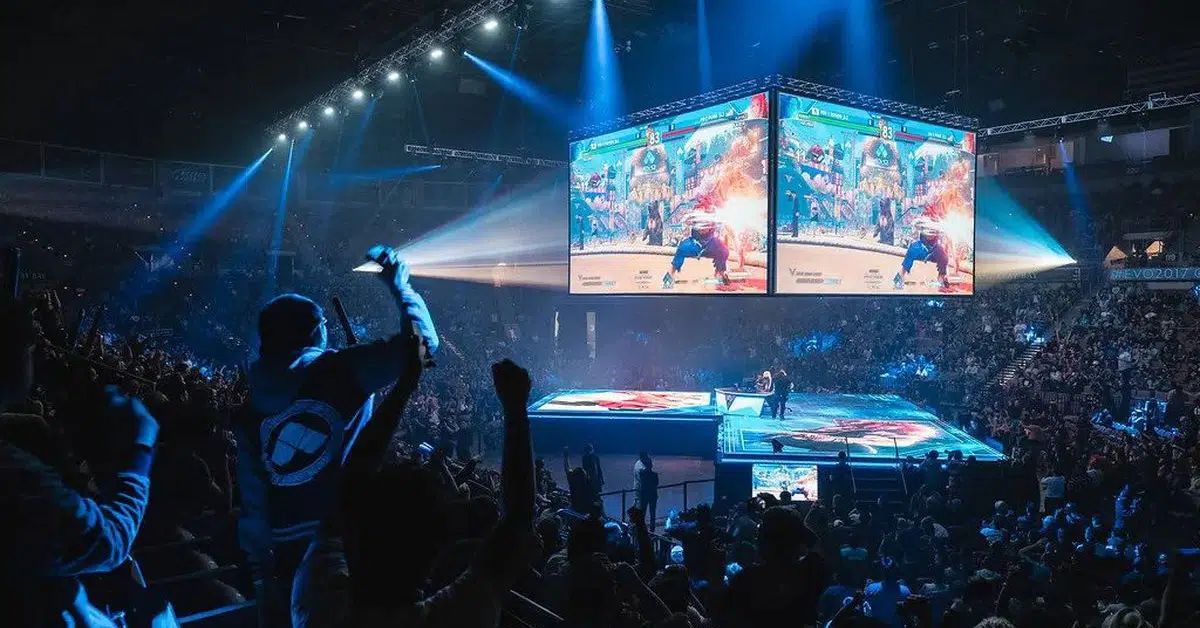
The Evolution Championship Series, universally known as Evo, is an annual esports tournament dedicated exclusively to fighting games. Founded in the United States and now under Saudi ownership, it is the world's premier open competition for the genre, attracting thousands of players from across the globe. Its growth from a small arcade gathering to a major televised event has defined the competitive fighting game scene for decades.
| Founded | 1996 |
|---|---|
| First held | 1996 (as Battle by the Bay) |
| Founder | Tom Cannon |
| Current owner | RTS (Public Investment Fund, Saudi Arabia) |
| Venue | Various, Las Vegas Valley (since 2005) |
| Format | Open, double elimination |
| Notable games | Street Fighter series, Marvel vs. Capcom 2, Super Smash Bros. Melee, Tekken series |
| Historic moment | Evo Moment #37 (2004) |
Origins and Early Years
The Evolution Championship Series began in 1996 as a modest event called Battle by the Bay. Organized by Tom Cannon, Tony Cannon, Joey Cuellar, and Seth Killian, it was held in a Golfland arcade in Sunnyvale, California. The first tournament featured just 40 competitors, primarily from the United States but also including players from Canada and Kuwait, and focused on two Capcom titles, Super Street Fighter II Turbo and Street Fighter Alpha 2.
Over the next several years, the event grew and began to incorporate more games. The 2000 event, B4, introduced Street Fighter Alpha 3, Street Fighter III: 3rd Strike, and Marvel vs. Capcom 2, marking the first time a non-Street Fighter game was included. This set a precedent for a more diverse roster. By 2001, the tournament attracted a larger international crowd, particularly from Japan. In 2002, the event was formally rebranded as the Evolution Championship Series, or Evo.
The Shift to Consoles and Iconic Moments
A significant and controversial shift occurred in 2004 when Evo moved most of its tournament games from arcade cabinets to home consoles. This decision standardized the platform for competition, though Street Fighter III: 3rd Strike was initially run on arcade hardware. That same year produced one of the most famous moments in esports history, known as Evo Moment #37. During a 3rd Strike match, Japanese player Daigo Umehara, using Ken, successfully parried a super move from American player Justin Wong's Chun-Li while at near-zero health, then countered to win the round.
The tournament found a permanent home in Las Vegas in 2005. Growth continued, with Capcom offering its first official public support for Evo in 2006. That year also saw a rare departure from fighting games with the inclusion of Mario Kart DS. The event confirmed its format with a core roster of fighting titles while beginning to present upcoming games like Street Fighter IV to attendees.
Explosive Growth in the Streaming Era
The release of Street Fighter IV in 2009 acted as a major catalyst for Evo's expansion. The tournament for that game alone drew over 1,000 participants, almost three times the attendance of other titles at the event. Evo 2010 saw Super Street Fighter IV attract approximately 1,800 players for a guaranteed prize pot of $20,000. The event's popularity was further amplified by the advent of live streaming. Evo 2011 was watched by over 2 million viewers on UStream, bringing the competition to a global online audience.
This period also saw increased involvement from game developers and publishers. Producers like Yoshinori Ono and Katsuhiro Harada attended to announce updates and new titles. In 2013, Evo introduced a charity drive to let the community vote for an eighth main game via donations, raising over $225,000 for breast cancer research. The winner was Super Smash Bros. Melee, which raised $94,683, despite initial resistance from Nintendo regarding its broadcast.
The Smash Phenomenon and Mainstream Reach
The inclusion of Super Smash Bros. Melee marked a new chapter for Evo. The game's passionate community helped it secure a permanent spot on the main roster. By 2015, both Melee and its successor, Super Smash Bros. for Wii U, had each surpassed 1,500 entrants. Evo's scale became very large, with Street Fighter V reaching over 5,000 entrants in 2016. That year, the Street Fighter V finals were broadcast live on ESPN2, a landmark moment for the tournament's mainstream visibility.
Publisher support also grew, with companies like Capcom, Microsoft, Warner Bros., and Bandai Namco contributing large bonus prize pots for their respective games. The tournament moved to larger venues like the Las Vegas Convention Center to accommodate the crowds. The lineup continued to evolve, featuring newer titles like Guilty Gear Xrd, Mortal Kombat X, and Tekken 7 alongside enduring classics.
Ownership Changes and Global Expansion
Evo underwent significant changes in ownership in the 2020s. Originally founded and run by members of the fighting game community, the event was acquired in 2021 by a joint venture between Sony Interactive Entertainment and the Endeavor-backed agency RTS. In 2025, Sony sold its stake to the Indian esports company Nodwin Gaming. Shortly after, Saudi Arabia's Public Investment Fund acquired RTS.
In February 2026, RTS acquired Nodwin's stake in Evo, placing the tournament under sole Saudi ownership. Throughout its history, while the main event has been held annually in Las Vegas, Evo has also organized spin-off events in other countries, including Japan and France, extending its international footprint.
Tournament Format and Community Culture
Evo is defined by its completely open, double elimination bracket format. Anyone can enter, leading to a diverse field where unknown players can compete against world champions. The official tournament games are selected each year, typically featuring a mix of the latest releases and community favorites. Alongside the main stage competitions, Evo features a Bring Your Own Console area where attendees can play a wide variety of games and participate in unofficial side tournaments.
This structure fosters a community gathering. Players travel from gaming hubs worldwide, including Japan, South Korea, and Pakistan, making it a world championship. The event serves not only as a competition but as an annual celebration and meeting point for the global fighting game community, where new games are presented and famous rivalries are born.
Detailed Event History and Game Rosters
The specific game lineups for each Evo reflect the evolution of the fighting game genre. Early events like B3 and B4 were dominated by Capcom's Street Fighter series and Marvel vs. Capcom 2. The 2004 roster expanded to include nine games such as Virtua Fighter 4, Soulcalibur II, and the Guilty Gear and Tekken series. The late 2000s saw the introduction of games like Dead or Alive 4 and the controversial inclusion of Super Smash Bros. Brawl in 2008.
The 2010s featured increasingly diverse and updated rosters. Evo 2012 included six main games, including Mortal Kombat and Street Fighter X Tekken. Evo 2013 expanded to nine, adding Persona 4 Arena and Injustice: Gods Among Us. Later years incorporated titles like Killer Instinct, Pokkén Tournament, and BlazBlue. Platform choices were sometimes contentious, such as in 2015 when Ultra Street Fighter IV was run on Xbox 360 instead of PlayStation 4 due to bugs in the new port, and Persona 4 Arena Ultimax used an outdated PlayStation 3 build.
Community Impact and Notable Incidents
Evo has been shaped by direct community action. The 2013 charity drive that added Super Smash Bros. Melee to the roster is a prime example, demonstrating the financial and passionate support of players. Community polls also decided the inclusion of games like Melty Blood: Actress Again at Evo 2010. The event has also been a stage for developer interactions, with companies presenting unreleased games and providing exclusive merchandise, such as the Skullgirls-themed arcade stick awarded at a 2011 side tournament.
Certain tournaments have been marked by notable incidents. The 2008 Brawl tournament was widely criticized for its ruleset, which allowed items and resulted in a relatively unknown player defeating established champion Ken Hoang. In 2013, Nintendo initially attempted to stop the streaming of Melee matches before relenting due to popular backlash. These moments highlight the ongoing negotiation between tournament organizers, game publishers, and the player base that defines the event's character.
FAQ
What does Evo stand for?
Evo stands for the Evolution Championship Series. The tournament was originally called Battle by the Bay before changing its name to Evo in 2002.
What is Evo Moment #37?
Evo Moment #37 refers to a famous play from the 2004 tournament. During a Street Fighter III: 3rd Strike match, Daigo Umehara parried Justin Wong's entire super move while at minimal health and then countered to win. It is one of the most famous moments in fighting game history.
Where is Evo held?
Since 2005, the primary Evo championship has been held at various venues across the Las Vegas Valley in Nevada, United States. The tournament has also organized spin-off events in other countries like Japan and France.
What games are played at Evo?
Evo features a roster of fighting games selected each year. Historically, it has focused on series like Street Fighter, Marvel vs. Capcom, Tekken, Guilty Gear, and Super Smash Bros. The lineup includes both new releases and classic titles.
Who owns Evo now?
As of February 2026, Evo is solely owned by RTS, an agency backed by Saudi Arabia's Public Investment Fund. This followed a series of transactions after the event was originally acquired by a Sony and Endeavor joint venture in 2021.
Source: English Wikipedia (CC BY-SA), rewritten by the Redington Cybersport desk.