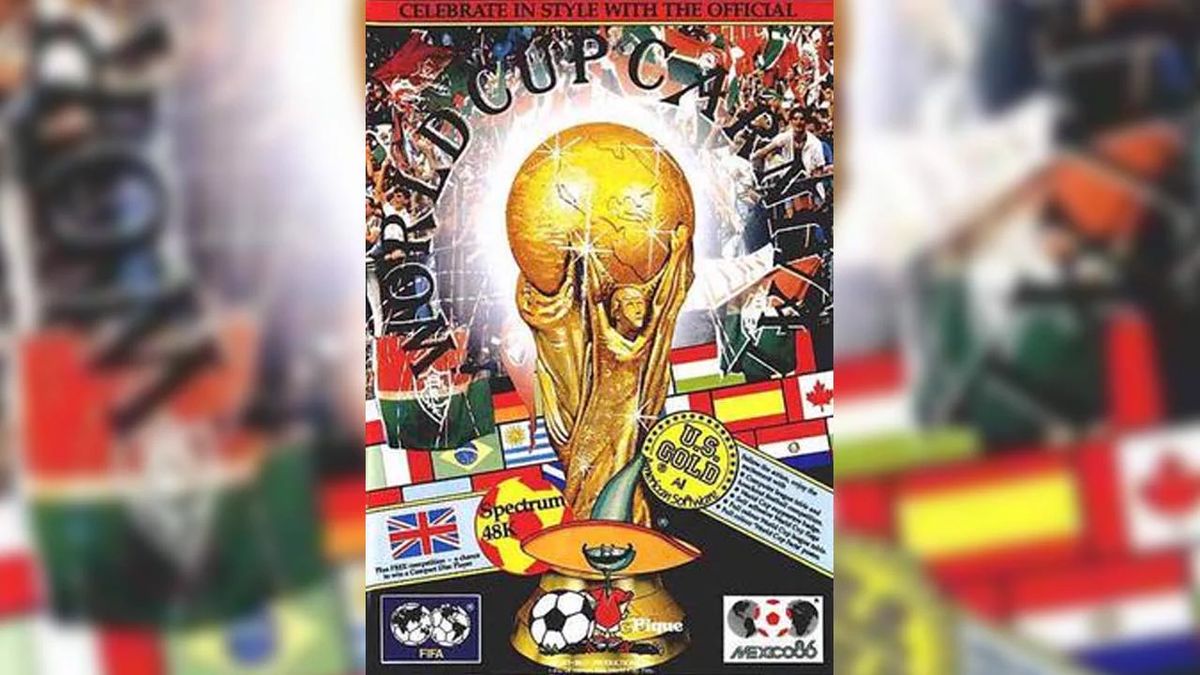
World Cup Carnival
World Cup Carnival is a 1986 football video game based on the FIFA World Cup in Mexico. Published by U.S. Gold, it holds the distinction of being the first officially licensed World Cup video game, but is more infamously remembered for its poor quality, commercial success, and the controversy that led to its developer's bankruptcy.
| Developer | Artic Computing |
|---|---|
| Publisher | U.S. Gold |
| First released | 1986 |
| Platforms | Amstrad CPC, Commodore 64, ZX Spectrum |
| Based on | 1986 FIFA World Cup |
| Preceded by | World Cup Football (1984) |
| Game modes | Tournament, Practice |
| Notable awards | Worst of 1986 in multiple magazines |
A Hasty and Recycled Production
World Cup Carnival's development was defined by compromise and haste. U.S. Gold had secured the prestigious license for the 1986 FIFA World Cup in Mexico, intending to create a new game. When development ran into problems, the publisher made a decisive and cost-effective choice. Instead of building a new title, they instructed developer Artic Computing to modify their existing 1984 game, World Cup Football. The primary changes were the addition of the FIFA license, a new title screen, and a separate practice mode. Developers Adam Waring and Tony Warriner were credited with working on these new elements. The result was a product that felt immediately outdated, essentially a two-year-old game with a fresh coat of paint and official branding.
Sparse Gameplay and Platform Differences
The gameplay of World Cup Carnival was extremely basic, even for its time. The main tournament mode skipped straight to the quarter-final stage, offering no group phase or qualification. Each match lasted only three minutes of in-game time, and players had no ability to change team formations or tactics, offering a very simplistic arcade experience. Interestingly, the game featured different content across its three platforms. The Commodore 64 and Amstrad CPC versions included only ten national teams: Uruguay, Italy, Germany, Brazil, England, Argentina, France, Spain, Mexico, and Scotland. The ZX Spectrum version was more complete, featuring all 24 teams that participated in the actual 1986 World Cup.
Alongside the tournament, a practice mode could be loaded separately. On the Amstrad CPC, Commodore 64, and ZX Spectrum, this mode contained three activities: practicing ball control, taking penalties, and saving penalties. Reviewers, however, were quick to point out that these subgames had little practical application to the main game, feeling tacked on and irrelevant. The practice mode did nothing to address the core criticisms of the recycled gameplay.
A Critical Firestorm
Upon release, World Cup Carnival was met with a torrent of negative reviews that were notable for their unanimity and intensity. Critics savaged every aspect of the game. Zzap!64 awarded the Commodore 64 version a mere 11%, noting that the only praise they could offer was for the physical packaging and the included posters. Amstrad Action gave the Amstrad CPC version a historic 0% score, explicitly stating this rating was for players who already owned the original World Cup Football.
The ZX Spectrum version fared little better. Crash magazine scored it 26%, with the reviewer stating it was the worst football simulation they had ever seen. Clare Edgeley, writing for Sinclair User, described it as awful, highlighting severe graphical color clashing. Your Sinclair reviewer John Minson, under the pseudonym Rachael Smith, gave it 3 out of 10, calling it the same mediocre game it always was and criticizing the on-screen player colors. Micro Hobby declined to give a score at all, dismissing it as a clone and expressing dissatisfaction with the new modes.
The game's infamy was confirmed at year's end when it swept 'worst of' awards. Crash readers voted it the Least Pleasing Game of 1986. It placed third in the same category in both Amtix! and Zzap!64. Readers of Popular Computing Weekly named it the Computer Game You Most Regretted Buying in 1986. In a satirical award, Commodore User columnist Mike Pattenden gave U.S. Gold the Arthur Daley Dodgy Software but a Good Earner Award for their role in publishing the game.
Commercial Strategy and Success
Despite the critical mauling, World Cup Carnival was a significant commercial hit. It entered the market at number one in computer game sales charts, held the top position for its first two weeks, and remained in the top three for the following two weeks. This success was not accidental but the result of a calculated strategy by publisher U.S. Gold. In a later interview, Charles Cecil revealed that U.S. Gold deliberately withheld review copies from magazines until the game was already actively on sale in stores.
This delay meant that the game had already sold widely to eager World Cup fans by the time the devastating reviews were published, causing what Cecil described as a furore. The tactic ensured strong initial revenue, capitalizing on the FIFA license and World Cup hype before the truth about the game's quality could dampen sales.
The Lawsuit That Bankrupted a Developer
The release of World Cup Carnival triggered immediate and severe legal consequences for Artic Computing. The core problem was that Artic no longer owned the rights to the game they had modified. In 1985, a year before Carnival's development, Artic had sold the copyright to World Cup Football to Prism Leisure Corporation in a desperate move to keep the company financially afloat.
When Artic then reused that game's code to create World Cup Carnival for U.S. Gold, they committed clear copyright infringement. Prism Leisure Corporation swiftly filed a lawsuit and won. The judgment required Artic Computing to pay Prism for all sales revenue generated by World Cup Carnival. This financial penalty was catastrophic, directly bankrupting Artic Computing and ending the company.
Legacy and Aftermath
World Cup Carnival stands as a notorious case study in the early video game industry, highlighting the risks of rushed licensed products, the power of marketing over quality, and the potential for commercial and critical reception to be completely divorced. Its story is a blend of cynical publishing, developer misfortune, and consumer disappointment.
U.S. Gold attempted to continue in the football arena, seeking the official license for the 1990 FIFA World Cup in Italy. They were unsuccessful, losing the license to Virgin Mastertronic, who developed World Cup Soccer: Italia '90. Undeterred, U.S. Gold released their own unlicensed football title for the 1990 tournament, simply named Italy 1990. The original World Cup Carnival, however, remains its defining and most infamous release, a game remembered not for celebrating a World Cup, but for embodying a carnival of poor practices.
FAQ
What made World Cup Carnival so controversial?
The game was controversial because it was a blatant, low-quality re-release of a 1984 game, World Cup Football, with minimal changes. Critics were furious at its poor quality, and the publisher's tactic of withholding review copies until after it went on sale misled early buyers. The resulting copyright infringement lawsuit also bankrupted the developer.
How could a game with such bad reviews sell so well?
World Cup Carnival sold well because it was the first officially licensed FIFA World Cup video game, released to coincide with the 1986 tournament hype. Publisher U.S. Gold ensured strong initial sales by not sending review copies to magazines until the game was already widely available in stores, so many fans bought it before the negative reviews were published.
What were the specific criticisms of the gameplay?
Reviewers criticized the simplistic and outdated gameplay. Matches lasted only three minutes, players could not change formations, and the tournament started only at the quarter-finals. The separate practice mode for penalties and ball control was seen as tacked on and irrelevant to the main game. Graphics were panned for poor color clashes, especially on the ZX Spectrum.
What was the outcome of the Prism Leisure lawsuit?
Prism Leisure Corporation, which owned the copyright to the original World Cup Football, sued developer Artic Computing for infringement and won. The court ordered Artic to pay Prism for all sales revenue from World Cup Carnival. This financial judgment was so severe it bankrupted Artic Computing.
Did U.S. Gold make another World Cup game after this?
U.S. Gold attempted to get the official license for the 1990 FIFA World Cup but failed, losing it to Virgin Mastertronic. They subsequently released an unlicensed football game called Italy 1990. They did not produce another official FIFA World Cup game after the disastrous reception to World Cup Carnival.
Source: English Wikipedia (CC BY-SA), rewritten by the Redington Cybersport desk.