Warcraft III: Reign of Chaos
Warcraft III: Reign of Chaos is a high fantasy real-time strategy game developed by Blizzard Entertainment and released in July 2002. As the third main entry in the Warcraft series, it introduced hero units and a rich narrative that became foundational for competitive play and future game genres.
| Developer | Blizzard Entertainment |
|---|---|
| Publisher | Blizzard Entertainment |
| Release Date | July 2002 |
| Expansion | Warcraft III: The Frozen Throne (July 2003) |
| Platform | PC |
| Genre | Real-time strategy (RTS) |
| Number of Factions | 4 |
| Campaigns | 4 (plus prologue tutorial) |
| Multiplayer Service | Battle.net |
| Remaster | Warcraft III: Reforged (2020) |
Gameplay Fundamentals and Innovation
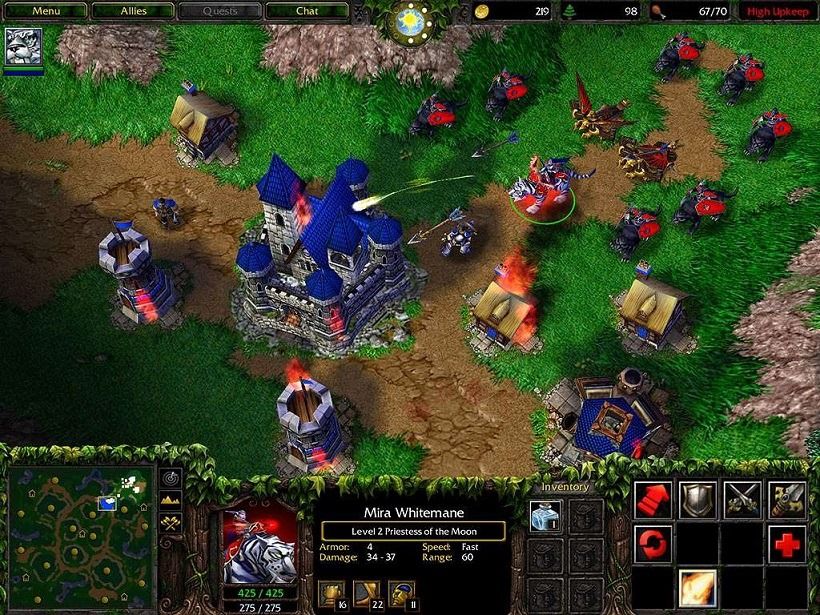
Warcraft III is a real-time strategy game where players collect resources, construct buildings, and train units to defeat opponents. The game manages three primary resources: gold mined from deposits, lumber harvested from trees, and food which limits the maximum number of units a player can control. A distinctive upkeep system penalizes players who produce large armies by reducing their gold income, encouraging strategic restraint and smaller, more tactical engagements.
The game is rendered in 3D from a top-down perspective with a slight angle, allowing for limited zoom and rotation. The interface features a fixed bottom panel with a mini-map, unit information, and command buttons. A top bar displays the time of day, current resources, and upkeep level, while the top left corner shows hero portraits for quick selection. The game introduced hero units that gain experience from combat, level up to a maximum of 10, and learn new abilities, bringing role-playing elements to the RTS genre.
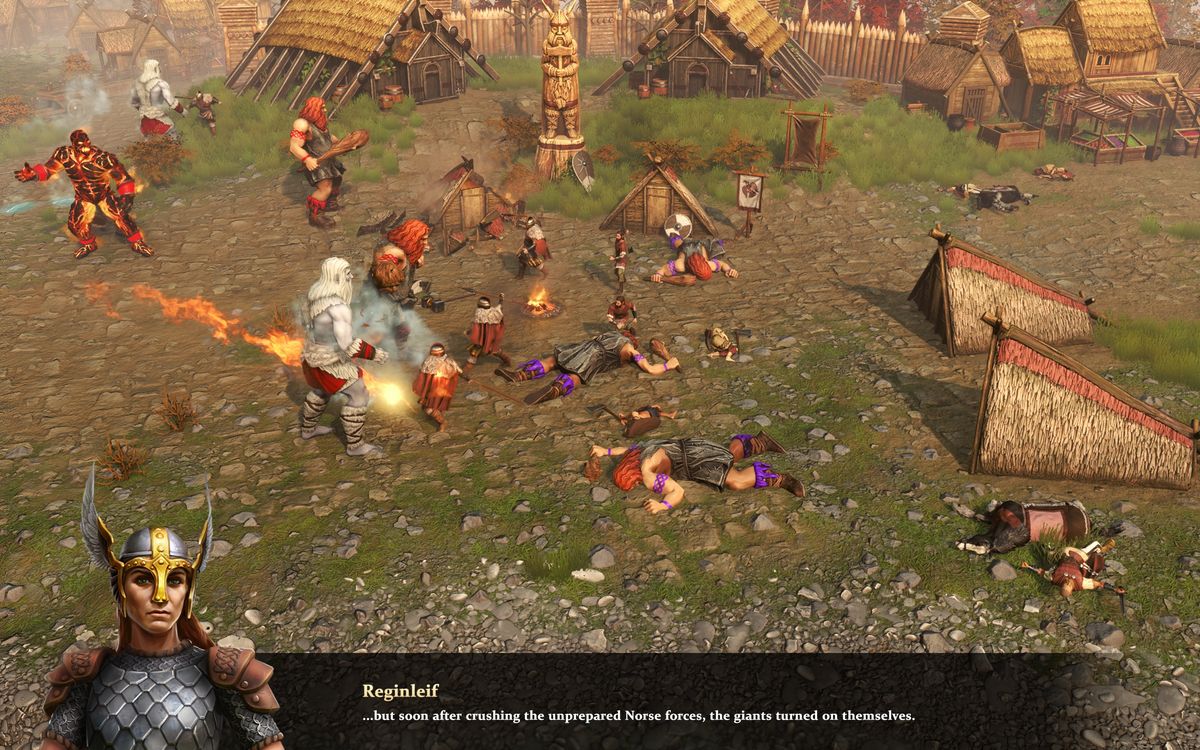
Warcraft III also features a day and night cycle that affects gameplay. At night, most units have reduced line of sight, and certain Night Elf units can become invisible when stationary. Computer-controlled hostile units called creeps guard key areas like gold mines and neutral buildings, providing experience, gold, and items when defeated.
The Four Asymmetric Factions
Players choose from four distinct factions, each with its own units, structures, and gameplay styles. The Human Alliance, a coalition of humans, dwarves, and high elves, returns from previous games with defensive capabilities and versatile units. The Orcish Horde, composed of orcs, trolls, and tauren, emphasizes brute strength and shamanistic magic.
The game introduces two new factions. The Undead Scourge operates through necromancy and corruption, spreading blight to build structures and raising fallen enemies. The Night Elves are an ancient, agile race with mobile buildings, potent ranged units, and druidic magic. Each faction's base-building methodology differs significantly, requiring players to master distinct economic and military strategies for competitive success.
Campaign Structure and Narrative
The single-player campaign is divided into four sequential stories following different factions, beginning with an optional prologue tutorial. Unlike previous Blizzard games, Warcraft III uses a system where plot exposition and objectives are revealed during gameplay rather than in mission briefings. Main quests must be completed to advance, while optional side quests provide additional benefits.
The narrative takes place several years after Warcraft II and follows three primary heroes. Human prince Arthas Menethil investigates a plague that turns victims into undead, leading him down a path of corruption. Orc warchief Thrall leads his people to the continent of Kalimdor after prophetic warnings. Night elf leader Tyrande Whisperwind deals with invaders in her sacred lands. Throughout their campaigns, players retain control of heroes who maintain experience levels between missions, growing progressively stronger.
Campaign missions follow a structured pattern, beginning with introductory levels that teach faction mechanics, progressing to base-building missions against enemy forces, and culminating in epic battles against large enemy armies. The only exception is the Night Elf campaign, which features limited base building in its first mission.
Multiplayer Systems and Competitive Framework
Multiplayer matches are played through Blizzard's Battle.net service across four regional gateways: Azeroth (U.S. East), Lordaeron (U.S. West), Northrend (Europe), and Kalimdor (Asia). The platform introduced anonymous matchmaking that automatically pairs players based on skill level and game preferences, preventing record inflation. For team play, Arranged Team Games match pre-made teams against similarly skilled opponents.
The standard victory condition in multiplayer is the destruction of all enemy buildings. Default melee matches allow players to select their own heroes, and hero death doesn't end the game. Maps are initially fully revealed but covered by fog of war, requiring constant scouting. The game records replays that can be viewed from any player's perspective at variable speeds, facilitating analysis and broadcasting.
Battle.net supports clans for tournament participation and social play, along with friends lists and chat channels. Global rankings are maintained on competitive ladders. The game's balance and mechanics fostered a professional competitive scene where players specialized in specific races and developed complex strategies around hero combinations, creeping patterns, and timing attacks.
Map Editor and Lasting Influence
Warcraft III includes the World Editor, a powerful tool that allows players to create custom maps with modified rules, units, and objectives. This editor enabled the creation of entirely new game modes within the Warcraft III engine, most notably Defense of the Ancients (DotA), which evolved into its own genre and inspired commercial games like League of Legends and Dota 2.
The editor's flexibility supported diverse creations including tower defense maps, role-playing adventures, and various multiplayer scenarios. Custom games became a major aspect of the community, with players hosting matches using both original creations and default multiplayer scenarios. This modding capability significantly extended the game's lifespan and influence beyond its core real-time strategy gameplay.
Warcraft III received critical acclaim upon release, with particular praise for its presentation and multiplayer features. It sold over one million copies within its first month and eventually shipped 4.4 million copies to retail stores. The game is widely regarded as one of the most influential real-time strategy titles and among the greatest video games ever made.
Development History and Technical Details
Development began after the cancellation of Warcraft Adventures: Lord of the Clans in 1998. Blizzard first presented Warcraft III to the public at the European Computer Trade Show in September 1999. The game underwent significant design changes during development, with the final version bearing little resemblance to the originally presented concept.
As the first 3D-rendered game in the Warcraft series, it represented a technological leap from its predecessors. The game's terrain features rivers, mountains, seas, and cliffs that affect gameplay, with units on higher elevations receiving attack bonuses against those below. The fog of war system reveals terrain through exploration but hides enemy movements in unexplored areas.
Warcraft III's legacy includes the 2020 release of Warcraft III: Reforged, a remastered version of both the original game and its expansion. The game's mechanics, particularly its hero system and faction asymmetry, have influenced numerous subsequent strategy games while its modding community created genres that dominate modern esports.
FAQ
What are the main resources in Warcraft III?
The three main resources are gold, lumber, and food. Gold and lumber are required to construct buildings and train units, while food limits the maximum number of units a player can control simultaneously.
How does the hero system work?
Heroes gain experience points from defeating enemy units, allowing them to level up to a maximum of 10. Each level increases attributes and unlocks new abilities, including an ultimate skill at level 6. Heroes can also equip items found throughout the map.
What is the objective in multiplayer games?
In standard multiplayer matches, the sole objective is to destroy all enemy buildings. Players achieve this by gathering resources, building bases, training units and heroes, and engaging in combat.
How many campaigns are in the single-player mode?
There are four main campaigns, one for each faction, played in a set order to follow the story. An optional prologue campaign serves as a tutorial before starting the main narrative.
What was the impact of the World Editor?
The World Editor allowed players to create custom maps and game modes, leading to the creation of Defense of the Ancients (DotA) which spawned the multiplayer online battle arena (MOBA) genre and inspired major commercial games.
Source: English Wikipedia (CC BY-SA), rewritten by the Redington Cybersport desk.