Virtua Fighter 5
Virtua Fighter 5 is the fifth main entry in Sega's pioneering 3D fighting game series, first released in arcades in 2006. Its deep, technical gameplay and numerous competitive revisions have established it as a fundamental title in the fighting game community for nearly two decades.
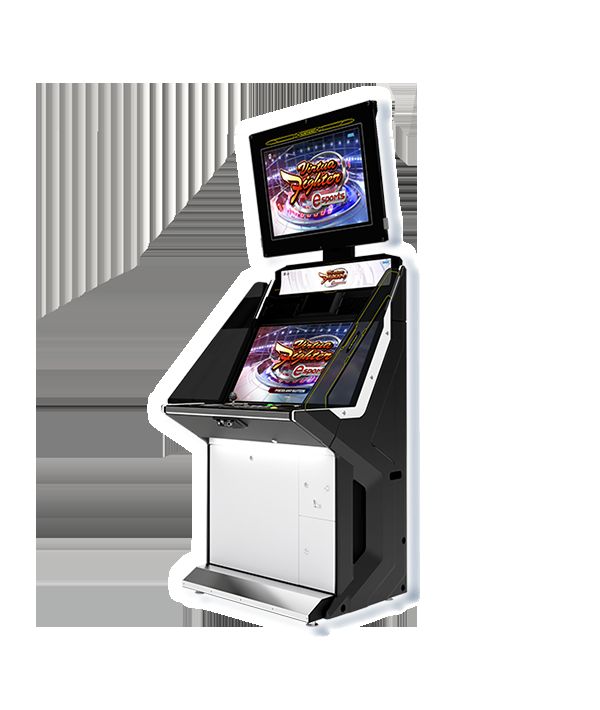
| Developer | Sega AM2 |
|---|---|
| First Released | July 12, 2006 (Arcade) |
| Latest Major Update | Virtua Fighter 5 R.E.V.O. World Stage (2025-2026) |
| Platforms | Arcade, PlayStation 3, Xbox 360, PlayStation 4, Windows, PlayStation 5, Xbox Series X/S, Nintendo Switch 2 |
| Number of Characters | 20 (including Dural) |
| Key Competitive Features | Clash System, Bound System, Online Play, Rollback Netcode (R.E.V.O.) |
Evolution of a Competitive Standard
The competitive journey of Virtua Fighter 5 is defined by its iterative arcade updates, each refining balance and adding content. The original 2006 release was followed by Version B and C revisions, which formed the basis for the initial home console ports. The first major overhaul, Virtua Fighter 5 R, arrived in 2008, reintroducing the sumo wrestler Taka-Arashi and adding the new karate fighter Jean Kujo, bringing the roster to 20 characters.
This was succeeded in 2010 by Virtua Fighter 5 Final Showdown, billed as the final revision for the Lindbergh arcade hardware. Final Showdown was ported to PlayStation 3 and Xbox 360 in 2012 with full online play, achieving over 300,000 global downloads in its first two weeks. It was later included as a playable arcade game within several Like a Dragon series titles.
The game received a modern revival with Virtua Fighter 5 Ultimate Showdown in 2021, a remaster built on the Dragon Engine for PlayStation 4. Co-developed by Ryu Ga Gotoku Studio, it featured updated visuals and new online infrastructure. A free PlayStation Plus offer led to over 10 million downloads, significantly expanding its player base.
The competitive feature set was fully modernized with Virtua Fighter 5 R.E.V.O. for Windows in 2025, which introduced crucial rollback netcode and balance changes. Later that year, it was expanded and rebranded as R.E.V.O. World Stage for PlayStation 5, Xbox Series X/S, and in 2026 for Nintendo Switch 2, adding cross-play support and a new single-player World Stage mode.
Core Gameplay Mechanics
Virtua Fighter 5 is known for its technical depth and strategic neutral game. The series' signature defensive move, the evade, was enhanced with the Offensive Move, a dash that can cancel into attacks to punish opponents. Throw speed was standardized to 12 frames, though instant throws return in guaranteed situations. The Clash System was introduced to reward precise timing, allowing a well-timed throw to cancel an opponent's attack and reset both players to a neutral position.
A major addition in the R revision and beyond was the Bound System. This mechanic causes a juggled opponent to bounce off the ground, allowing for extended combo sequences. Characters possess both high and low bound moves, and successful combos often chain these together, with effectiveness influenced by the opponent's weight and the stage geometry. This system added a significant layer of combo creativity and damage optimization.
Stage design also plays a strategic role. Ring boundaries vary in shape, size, and height, and walls are not uniformly placed. Specific high-damage attacks can trigger a Wall Break on certain stages, offering dramatic combo finishers. These environmental factors force players to adapt their positioning and combo routes.
The Competitive Roster
The starting roster of 17 fighters included every veteran from the series' history up to Virtua Fighter 4, plus the unplayable boss Dural. Virtua Fighter 5 R expanded this to a full set of 20 with two key additions. Jean Kujo, a French-Japanese karateka, was a completely new character with ties to Lion Rafale's backstory. Taka-Arashi, the sumo wrestler absent since Virtua Fighter 3, made a long-awaited return to the series.
This complete roster represents a wide spectrum of real-world martial arts, from Akira Yuki's Bajiquan to Sarah Bryant's Jeet Kune Do. Each character maintains a highly detailed move set, contributing to the game's balanced and matchup-knowledge intensive competitive environment. In the Ultimate Showdown remaster, Dural was initially unavailable as a playable character but was later added via DLC in the World Stage version, though banned from official Sega tournaments.
Online Play and Netcode Revolution
Online functionality has been a central and evolving aspect of Virtua Fighter 5's competitive life. The initial 2007 Xbox 360 port, based on Version C, was the first to offer online battles via Xbox Live. The PlayStation 3 version, built on the older Version B, was never updated with online play due to stated technical limitations.
This divide was resolved with the 2012 release of Final Showdown on consoles, which included online play for both PlayStation 3 and Xbox 360. The 2021 Ultimate Showdown release rebuilt the online experience for PlayStation 4 with new features. The most significant leap came with R.E.V.O. in 2025, which implemented rollback netcode for the Windows version, a technology highly demanded by the fighting game community for its superior performance in online matches.
Rollback netcode and full cross-play support became standard with the R.E.V.O. World Stage release across Windows, PlayStation 5, Xbox Series X/S, and Nintendo Switch 2. This interconnected ecosystem, tested through closed betas, represents the most accessible and technically robust online environment in the game's history.
Tournament Presence and Legacy
Virtua Fighter 5 has maintained a persistent presence in the fighting game tournament scene, particularly in Japan. Its various iterations have been featured at premier events like the Evolution Championship Series (EVO). The announcement of the R.E.V.O. World Stage version was made at EVO 2025, underscoring its continued relevance to the competitive community.
The game's legacy is also deeply intertwined with Sega's broader brand. The Ultimate Showdown remaster was part of Sega's 60th-anniversary celebration. Furthermore, extensive downloadable content packs have tied the game to Sega's history, including collaborations with the Like a Dragon (Yakuza) series, which itself featured Final Showdown as an in-game arcade cabinet, and even a crossover costume pack with Bandai Namco's Tekken 7.
The new World Stage mode in the latest version directly engages with the competitive scene by featuring CPU opponents modeled on the data of real-life top players. This single-player campaign serves as both a training tool and a tribute to the community that has sustained the game for years.
FAQ
What is the difference between Virtua Fighter 5 Final Showdown and Ultimate Showdown?
Final Showdown is the final arcade revision from 2010, later ported to consoles. Ultimate Showdown is a 2021 enhanced remaster for PlayStation 4, rebuilt on the Dragon Engine with updated graphics, a new interface, and revamped online features. Ultimate Showdown is based on Final Showdown but is a distinct, modernized release.
Does Virtua Fighter 5 have rollback netcode?
Yes, rollback netcode was introduced in the Virtua Fighter 5 R.E.V.O. version for Windows in 2025. This feature, along with cross-play support, was carried over to the subsequent R.E.V.O. World Stage release on PlayStation 5, Xbox Series X/S, and Nintendo Switch 2.
How many characters are in Virtua Fighter 5?
The original arcade release had 17 playable characters plus the boss Dural. The Virtua Fighter 5 R update added two characters, Jean Kujo and the returning Taka-Arashi, bringing the total roster to 20 characters including Dural.
Which version of Virtua Fighter 5 had online play first?
The Xbox 360 port released in 2007, titled Virtua Fighter 5 Online in North America, was the first version to feature online play via Xbox Live. The PlayStation 3 version never received an online play patch.
What is the Bound System in Virtua Fighter 5?
The Bound System was added in the Virtua Fighter 5 R update. It allows certain moves to slam a juggled opponent into the ground, causing them to bounce and enabling extended combo sequences. Characters have both high and low bound moves that can be chained together for optimal damage.
Source: English Wikipedia (CC BY-SA), rewritten by the Redington Cybersport desk.