Unreal Championship 2: The Liandri Conflict
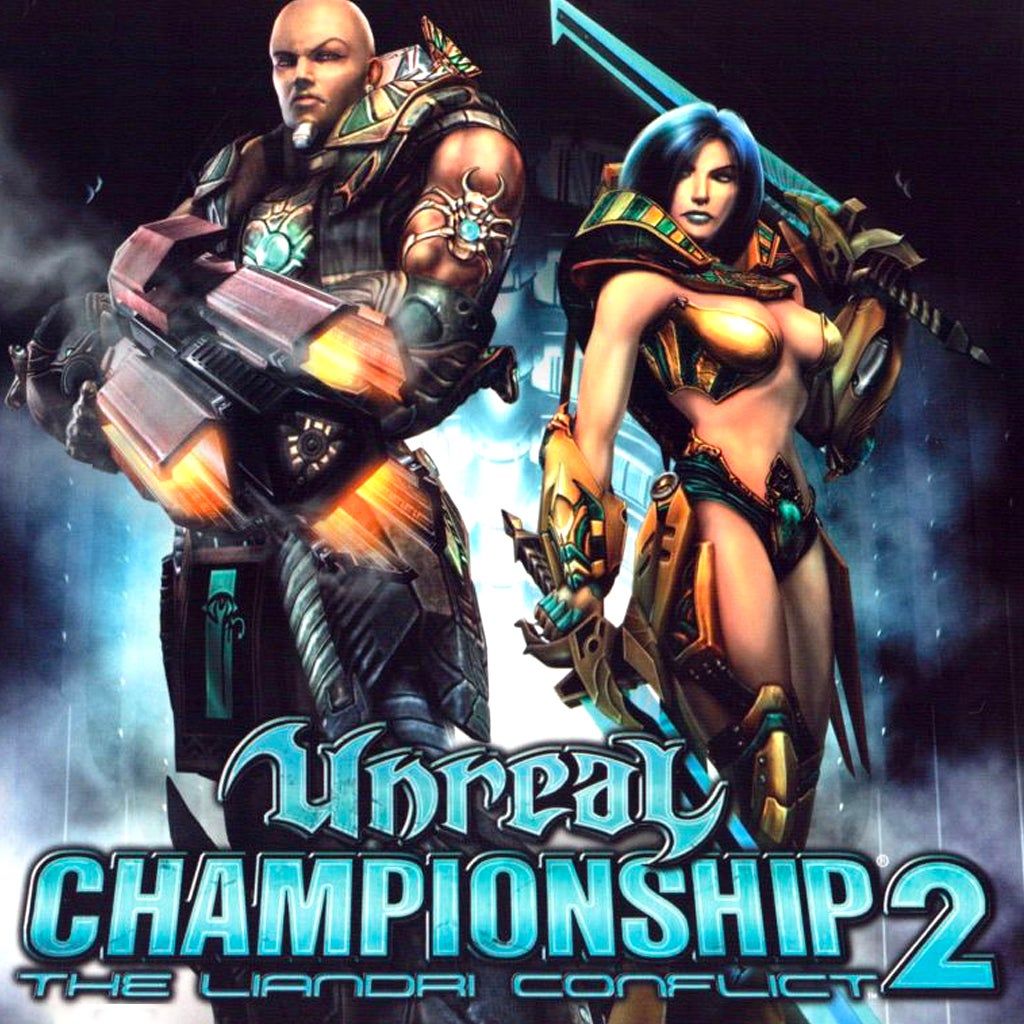
Unreal Championship 2: The Liandri Conflict is a 2005 arena shooter developed by Epic Games exclusively for the Xbox. It is a direct sequel to Unreal Championship and is notable for blending first-person shooting with third-person melee combat. The game was built to take full advantage of Xbox Live and remains a console-focused entry in the Unreal Tournament series.
| Developer | Epic Games |
|---|---|
| Publisher | Midway Games |
| Release Date | April 2005 |
| Platform | Xbox |
| Genre | Arena shooter |
| Game Engine | Unreal Engine 2X |
| Metacritic Score | 85/100 |
| Composer | Kevin Riepl |
A Hybrid Combat Experience
Unreal Championship 2 fundamentally altered the Unreal Tournament formula by introducing deep melee combat alongside its traditional gunplay. Players could switch between first-person and third-person perspectives on the fly, with melee weapons like blades and staffs only usable in third-person view. This added a new layer of strategy, allowing for close-quarters engagements that culminated in special Coup de grâce finishing moves, reminiscent of the Fatalities from Midway's own Mortal Kombat series.
The game further diversified its roster by assigning each of its 14 characters a weight class: light, medium, or heavy. This classification determined a fighter's health, melee damage, movement speed, and agility. Light characters were fast and nimble but fragile, heavy characters were powerful tanks but slow, and medium types offered a balanced approach. To assist with the precision challenges of a console controller, the game featured a lock-on mechanic that kept a targeted opponent on screen, making circle-strafing and melee attacks more manageable than with analog sticks alone.
The Adrenaline System
Adrenaline powers provided another key strategic element in this installment. Each character had access to six special abilities fueled by an adrenaline meter. Two powers, Speed and Nimble, were universal, granting temporary boosts to movement or enhanced jumping. The remaining four abilities were race-specific, with different powers for humans, Nakhti, Necris, Skaarj, Juggernauts, and Liandri robots. Some characters also possessed their own powers.
Adrenaline was earned gradually during a match, with kills and killing sprees providing a significant boost. Pickups were also scattered across maps. Activation costs varied, with the most powerful abilities requiring a full adrenaline meter. This system encouraged aggressive play and forced players to decide between using smaller boosts frequently or saving up for a game-changing power.
Game Modes and Story
The game offered substantial single-player content through three distinct modes. The story-driven Ascension Rites campaign cast players as Anubis, a former tournament champion turned soldier. He re-enters the Nakhti Ascension Rites to stop his power-hungry former fiancée, Selket, from becoming empress, a plot broadcast galaxy-wide by the Liandri Corporation. The narrative unfolded through in-engine cutscenes as players fought through a tournament ladder.
Tournament Mode provided a more traditional ladder experience with any character, while Challenge Mode tasked players with completing specific objectives in single matches. Success in these modes unlocked additional characters and mutators for use elsewhere. The story concluded with Anubis defeating Selket in a final, no-respawn duel. Heartbroken, he later accepts a deal from the Liandri Corporation to resurrect her via the Necris Process, binding his fate to their tournaments as he reluctantly assumes the throne.
Multiplayer and Legacy
Multiplayer supported up to eight players in free-for-all and team-based modes like deathmatch and capture the flag. The game launched with 50 maps tailored for specific gametypes, including new additions like Overdose and Nali Slaughter. As with earlier Unreal games, hosts could customize matches with various mutators that altered gravity, health regeneration, and other core rules.
Although the original Xbox Live service shut down in 2010, Unreal Championship 2 can be played online today through fan-run replacement servers like Insignia. The game's legacy is also marked by a 2021 leak of an unfinished Windows port, highlighting enduring interest in this console-exclusive title.
Development and Cross-Over
Development began after Unreal Tournament 2003, initially as a PC project before Epic Games shifted focus to consoles under a three-game contract with publisher Midway Games. This partnership led to several crossover elements. Raiden from Midway's Mortal Kombat series was included as an unlockable character, and players could optionally switch the game's announcer to the voice from contemporary Mortal Kombat titles.
The game was built on Unreal Engine 2X, a custom version of Unreal Engine 2.5 optimized for the Xbox. This engine allowed for a significant leap in graphical fidelity, with developers claiming it could push three to four times the polygons of the original Unreal Championship and outperform many PC games of the era, thanks to enhanced memory management.
Competitive Gameplay and Mechanics
The lock-on mechanic was a deliberate design choice to address the inherent imprecision of analog sticks compared to a PC mouse and keyboard. It kept a targeted character on screen until the player manually unlocked, or until line of sight was broken. This system was crucial for enabling the fast-paced, close-range melee combat that defined the game's competitive play, allowing for consistent tracking during frantic exchanges.
Character balance was intrinsically tied to the weight class system. A light character's speed and agility could be used to control the flow of a match and secure adrenaline pickups, while a heavy character's high health and melee damage made them formidable in confined spaces. The availability of extra characters via an Xbox Live bonus pack added further variety to the competitive meta, requiring players to adapt to a wider range of possible matchups and special abilities.
Technical Foundation and Design
Unreal Championship 2 was developed from the ground up for the Xbox and its online service, Xbox Live. This console-first approach distinguished it from its predecessor, which was a port of a PC title. The shift to consoles was part of a three-game publishing deal between Epic Games and Midway Games. This deal influenced the game's content, leading to the inclusion of Mortal Kombat elements like Raiden and the alternate announcer.
The custom Unreal Engine 2X was engineered specifically for the Xbox hardware. Developers stated it could render three to four times the polygons of the first Unreal Championship. Key to this performance were memory enhancements that reduced the console memory footprint and managed leaks more efficiently, allowing the game to achieve a level of detail that rivaled contemporary PC titles despite running on less powerful hardware.
FAQ
What platforms is Unreal Championship 2 on?
Unreal Championship 2 was released exclusively for the original Xbox console in April 2005. An unfinished Windows port was leaked online in 2021 but was never officially released.
What is new in Unreal Championship 2 compared to the first game?
The sequel introduced melee combat with dedicated weapons, a third-person perspective, character weight classes (light, medium, heavy), an adrenaline power system, and new gametypes like Overdose and Nali Slaughter. It was built from the ground up for Xbox Live.
Can you play Unreal Championship 2 online today?
Yes, while the official Xbox Live service for the original Xbox shut down in 2010, the game is playable online through fan-run replacement servers such as Insignia.
Is there a story mode in Unreal Championship 2?
Yes, the Ascension Rites campaign is a single-player story mode following the character Anubis as he competes in a tournament to stop his former fiancée, Selket, from becoming empress, with story scenes presented through in-engine cutscenes.
Which Mortal Kombat character is in Unreal Championship 2?
Raiden from the Mortal Kombat series is included as an unlockable playable character. Additionally, players can opt to use the Mortal Kombat announcer voice instead of the standard Unreal Tournament announcer.
Source: English Wikipedia (CC BY-SA), rewritten by the Redington Cybersport desk.