Unreal Tournament 2003
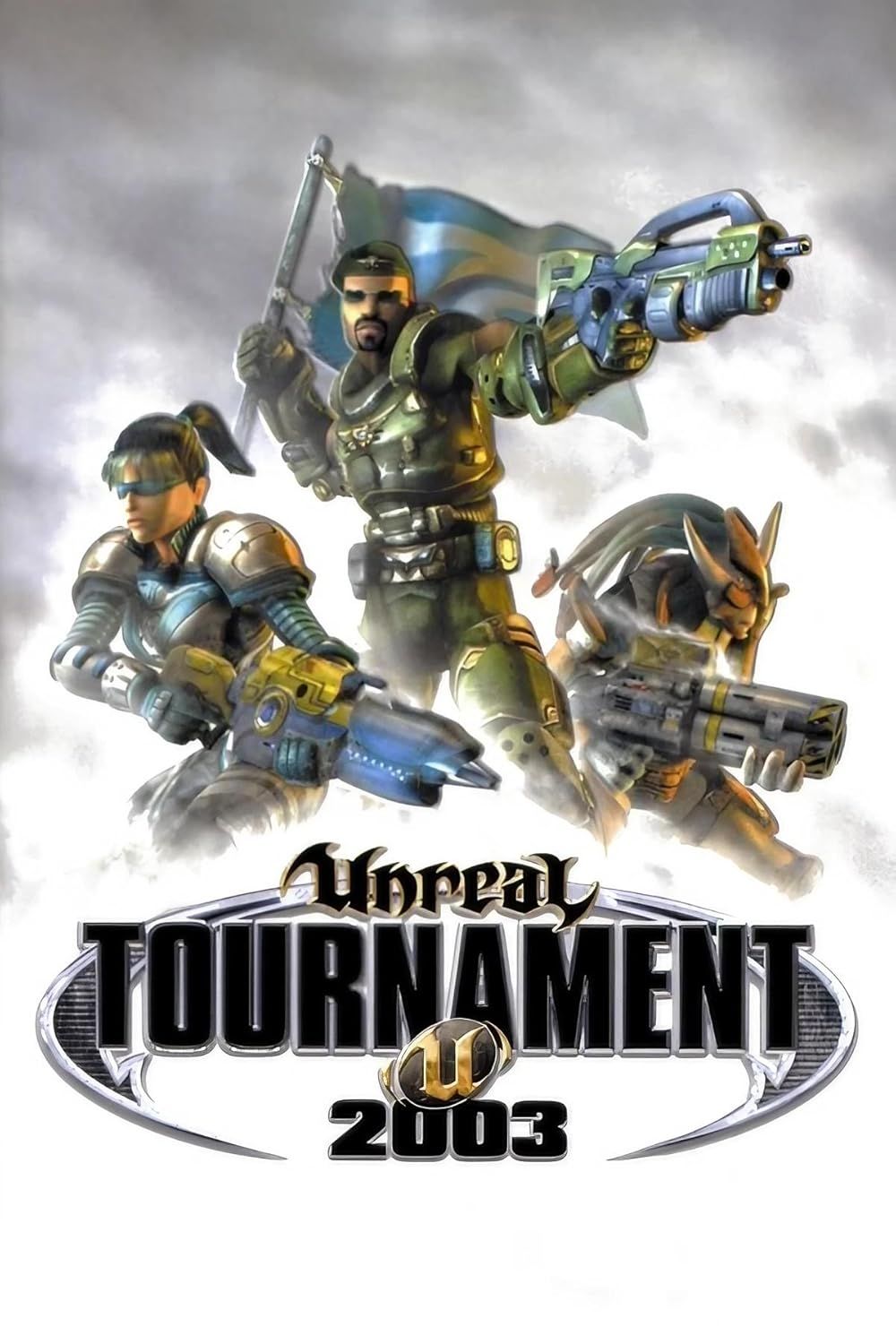
Unreal Tournament 2003 is a first-person arena shooter video game developed by Epic Games and Digital Extremes. Released in 2002, it was a major multiplayer-focused sequel that introduced new gameplay modes and refined the competitive formula of its predecessor.
| Developer | Epic Games, Digital Extremes |
|---|---|
| Publisher | Infogrames (Atari brand) |
| Release | 2002 |
| Platform | Microsoft Windows |
| Genre | First-person arena shooter |
| Modes | Multiplayer |
| Initial Gametypes | Deathmatch, Team Deathmatch, Capture the Flag, Double Domination, Bombing Run |
| US Sales (to Aug 2006) | 360,000 copies |
| First Month Worldwide Sales | Over 800,000 copies |
| Demo Downloads | 1.2 million |
A Multiplayer Arena Evolves
Unreal Tournament 2003 was built from the ground up for competitive multiplayer action. As the second title in the Unreal Tournament series, it aimed to advance the fast-paced, skill-based combat that defined the franchise. The game transported players to futuristic arenas where victory depended on sharp reflexes, tactical awareness, and mastery of an arsenal of powerful weapons. Its core design philosophy centered on providing a pure, adrenaline-fueled player-versus-player experience.
The game's release was a significant event, with its demo being downloaded a record 1.2 million times. It also served as a prominent application for the Unreal Engine, which became widely licensed for other major titles. While the game was successful, its lifecycle was notably short, as it was effectively re-released and expanded just over a year later as Unreal Tournament 2004.
Core Gameplay and Modes
The game launched with five primary competitive modes. Deathmatch and Team Deathmatch focused on pure combat, rewarding players and teams with the most eliminations, or frags. Capture the Flag required coordinated team play to steal the enemy flag and return it to base. Double Domination introduced area control, where teams fought to hold two specific points on the map simultaneously.
A standout new addition was Bombing Run, a sport-like mode. Players fought to carry a ball into the enemy's goal, with the option to pass to teammates. Carrying the ball provided healing but made the player a target, and scoring a touchdown by running through the goal often resulted in the carrier's death. This mode added a layer of objective-based teamwork distinct from traditional shooter gameplay.
Expanded Game Types and Mechanics
Beyond the core five, additional gametypes expanded the variety. Last Man Standing gave each player a limited number of lives, creating a tense survival contest. Invasion offered a cooperative experience against waves of alien AI. The Mutant mode created a dynamic power shift, where the first player to get a kill became a powerful Mutant with enhanced abilities, turning them into the primary target for everyone else.
The game also introduced the Adrenaline system, a new mechanic that allowed players to build up a meter for temporary power-ups. This added a strategic layer to combat, rewarding aggressive and sustained performance. The movement physics, described by some players as floaty and dodge-heavy, represented a departure from the feel of the original Unreal Tournament and became a point of discussion within the community.
Commercial Performance and Reception
Unreal Tournament 2003 was a commercial success. In its first month, it sold more than 800,000 copies worldwide. In the United States alone, it sold 360,000 copies and earned $13.6 million by August 2006, making it the best-selling Unreal title in the US since January 2000. In Germany, Austria, and Switzerland, it achieved Gold status for sales of at least 100,000 units.
Critically, the game was praised for its technical skill. GameSpot named it the best computer game of October 2002 and later awarded it their annual Best Graphics (Technical) on PC award. It was also nominated for Best Multiplayer Action Game on PC and received a nomination for Outstanding Achievement in Visual Engineering at the Interactive Achievement Awards.
Legacy and Competitive Scene
Unreal Tournament 2003's competitive legacy is intrinsically tied to its successor. The rapid release of Unreal Tournament 2004, which included all of UT2003's content plus new vehicles and the popular Onslaught mode, meant that the 2003 edition was largely superseded in the esports arena. Most organized competition and community focus shifted to the more complete UT2004 package.
Nevertheless, UT2003 established the foundational gameplay and visual style that would define the mid-2000s era of the franchise. It served as the testing ground for the new engine and game modes that would flourish in 2004. For a brief period, it hosted a dedicated player base and tournaments, with information trackers later documenting its prize pools and top competitors. The game is remembered as an important, transitional chapter in the history of arena shooters.
FAQ
What is Unreal Tournament 2003?
Unreal Tournament 2003 is a first-person arena shooter video game developed by Epic Games and Digital Extremes. Released in 2002, it is the sequel to 1999's Unreal Tournament and was designed primarily for competitive multiplayer gaming.
What game modes did Unreal Tournament 2003 have?
The game launched with five main modes: Deathmatch, Team Deathmatch, Capture the Flag, Double Domination, and Bombing Run. Later updates added modes like Last Man Standing, Invasion, and Mutant.
Was Unreal Tournament 2003 successful?
Yes, it was commercially successful, selling over 800,000 copies worldwide in its first month. Its demo was downloaded 1.2 million times. It also won awards for its technical graphics and was nominated for several multiplayer accolades.
How is Unreal Tournament 2003 related to Unreal Tournament 2004?
Unreal Tournament 2004 was a re-release and expansion of UT2003. Released in March 2004, it included all the content from UT2003 while adding new features like vehicles and the Onslaught mode, quickly making it the preferred version for most players.
What was the Bombing Run mode?
Bombing Run was a sport-inspired team mode where players fought to carry a ball into the enemy's goal. The ball could be passed, and carrying it healed the player. Scoring a touchdown by running through the goal usually killed the carrier but awarded seven points.
Source: English Wikipedia (CC BY-SA), rewritten by the Redington Cybersport desk.