Tactical Ops: Assault on Terror
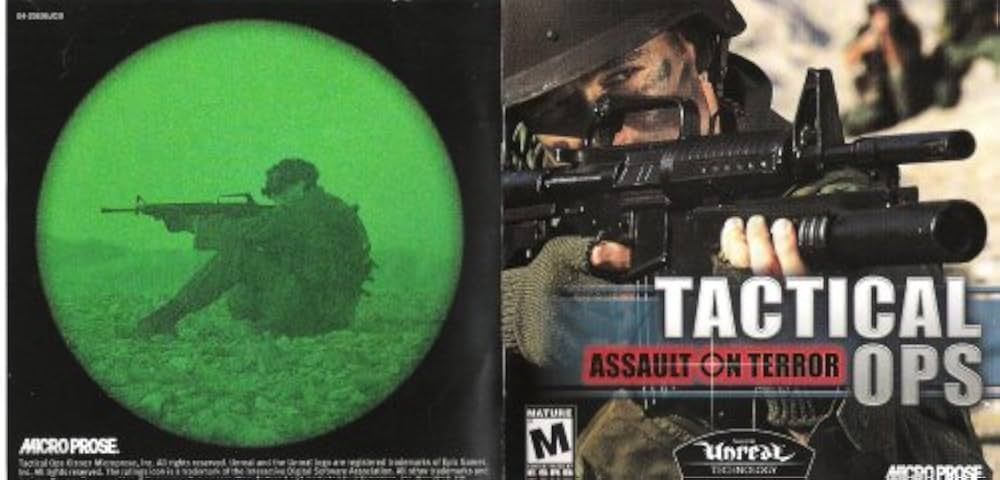
Tactical Ops: Assault on Terror is a 2002 first-person shooter that carved out a niche in the competitive multiplayer scene as a standalone retail version of a popular Unreal Tournament mod. It pitted Special Forces against terrorists in objective-based rounds, offering a familiar but distinct experience in an era dominated by titles like Counter-Strike.
| Developer | Kamehan Studios |
|---|---|
| Publisher | Infogrames (MicroProse) |
| Release Year | 2002 |
| Platform | PC |
| Genre | First-person shooter |
| Game Engine | Unreal Engine |
| Original Mod Release | 1999 (for Unreal Tournament) |
| Single-player Maps | 30 |
From Mod to Mainstream
Tactical Ops began its life in 1999 as a fan-made modification for the popular arena shooter Unreal Tournament. Developed by Paris-based Kamehan Studios under the leadership of Laurent Delayen, the mod was first published as SWAT in June 2000 before evolving into the Tactical Ops name. Its success caught the attention of publisher Infogrames, which in 2002 secured a deal to release it as a full commercial product under the MicroProse brand.
This move to retail required the addition of a single-player component, a task given to Kamehan Studios. At its peak, over fifty staff including designers, programmers, and testers worked on the project. However, the developer later stated that the transition to commercial development was unplanned and came with tight deadlines. This limited their ability to create deep and complex scenarios, leading them to focus on replicating the multiplayer experience with computer-controlled bots instead. The retail version was also designed to be freely distributed to Unreal Tournament players as a separate patch, maintaining a bridge to its mod community.
Core Gameplay Loop and Mechanics
The gameplay of Tactical Ops will be immediately familiar to fans of team-based tactical shooters. Two teams, Special Forces and terrorists, face off in four-minute rounds across various maps. Victory is achieved not just by eliminating the opposition but by completing specific mission objectives. These objectives include guarding or extracting hostages, securing weapons caches, or planting and detonating bombs at designated sites.
A key economic layer drives the action. Players earn in-game money for kills, finding hidden contraband, and completing objectives. Between rounds, this currency is spent in a buy menu to purchase an arsenal of weapons, armor, grenades, and utility items like night vision goggles. If a player is killed during a round, they must spectate until the round concludes, either by timer expiration or objective completion, adding a high-stakes, round-based tension to the matches. The single-player mode allowed players to compete across 30 different maps against computer-controlled bots, attempting to simulate the multiplayer experience.
Critical Reception: A Divided Opinion
Upon its retail release, Tactical Ops received a mixed critical response. Review aggregator Metacritic classified its reception as mixed or average. A common point of cynicism was the very concept of selling a commercial version of what was essentially a mod for another game. Many critics directly compared it to Counter-Strike and Global Operations, labeling it a clone in an already oversaturated genre. Tom Price of Computer Gaming World noted the whole counter-terrorist themed, close quarters combat genre is oversaturated. PC Gamer noted the genre was long in the tooth, giving the game a been-there-done-that feeling.
Opinions on its visual presentation and map design were sharply divided. Scott Osborne of GameSpot remarked the updated graphics were a welcome overhaul, highlighting the attractive and convincing textures and player skins. GameZone praised the game's semi-realistic visual design, level of detail, and lighting. In contrast, Tom Price stated that the game's models were uninteresting and barely detailed, featuring drab textures and stiff animation, with levels devoid of decent choke points. Mark Hill of PC Zone found the maps to be boxy, ugly, and unbalanced affairs.
Gameplay and Bot AI Under Scrutiny
Critics were also mixed on the gameplay itself, though commentary on the single-player bots was overwhelmingly negative. PC Gamer praised the gameplay as a lot of fun, highlighting the gunfights as brutal and the weapons as semi-realistic. GameZone found the multiplayer mode to be intense and extremely fast paced. However, Bill Hiles of GameSpy remarked that the multiplayer mode lacked sophistication, devolving to mob rule and juvenile deathmatch antics, and that the single-player mission types lacked in variety.
The artificial intelligence in single-player was a particular point of criticism. Tom Price described the single-player gameplay as marred by lackluster bot AI due to their predictable behaviour. Mark Hill of PC Zone lambasted the bots as useless and lacking tactical options, stating they run to their target, shoot anything that stands in their way and get killed. That's about it. IGN found Tactical Ops to be an acceptable alternative to its counterparts, but concluded its retail version needed more work.
Cultural Context and Publisher Response
The game's release in 2002 placed it in a sensitive cultural context following the September 11, 2001 terrorist attacks. In response to criticism by reviewers that the terrorism theme of Tactical Ops was in poor or cynical taste, Infogrames publicly clarified that the game did not seek to glorify terrorism or terrorist activity in any way. The publisher also noted the project was in production before the attacks occurred, aiming to distance the commercial product from accusations of exploitation.
The Competitive Scene and Enduring Community
While the notes do not detail formal leagues or tournaments with specific prize pools, Tactical Ops fostered a dedicated online multiplayer community. Its roots as a popular Unreal Tournament mod provided a built-in player base that transitioned to the standalone version. The game was designed to be both a sold retail product and a free download for Unreal Tournament owners, which helped maintain its accessibility and player numbers for years.
The core competitive appeal lay in its objective-based team play, which demanded coordination and strategy beyond simple deathmatch skills. This formula, reminiscent of but distinct from Counter-Strike, secured Tactical Ops a place in the memories of many players. Online forums and videos years later show players reminiscing about it as a favorite title and even organizing multiplayer sessions well into the 2020s, demonstrating its lasting niche appeal. For some players, particularly on platforms like Mac, it was a primary tactical shooter that ran smoothly.
Place in Gaming History
Tactical Ops: Assault on Terror is a notable example of the mod-to-retail pipeline that was prominent in the early 2000s. It represents a specific moment when successful community projects could be polished and packaged for a wider audience. While it may not have achieved the success of a title like Counter-Strike, it served as a functional and enjoyable alternative for players invested in the Unreal Engine ecosystem or seeking a different flavor of tactical combat.
Its development story highlights the challenges of rapid commercialization, where ambitious ideas for complex scenarios were shelved in favor of delivering a product that faithfully, if imperfectly, translated a multiplayer mod into a single-player capable package. The mixed reviews capture a snapshot of a crowded market where innovation was prized, and derivative works faced an uphill battle for recognition, even when they provided competent and engaging gameplay for a dedicated community.
FAQ
What type of game is Tactical Ops: Assault on Terror?
It is a team-based, objective-focused first-person shooter where Special Forces battle terrorists in round-based matches. Players complete missions like hostage rescue or bomb defusal, using money earned in-game to buy weapons and gear between rounds.
Was Tactical Ops originally a mod?
Yes. It originated in 1999 as a modification for Unreal Tournament called SWAT, later renamed Tactical Ops by developer Kamehan Studios. The standalone retail version was published in 2002.
How was the single-player mode received?
Critics were mostly negative about the single-player mode, specifically criticizing the performance of the computer-controlled bots. The AI was described as predictable, lackluster, and useless, with bots lacking tactical options and running directly to targets.
How did critics compare it to other games?
Many reviewers described it as a clone or imitation of existing titles like Counter-Strike and Global Operations. They felt the counter-terrorist genre was oversaturated, giving Tactical Ops a been-there-done-that feeling for some.
What was the controversy around its theme?
Following the September 11 attacks, some critics questioned the taste of a game about terrorism. Publisher Infogrames clarified that the game did not glorify terrorism and was already in production before the attacks occurred.
Source: English Wikipedia (CC BY-SA), rewritten by the Redington Cybersport desk.