Red Orchestra: Ostfront 41–45
Red Orchestra: Ostfront 41–45 is a landmark multiplayer tactical first-person shooter released in 2006, noted for its uncompromising dedication to realism in depicting Eastern Front combat during World War II. Developed by Tripwire Interactive, the game emerged from a successful modding competition and established a distinct, hardcore niche in competitive online play.
| Developer | Tripwire Interactive |
|---|---|
| Release | March 14, 2006 |
| Platform | PC |
| Genre | Tactical First-Person Shooter |
| Setting | Eastern Front, World War II (1941–1945) |
| Copies Sold (as of April 2009) | Approximately 400,000 |
| Predecessor | Red Orchestra: Combined Arms (mod) |
| Sequel | Red Orchestra 2: Heroes of Stalingrad (2011) |
| Official Maps | 16 |
| Supported Community Maps | 10 |
From Mod to Standalone Success
The origins of Red Orchestra: Ostfront 41–45 lie in a total conversion mod for Unreal Tournament 2004 called Red Orchestra: Combined Arms, which was itself originally developed for Unreal Tournament 2003. The independent international team behind this mod, which would later form Tripwire Interactive, entered the NVIDIA Make Something Unreal Contest. Their success in this competition, which included winning the Best Mod award from Computer Games Magazine in 2004, secured them the grand prize of free Unreal Engine 2.5 and 3.0 licenses. This victory directly funded the development of a full commercial product.
The development of the Combined Arms version of the mod, specifically version 3.0, was driven by suggestions that vehicles be included to help the project progress in the contest. Further refinement led to version 3.3, the final version of the mod. Tripwire Interactive announced the standalone game in November 2005, choosing Valve's Steam platform for distribution. Red Orchestra: Ostfront 41–45 was released on Steam on March 14, 2006, marking the studio's first official project. The game was a critical success, receiving favorable reviews and being named a runner-up for Computer Games Magazine's top 10 computer games of 2006. By April 2009, it had sold approximately 400,000 copies.
A Philosophy of Hardcore Realism
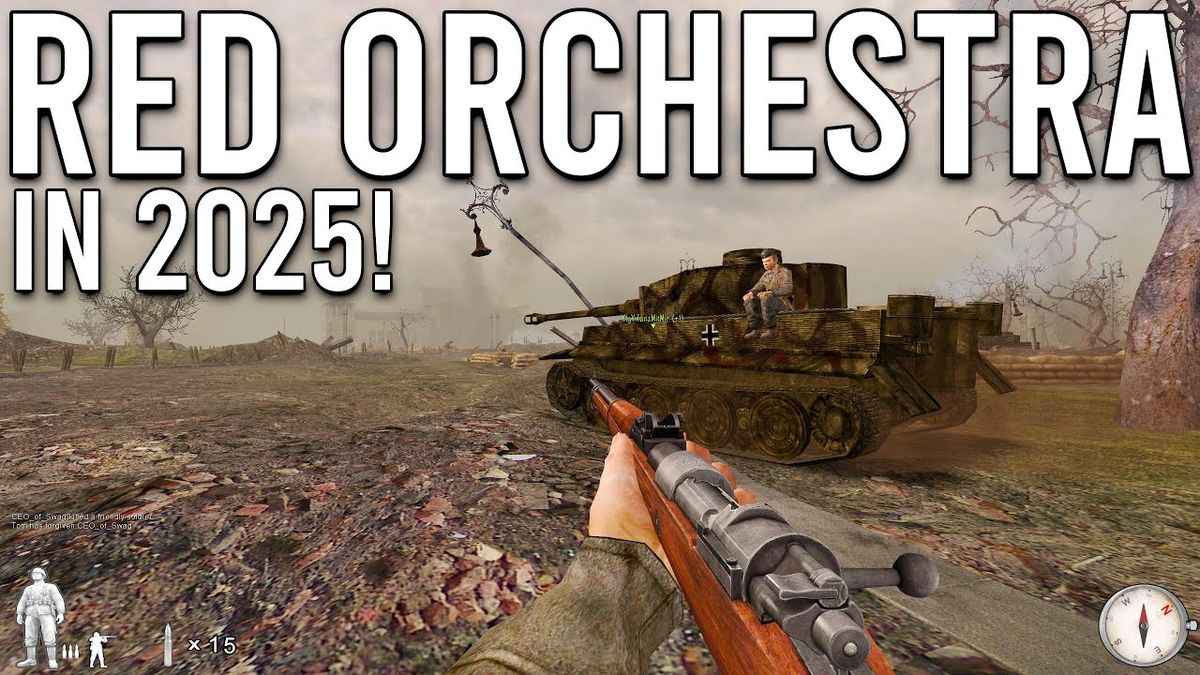
Red Orchestra distinguished itself from other World War II shooters through a relentless focus on simulation and realism. The game strips away common player aids, forcing a more deliberate and tactical style of play. There is no on-screen crosshair for aiming. Instead, players must aim down the three-dimensional iron sights of their weapon, manually compensating for character breathing and natural sway from holding the gun. Alternatively, they can use a much quicker but less accurate free-aim system from the hip, effective only at very short range.
The game's advanced ballistics system models bullet drop and flight time for both small arms and tank rounds. Player health is not represented by a numeric counter but by a diagram of the player's body with reddened sections that show wounded areas. There is no way to recover from wounds, though after a brief period the player will function at 100% capacity again. Wounds have specific effects, such as temporarily slowing the player if legs are hit or causing a player to drop their currently held weapon if hands are injured. Players must also mentally track their ammunition, as no on-screen counter is provided. Bolt-action rifles are typically lethal with a single shot to the torso or head, and semi-automatic rifles like the SVT-40 and Gewehr 43 are also capable of one-shot kills.
Crew-Based Armored Warfare
Vehicle combat is a central pillar of the Red Orchestra experience, designed with the same commitment to realism as infantry play. Players can operate tanks and other combat vehicles, taking on specific crew roles such as driver, commander, or machine-gunner. Most tanks can accommodate up to three crew members to be fully effective, particularly in close city fighting. A tank is most effective with multiple players cooperating in these roles, but a single player can operate one solo by switching between positions as needed.
The game's mechanics encourage teamwork by awarding points to all players in a vehicle for the actions of their fellow crew members. For example, if a driver and commander destroy an enemy tank, both receive points for the kill. When operating a tank solo, a player can only perform one role at a time. This prevents a solo player from moving, firing, and reloading simultaneously, as reloading is a specific task performed by the commander role. The tank armor model is also highly detailed, featuring penetration and deflection mechanics that relate to range and the angle of the projectile's trajectory. Certain maps also provide artillery support that can be utilized by both squad leaders and tank commanders.
Infantry Movement and Map Design
Infantry gameplay is built on a realistically modeled movement system. Players have the ability to lie and move prone, sprint while standing or crouching, and deploy machine guns on objects for stable fire. This movement system complements the game's lethal gunplay, making positioning and use of cover critical for survival. The game concentrates mostly on its multiplayer aspect, though a singleplayer Practice mode is available for training.
The battlefield is defined by the game's maps. Red Orchestra shipped with 16 official maps and later supported 10 community-made maps. The Red Orchestra SDK, though it never progressed beyond a beta version, allowed the community to produce hundreds of user-created maps. Maps are categorized into specific types to shape the gameplay experience. Infantry maps focus on foot soldier combat, sometimes including armored personnel carriers. Tank maps are designed primarily for armored vehicle engagements. Combined Arms maps are the most complex, making the coordination of infantry and armor the focal point of gameplay. Environments are richly detailed with broken buildings, wrecked vehicles, propaganda posters, and resupply areas to enhance immersion. However, interaction with the environment is often limited to objects that are part of specific objectives or blockades.
The Modding Heritage and Technical Details
The lineage from mod to retail product is a core part of the game's identity. The original Red Orchestra: Combined Arms mod is notable for its early emphasis on the same realism that defined the standalone game. It featured little on-screen information, no crosshairs, and required aiming with iron sights while compensating for breath and sway. For Linux gamers, Loki installers provided a way to run the original Combined Arms modification with the Linux port of Unreal Tournament 2004, including an installer for the Summer Offensive Map Pack Addon.
This modding heritage facilitated a strong community around the standalone game. The availability of development tools, even in beta, ensured a steady stream of new content and variations on gameplay, extending the title's longevity. The community's role in map creation and modification was officially acknowledged through the support of ten community-made maps, bridging the gap between developer and player.
The Competitive Scene and Legacy
Red Orchestra: Ostfront 41–45 carved out a dedicated competitive community drawn to its high skill ceiling and team-based gameplay. The absence of casual mechanics like crosshairs and health regeneration created a steep learning curve that rewarded coordination, communication, and mastery of the game's realistic systems. Matches often revolved around controlling key map objectives through combined arms tactics, where a well-crewed tank supported by disciplined infantry could dominate the battlefield. The points system for vehicle crews further incentivized structured teamwork over individual play.
The game's legacy is significant. It proved the commercial viability of a hardcore tactical shooter and established Tripwire Interactive as a respected developer in the genre. Its success directly led to the development and release of the sequel, Red Orchestra 2: Heroes of Stalingrad, in September 2011, which built upon and refined the foundational gameplay established by Ostfront 41–45. The original game remains a benchmark for realism in military shooters, remembered for its authentic portrayal of Eastern Front warfare and its demanding, rewarding competitive environment.
FAQ
What is Red Orchestra: Ostfront 41–45?
It is a multiplayer tactical first-person shooter video game released in 2006, set on the Eastern Front of World War II. Developed by Tripwire Interactive, it is known for its high level of realism in combat simulation and originated from an award-winning mod.
How does the realism in Red Orchestra work?
The game removes standard aids like crosshairs and ammo counters. Players aim using iron sights with weapon sway and breath, track ammo mentally, and have a wound system shown on a body diagram instead of health points. Ballistics include bullet drop and flight time, and rifles often kill in one shot.
Can you play tanks in Red Orchestra?
Yes, vehicle combat is a major feature. Players can crew tanks in roles like driver, commander, and machine-gunner. Tanks have realistic armor modeling with penetration and deflection, and operating them effectively requires teamwork, though a single player can switch between roles solo.
What was the game's origin?
It originated as a mod called Red Orchestra: Combined Arms for Unreal Tournament 2004. The mod team won the Make Something Unreal contest, which provided the Unreal Engine licenses used to develop the standalone commercial game after forming Tripwire Interactive.
How many maps does the game have?
The game launched with 16 official maps and later supported 10 community-made maps. Hundreds of additional user-created maps were made possible by the release of a beta Software Development Kit (SDK).
Source: English Wikipedia (CC BY-SA), rewritten by the Redington Cybersport desk.