Overwatch (2023 video game)
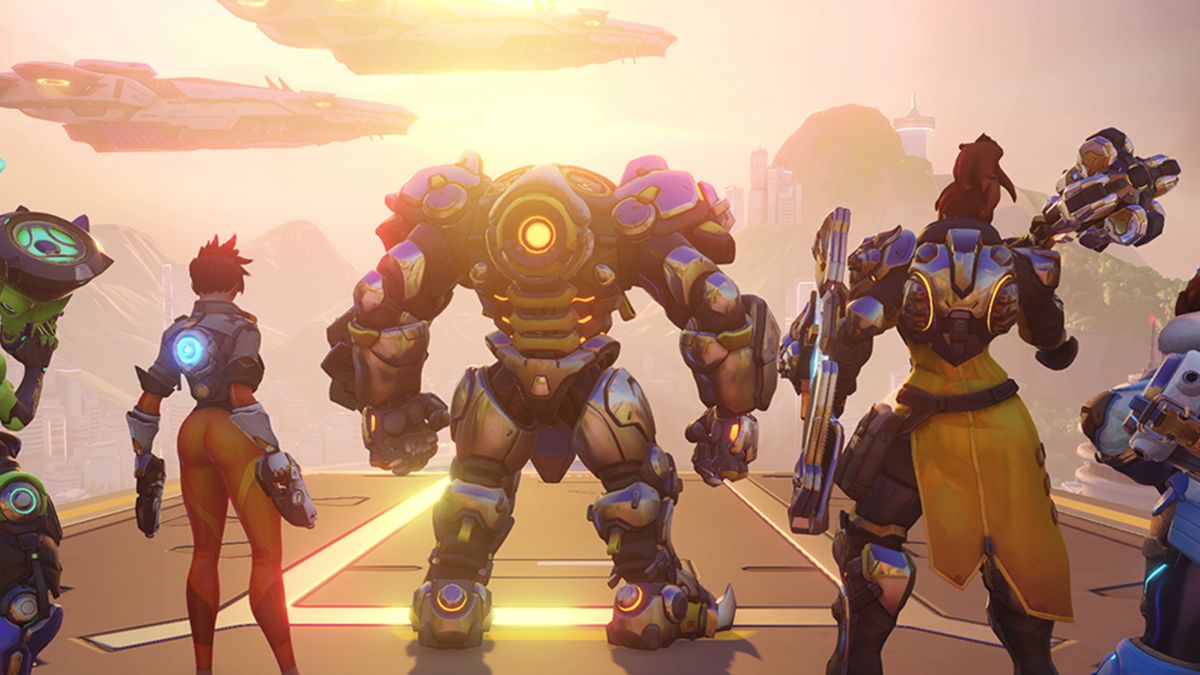
Overwatch is a free-to-play first-person hero shooter that serves as the sequel and replacement to the 2016 game of the same name. It is a major title in competitive gaming, known for its team-based combat across a diverse roster of heroes. The game's shift to a five-player format and continuous evolution through seasonal updates have defined its modern competitive identity.
| Developer | Blizzard Entertainment |
|---|---|
| Release | August 2023 |
| Platforms | Nintendo Switch, Nintendo Switch 2, PlayStation 4, PlayStation 5, Windows, Xbox One, Xbox Series X/S |
| Game Type | Hero Shooter |
| Team Size | 5 (standard) |
| Cross-Platform Play | Yes |
| Monetization | Free-to-play with battle pass and in-game store |
Core Gameplay and the Shift to 5v5
Overwatch is built around team-based player versus player combat, with two teams of five selecting from a roster of over 40 heroes. These heroes are divided into three distinct roles. The damage role focuses on offensive pressure, the support role provides healing and utility, and the tank role is responsible for creating space and protection for their team. Each hero possesses its own kit of active, passive, and powerful ultimate abilities.
The most significant change from the original Overwatch is the reduction in team size from six to five. This was achieved by removing one tank slot from the standard team composition. Game director Aaron Keller stated the goal was to speed up gameplay, which developers felt had become slow with two tanks, and to make matches easier to follow for both players and spectators. To support this new five-player dynamic, heroes across all roles received adjustments. Damage heroes gained increased movement speed, support heroes were given passive health regeneration, and tanks were redesigned to take on a more offensive posture.
Specific heroes were reworked to fit the new format. Orisa, a tank, had several defensive abilities replaced with offensive ones and gained more self-sustainability. Doomfist was moved from the damage role entirely and reworked into a fast-moving tank character. New maps were also designed with more cover options to compensate for having one less tank providing protection for the team.
Game Modes and Evolution
The game retains several popular team-based modes from its predecessor, including Control, Escort, and Hybrid. Assault maps, however, were removed from standard play due to community perceptions of imbalance, though they remain available in arcade modes and custom games. Overwatch has introduced several new core modes since its launch.
Push was introduced at release. In this symmetric mode, teams fight for control of a robot that pushes a barrier toward the enemy's goal, functioning like a tug-of-war. Flashpoint arrived in Season 6. Here, teams battle over a series of capture points, with the first team to secure three points winning the match. Clash was added in Season 12, featuring a linear series of five objectives to capture, but it was later removed from core modes and is now only available within the Stadium mode.
The Stadium mode, launched in Season 16, represents a major departure. Matches are best-of-seven series played on condensed versions of Control, Push, or Clash maps. A key feature is the Stadium Cash system, where players earn currency based on performance to purchase in-round character upgrades. Stadium is played in a third-person view by default and was initially a competitive-only mode before a quick-play version was added later.
Post-Launch Systems and Updates
Overwatch operates on a seasonal model, with major updates often reshaping the game's systems. A crucial change came with Season 9, which overhauled combat by increasing all heroes' health, adding passive healing, and buffing projectile weapons to improve survivability. The competitive ranking system was also redesigned to adjust ranks after each match, providing more feedback, a shift from the previous system that updated after five wins or 15 losses.
Monetization and progression have seen significant revisions. The game launched with a battle pass system, replacing the original's loot boxes. However, with Season 10, Blizzard reversed course on locking new heroes behind the battle pass, making all new and existing Overwatch 2 heroes free for all players. Loot boxes were reintroduced in Season 15, earned through gameplay but not directly purchasable, containing cosmetic items from past seasons.
New gameplay mechanics have been steadily integrated. A ping system allows for better team communication. Season 15 introduced perks, which let players modify hero abilities as they level up during a match. Competitive modes gained a hero ban system in Season 16, allowing teams to vote to disable specific heroes. Season 17 added a map voting system, giving players a choice from three algorithm-selected options before a match begins.
Additional Content and Player Experience
Beyond the core PvP experience, Overwatch has experimented with other forms of content. Three story-based Player versus Environment missions were added in Season 6, advancing the game's narrative, though access to these required a purchase. Hero Mastery courses, introduced to help players improve with specific characters, were phased out by Season 19 due to low popularity.
The game frequently hosts limited-time events and collaborations with other franchises. These have included crossovers with Blizzard's own Diablo IV, anime series like One-Punch Man and Cowboy Bebop, and the Korean idol group Le Sserafim, offering unusual cosmetic items.
Blizzard has also tested reverting to the original six-versus-six team format through limited-time events and a dedicated competitive mode introduced in Season 15, gauging player response. Furthermore, starting with Season 18, console players have the option to use mouse and keyboard controls, though they are then queued into matches with PC players. The game requires a Blizzard Battle.net account and features full cross-progression, allowing cosmetic items and progress to be shared across all platforms, though competitive skill ratings are kept separate between console and PC.
Development and Rebranding
Overwatch 2 was announced in 2019 with a plan to share a multiplayer environment with the original game. Development faced delays due to internal decisions to shift to a free-to-play model and difficulties in implementing ambitious Player versus Environment concepts. The game released in early access in October 2022 before its official launch in August 2023.
Plans for extensive story-based cooperative modes were scrapped in 2023 to focus on PvP elements. In a significant rebranding move in February 2026, the game's title was shortened from Overwatch 2 to simply Overwatch, signaling a renewed focus on narrative elements tied to new heroes and seasonal content. Former director Jeff Kaplan noted in a 2026 interview that the demands of the Overwatch League, launched in 2017, significantly influenced the original game's development, pushing features more amenable to professional play.
FAQ
Is Overwatch free to play?
Yes, Overwatch is a free-to-play game. It uses a seasonal battle pass system and an in-game store for monetization, a shift from the premium purchase model of the original 2016 game.
How many players are on a team in Overwatch?
The standard team size is five players, reduced from six in the original game. This change removed one tank slot from the team composition. Blizzard has also tested bringing back six-versus-six gameplay through limited-time modes and a separate competitive queue.
What are the main game modes in Overwatch?
Core modes include Control, Escort, Hybrid, and Push. Flashpoint and the Stadium mode are also key additions. Assault maps were removed from standard play, and Clash was moved to only be available within Stadium.
Can I use my progress across different platforms?
Yes, Overwatch features full cross-progression. Cosmetic items, in-game currency, and player statistics are shared across PC and console versions when linked to a Blizzard Battle.net account. However, competitive skill ratings are kept separate for console and PC players.
What is the Stadium game mode?
Stadium is a mode where two teams of five play a best-of-seven series on smaller versions of standard maps. Players earn Stadium Cash based on performance to purchase in-round character upgrades, and the mode is played in a third-person view by default.
Source: English Wikipedia (CC BY-SA), rewritten by the Redington Cybersport desk.