Overwatch League
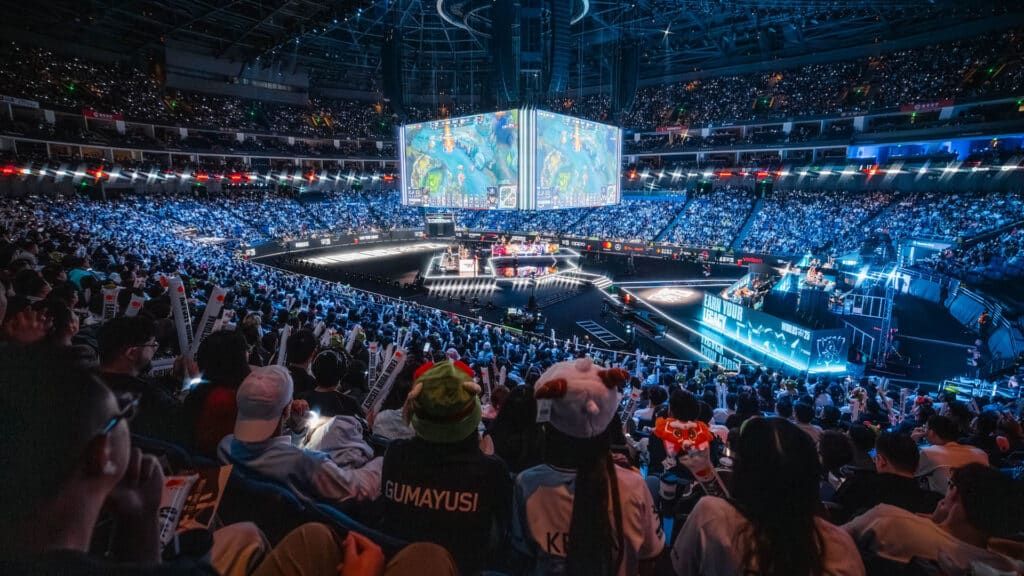
The Overwatch League (OWL) was a professional esports league for Overwatch and Overwatch 2, produced by Blizzard Entertainment. Operating from 2018 to 2023, it was notable for its traditional North American sports model of permanent, city-based franchises, a pioneering structure in the esports world.
| Founded | 2016 |
|---|---|
| First held | 2018 |
| Final season | 2023 |
| Game | Overwatch / Overwatch 2 |
| Developer | Blizzard Entertainment |
| Format | Regular season and playoffs |
| Prize pool (2018) | US$3.5 million |
| Minimum player salary (2023) | US$54,249 |
| Teams (peak) | 20 |
| Successor | Overwatch Champions Series (OWCS) |
League Structure and Format
The Overwatch League was owned and operated by Blizzard Entertainment and its parent company's subsidiary, Major League Gaming. It rejected the promotion and relegation system common in other esports, instead adopting a closed franchise model similar to major North American sports. The league featured twenty permanent teams split into two conferences, East and West, with eight teams in the East and twelve in the West.
Its inaugural 2018 season established the core competitive format. It consisted of a pre-season, a regular season divided into four five-week stages, and a post-season playoff tournament. Each stage concluded with its own playoff to crown a stage champion. Teams played 40 regular season matches. The top team from each division earned a high seed in the season playoffs, with additional spots filled by the best remaining teams across both conferences. An All-Star weekend, with teams selected by fan vote and league representatives, was also held.
Subsequent seasons saw adjustments. The 2019 season reduced the number of matches to 28 and eliminated the fourth stage playoff. A major shift came in 2020 with the introduction of a homestand model, where teams were to host live events, though this was abandoned due to the COVID-19 pandemic. The season was restructured into online, bimonthly tournaments. Monetary prizes were awarded for regular season placement, stage playoffs, and the post-season championship, with the 2018 champion winning $1 million from a $3.5 million total pool.
Gameplay and Competition Rules
Matches were played on a custom version of Overwatch, a five versus five team-based first-person shooter. The objective is for teams to work together to complete map-specific goals, such as escorting a payload or controlling a point. Players choose from a roster of heroes divided into three classes: Damage, Support, and Tank. Starting in 2019, a role lock rule required teams to field a composition of two Damage, two Support, and two Tank heroes. Players could switch to another available hero within their class upon death or by returning to their spawn point, allowing for dynamic strategic adjustments.
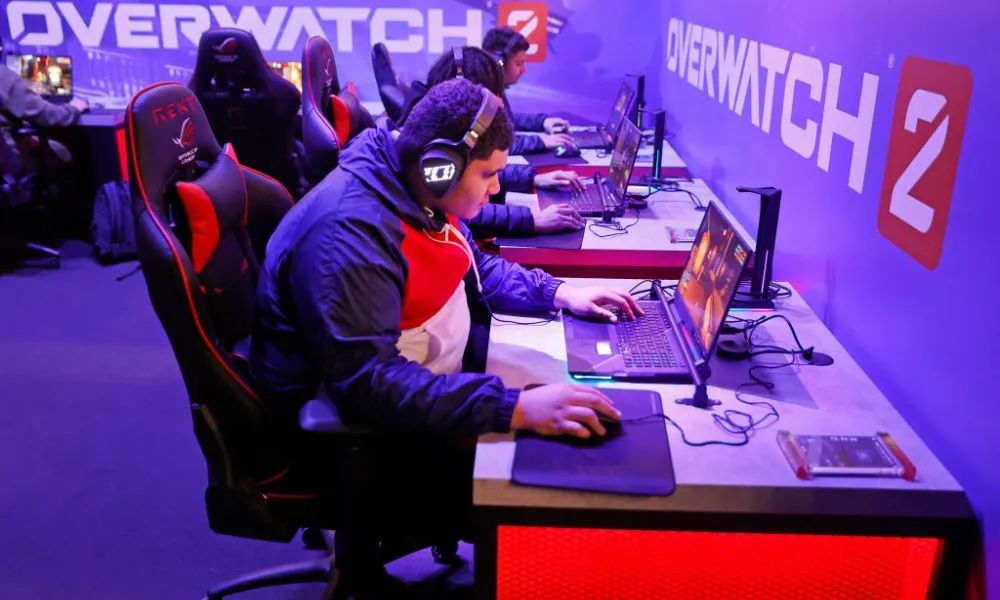
During the regular season, matches followed a best-of-five map format. The map pool, drawn from standard game modes like Control, Assault, Escort, and Hybrid, was set periodically by the league. A team winning three maps first won the match. If the score was tied 2-2 after four maps, a tiebreaker Control map decided the winner. Standings were primarily based on match win-loss records, with map differential used as a tiebreaker. Teams could substitute players only between maps. All matches were played on identical league-provided computer hardware, though players could use their own preferred keyboard and mouse.
Game updates from the public version of Overwatch were not immediately applied to the league server. Changes, including new heroes, maps, and balance adjustments, were rolled out no more frequently than once every six weeks to maintain competitive stability. However, teams were given access to private servers with the latest updates for practice, allowing them to prepare new strategies before official implementation.
Players, Salaries, and Conduct
Overwatch League teams could maintain a roster of up to twelve players, with substitutions allowed between maps. Rosters were locked at the start of the season but could be adjusted during a mid-season signing period and a post-season free agency window. The league had no regional restrictions on player nationality, allowing teams to sign talent from anywhere in the world, exemplified by the all-South Korean London Spitfire roster in 2018. The only eligibility requirement was that players be at least 17 years old and able to travel internationally.
The league guaranteed players an annual salary, benefits, and a share of team winnings. For the 2023 season, the minimum salary was set at $54,249. Teams were required to provide players with at least 50% of the team's tournament winnings and revenue-sharing bonuses, though players could negotiate for larger shares. In a notable 2017 signing, Jay 'sinatraa' Won secured a $150,000 salary with the San Francisco Shock plus a 50% bonus share. Additional benefits included health insurance, retirement plans, housing, training support, and media training.
Players were required to adhere to a league-mandated code of conduct. Violations could result in fines and suspensions from both the league and their team. A prominent early incident involved Dallas Fuel player Félix 'xQc' Lengyel, who was suspended for four games and fined $2,000 by the league for homophobic comments, with his team suspending him for the remainder of the stage. After further conduct issues, he was released. Blizzard later instituted an online discipline tracker in December 2018 to publicly list player suspensions and fines.
Path to Pro: Open Division and Contenders
Blizzard operated a tiered developmental system to feed talent into the Overwatch League. The foundation was the Open Division, launched in June 2017, an amateur competition across seven global regions: Australia, China, Europe, Korea, North America, Pacific, and South America. Winning teams earned prize money and credits to Blizzard's store, with top finishers qualifying for post-season tournaments.
The primary feeder league was Overwatch Contenders, launched in 2018 as a global minor league. It consolidated several existing regional tournaments into a unified structure with seven divisions corresponding to the Open Division regions. Contenders teams could be affiliated with an Overwatch League franchise as an academy team. Under a two-way contract system, up to two players from an academy team could move between the Contenders and Overwatch League rosters.
The format evolved over time. Initially, most divisions had 12 teams. For the 2019 season, Blizzard reduced this to eight teams per region and split North America into East and West divisions, while also imposing a limit of three 'import players' from outside a division's home region. These changes were reverted for the 2020 season. The top eight Open Division teams in each region were also invited to Contenders Trials, a weekly promotion tournament for a chance to enter Contenders.
Challenges and Transition
The league faced significant operational and financial challenges throughout its run. Skepticism greeted its 2016 announcement due to Overwatch's unproven esports track record and the novel franchise model with high entry fees, starting at $20 million per team in 2018 and rising to between $35 million and $60 million for expansion teams. The COVID-19 pandemic in 2020 forced the cancellation of the planned homestand events, shifting competition entirely online. While some team owners noted this mitigated potential losses from hosting live events, it raised questions about the league's long-term financial model.
External pressures mounted in 2021 when nearly all league sponsors withdrew following a lawsuit filed against Activision Blizzard. Further disruption came in late 2022 when Blizzard's partnership with NetEase ended, suspending access to Overwatch 2 in China. This led to the dissolution of the Chengdu Hunters, the league's first team departure, and prompted the league to allow Overwatch Contenders teams to compete in its Eastern Region for the 2023 season.
By early 2023, team owners collectively initiated a bargaining process that resulted in Blizzard waiving all outstanding franchise fees. In November 2023, Blizzard announced the Overwatch League was 'transitioning' to a new, more traditional esports structure. This marked the end of the OWL, with its successor, the Overwatch Champions Series (OWCS), slated to begin in 2024.
FAQ
What was the Overwatch League?
The Overwatch League was a professional esports league for the video games Overwatch and Overwatch 2, produced by Blizzard Entertainment. It ran from 2018 to 2023 and used a city-based franchise model similar to traditional North American sports leagues, with permanent teams and a season playoff format.
How much did it cost to buy an Overwatch League team?
Franchise fees started at $20 million for the twelve inaugural teams in 2018. For the following season, eight new expansion teams paid between $35 million and $60 million each to join the league.
What was the minimum salary for an Overwatch League player?
For the 2023 season, the league set a minimum annual salary of $54,249 for players under contract. Players also received health benefits, retirement plans, and a guaranteed share of team winnings and revenue.
Why did the Overwatch League end?
The league faced multiple challenges, including the COVID-19 pandemic disrupting its live event model, sponsor withdrawals following a lawsuit against Activision Blizzard, and the loss of its Chinese market. In November 2023, Blizzard announced it was transitioning to a new esports structure, the Overwatch Champions Series, ending the OWL.
What were Overwatch Contenders and the Open Division?
They were developmental leagues run by Blizzard to feed talent into the Overwatch League. The Open Division was for amateur teams, while Contenders was the premier minor league. Top Contenders teams could be affiliated with OWL franchises, and players could move between leagues on two-way contracts.
Source: English Wikipedia (CC BY-SA), rewritten by the Redington Cybersport desk.