Overwatch (2016 video game)
Overwatch was a landmark team-based hero shooter released by Blizzard Entertainment in 2016. It defined a genre with its accessible, character-driven gameplay and became a major force in esports, particularly through the Overwatch League. The original game's servers were shut down in 2022 as it transitioned fully to its sequel.
| Developer | Blizzard Team 4 |
|---|---|
| Publisher | Blizzard Entertainment |
| Release Date | May 24, 2016 |
| Platforms | PlayStation 4, Windows, Xbox One, Nintendo Switch |
| Genre | Hero shooter |
| Game Modes | Casual, Competitive, Custom |
| Initial Hero Roster | 21 |
| Final Hero Roster | 32 |
| Original Servers Shut Down | October 3, 2022 |
| Successor | Overwatch 2 |
Core Gameplay and Design
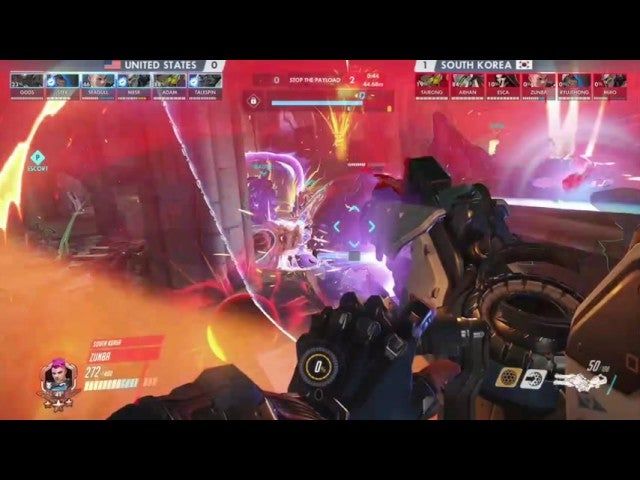
Overwatch was a six versus six online first-person shooter built around a diverse roster of heroes. Players selected from characters divided into three roles. Damage heroes focused on eliminating opponents, Tank heroes absorbed damage and created space, and Support heroes healed and empowered their team. Each hero possessed its own set of abilities, including a powerful ultimate ability that charged over time during a match.
A key strategic element was the ability to switch heroes mid match. This encouraged teams to dynamically adapt their composition to counter the enemy or achieve map objectives. The primary competitive modes involved teams either attacking or defending, with goals like securing control points or escorting a payload across the map. The game also featured casual modes such as deathmatch and capture the flag.
Progression was centered on cosmetic rewards. By playing matches, players earned experience to level up and receive loot boxes. These boxes contained skins, emotes, and other visual customizations for heroes, with no impact on gameplay power. These items could also be acquired through optional microtransactions.
The World and Story
The narrative of Overwatch was set in an optimistic, futuristic version of Earth, decades after the Omnic Crisis. This global conflict saw hostile robots attack humanity, leading to the formation of the international peacekeeping force known as Overwatch. The team successfully ended the crisis and maintained peace for a period called the Overwatch Generation.
The story focused on the fallout from the group's eventual collapse. Internal strife between leaders Jack Morrison and Gabriel Reyes, alongside public scandals, led to a United Nations investigation. The organization was disbanded by the Petras Act after its headquarters was destroyed in an explosion, an event believed to have killed Morrison and Reyes.
The game's present day is set six years after the Petras Act, with the world descending into renewed conflict. The story follows the recall of Overwatch by the gorilla scientist Winston, as old heroes and new allies reunite to face new threats. It is revealed that Morrison survived, becoming the vigilante Soldier 76, while Reyes was transformed into the terrorist Reaper.
Development and Origins
Overwatch was born from the ashes of a canceled Blizzard MMO project in 2013. A small team of around 40 developers, led by director Jeff Kaplan, was tasked with creating a new game. Inspired by team based shooters like Team Fortress 2 and the popularity of MOBAs, they conceived a hero focused shooter, using some assets from the canceled project as a starting point.
The cancellation of Titan directly influenced the game's setting. The team crafted a hopeful near future world that allowed for a wide array of characters and global locations. This setting emerged from the aftermath of the Omnic Crisis and the fall of Overwatch, providing rich narrative potential.
Blizzard supported the game for years with free post launch content, including new heroes, maps, and seasonal events. The original roster of 21 heroes grew to 32 by April 2020. Development then shifted fully to the sequel, Overwatch 2. Kaplan led the project until his departure from Blizzard in April 2021, after which Aaron Keller took over.
Launch and Post Release Support
Blizzard announced Overwatch at BlizzCon in November 2014, where it was playable with 14 heroes. A closed beta began in October 2015, followed by a massively popular open beta in May 2016 that attracted nearly 10 million players. The game launched officially on May 24, 2016, for PlayStation 4, Windows, and Xbox One.
Special Origins and Collector's Editions were released alongside the standard game. A Nintendo Switch version, the Legendary Edition, was released in October 2019, developed by Iron Galaxy with gyroscopic control support. A major update in June 2021 introduced cross-platform play across all systems, though the competitive mode remained segregated between console and PC players to account for control differences.
The original Overwatch servers were shut down on October 3, 2022, to make way for the early access release of Overwatch 2 the following day. The sequel was later rebranded simply as Overwatch in February 2026, concluding the legacy of the 2016 game.
Critical and Commercial Success
Upon release, Overwatch received universal critical acclaim. Reviewers praised its accessible yet deep gameplay, the diverse appeal of its hero designs, its cartoonish art style, and the overall fun of its team based combat. The game won numerous Game of the Year awards and was frequently cited as one of the greatest video games ever made.
Commercially, Overwatch was a phenomenon. Blizzard reported over one billion dollars in revenue within its first year. The player base grew to over 50 million within three years of launch. Its success propelled Blizzard to the forefront of gaming industry advertising in the United States during its launch window.
The Esports Ecosystem
Overwatch was designed from the ground up to support competitive play, both for ranked matchmaking and professional esports. The game quickly developed a thriving competitive scene, with third party tournaments and leagues emerging globally. Its clear hero roles, objective based modes, and spectator friendly visuals made it a natural fit for esports.
The top of its competitive structure was the Overwatch League, a global city based franchise league fully funded and produced by Blizzard. Modeled after traditional sports leagues, the OWL became the centerpiece of Overwatch esports, featuring permanent teams, regular season play, and grand finals. The league was a major investment by Blizzard to establish Overwatch as a leading esport title during the game's active lifespan.
FAQ
When did Overwatch come out?
Overwatch was first released on May 24, 2016, for PlayStation 4, Windows, and Xbox One. A version for Nintendo Switch was released on October 15, 2019.
Is Overwatch still playable?
No, the servers for the original 2016 Overwatch game were shut down on October 3, 2022. The game was succeeded by Overwatch 2, which launched in early access the next day.
How many heroes were in Overwatch?
The game launched with 21 heroes. Through free updates, the roster expanded to 32 heroes by April 2020. No new heroes were added after that as development shifted to the sequel.
What was the Overwatch League?
The Overwatch League was a global professional esports league created and run by Blizzard Entertainment. It featured city based franchise teams and was the premier competitive circuit for the game.
What is the story of Overwatch about?
The story is set in a future Earth recovering from the Omnic Crisis. It follows the rise, fall, and eventual recall of the Overwatch peacekeeping team, focusing on its diverse cast of heroes as they battle new threats years after the organization was disbanded.
Source: English Wikipedia (CC BY-SA), rewritten by the Redington Cybersport desk.