FIFA Football 2003
FIFA Football 2003, known as FIFA Soccer 2003 in North America, was the tenth installment in EA Sports' long-running football simulation series. Released in 2002, it marked a significant technical and gameplay evolution for the franchise, introducing features that revitalized its competitive and presentation appeal against its main rival.
| Developer | EA Canada |
|---|---|
| Publisher | Electronic Arts (EA Sports) |
| Release Year | 2002 |
| Series | FIFA |
| Platforms | PC, PlayStation 2, Xbox, GameCube |
| Genre | Football Simulation |
| Modes | Singleplayer, Multiplayer |
| Notable Feature | Freestyle Control |
| Featured Mode | Club Championship Mode |
A Rebirth in Gameplay and Control
FIFA Football 2003 was widely perceived as a rebirth for the series, bringing smoother gameplay and improved ball control that many felt brought the franchise back to life. The most anticipated new feature was EA Sport's Freestyle Control system, which allowed users to flick the ball on and lay it off to teammates with greater finesse. This added a new layer of tactical depth and personal skill to matches, moving beyond basic passing.
Enhanced team play and deeper tactics were core pillars of the experience. The game also introduced the Club Championship Mode, a dedicated feature where players could compete against 17 of Europe's top clubs. This mode was enhanced by authentic atmospheres, as matches took place in the clubs' own stadiums with fans singing their chants and songs.
Presentation and Authentic Detail
Presentation took a major leap forward with a comprehensive TV-style broadcast package. This included highlights at half-time and full-time, accompanied by comprehensive analysis, making each match feel like a major televised event. Player models and databases received significant attention to create an authentic world.
The game featured greater likenesses of some of the more well-known players such as Thierry Henry and Ronaldinho, as well as realistic player responses. It included over 10,000 accurately portrayed players across 350 teams from 16 leagues around the world. This broad scope was supported by many new detailed player animations, helping confirm its position as a comprehensive football simulation.
Cover Stars and the Top Rated Player
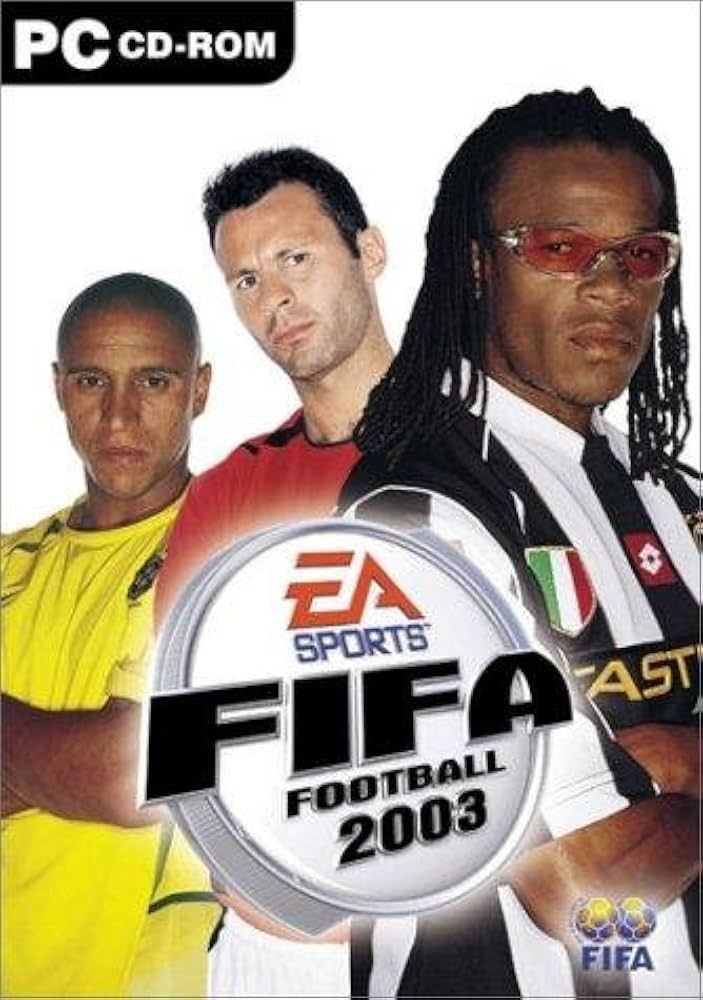
The game's cover art varied by region, reflecting its global appeal and marketing. The European cover featured a trio of stars representing different clubs and nations: Roberto Carlos of Brazil, Ryan Giggs of Manchester United, and Edgar Davids of Juventus. In the United States, Landon Donovan appeared on the cover alone, highlighting the North American market.
Interestingly, the highest rated player in the game was not one of these global cover stars. That distinction went to Italian midfielder Matteo Brighi from Parma, who was given a rating of 97, the highest in the game.
Commercial Performance and Rivalry
The game entered a highly competitive market. Upon its release in October 2002, FIFA 2003 was initially outsold by its rival, Pro Evolution Soccer 2. However, it staged a strong commercial comeback, overtaking PES by December 2002. By that time, FIFA 2003 had sold 2.5 million copies across Europe, demonstrating its strong market hold.
In the United Kingdom, the PlayStation 2 version earned a Double Platinum sales award from the Entertainment and Leisure Software Publishers Association (ELSPA). This award indicated sales of at least 600,000 copies in that territory alone, underscoring its popularity on the leading console of the era.
Critical Reception and Accolades
Critically, the game was well received across most platforms. According to the review aggregation website Metacritic, it received generally favorable reviews on all platforms except the original PlayStation version, which received average marks. This indicated a successful technical transition to newer hardware.
FIFA Football 2003 was also a runner-up for GameSpot's annual Best Sports Game on PC award, which ultimately went to Madden NFL 2003. This nomination highlighted its standing as a top-tier sports title on the computer platform that year.
Legacy and Technical Context
As the tenth game in the FIFA series and the eighth to be produced in 3D, FIFA 2003 represented a crucial point of refinement and modernization. Its introduction of Freestyle Control set a new standard for interactive ball physics that would become a staple. The immersive Club Championship Mode with authentic stadia and chants raised the bar for in-game atmosphere.
The game's successful commercial turnaround against the formidable Pro Evolution Soccer 2 demonstrated the lasting appeal of the FIFA brand and the effectiveness of its new features. For the competitive scene and casual players, FIFA 2003 is remembered as the title that brought smoother, more tactical gameplay and a fresh, television-quality presentation that made the virtual pitch feel more authentic and engaging.
FAQ
When was FIFA Football 2003 released?
FIFA Football 2003 was released in the year 2002. It is the tenth game in the FIFA series.
What was the new Freestyle Control feature?
Freestyle Control was a new gameplay system by EA Sports that allowed the user to flick the ball on and lay it off to their teammates. It was one of the most anticipated features, adding enhanced ball control.
What was in the Club Championship Mode?
Club Championship Mode let players compete against 17 of Europe's top clubs in their own stadiums. The mode featured the fans singing their chants and songs for an authentic atmosphere.
How did FIFA 2003 sell compared to Pro Evolution Soccer 2?
FIFA 2003 was initially outsold by Pro Evolution Soccer 2 in October 2002. However, it later overtook PES by December 2002, when FIFA had sold 2.5 million copies across Europe.
Who was the highest rated player in FIFA 2003 and what was his rating?
The highest rated player in the game was the Italian midfielder Matteo Brighi, from Parma. He had a rating of 97.
Source: English Wikipedia (CC BY-SA), rewritten by the Redington Cybersport desk.