FIFA 10
FIFA 10 is a football simulation video game released in 2009, representing a major entry in EA Sports' long-running series. It was critically acclaimed for its refined gameplay and deep game modes, and became a commercial success, selling over 10 million copies. The game's innovations in Manager Mode and the introduction of the Virtual Pro system confirmed its place as a landmark title in competitive football gaming.
| Developer | EA Canada |
|---|---|
| Publisher | Electronic Arts (EA Sports) |
| Release Date | 2 October 2009 (Europe), 20 October 2009 (North America) |
| Platforms | PlayStation 3, Xbox 360, Microsoft Windows, PlayStation 2, Wii, iOS, Nintendo DS, PlayStation Portable, Mobile Phones |
| Tagline | How big can soccer get? |
| Commentary | Martin Tyler and Andy Gray (English, main consoles) |
| Leagues | 30 leagues, over 500 teams |
| National Teams | 41 |
| Stadia | 50, including major real-world venues |
| Ultimate Team Release | 25 February 2010 (expansion) |
A Landmark Release and Critical Success
FIFA 10 launched in October 2009 to immediate commercial and critical success. It was the fastest selling sports game ever in Europe at the time, moving 1.7 million copies in its first week and eventually selling over 10 million units. Critics praised it as the most refined football simulation to date, with aggregate review scores reaching 90 percent. Publications highlighted its polished gameplay and compelling feature set, with IGN UK calling it one of the most compelling takes on any sport. The game earned the Sports Game of the Year award at the 13th Annual Interactive Achievement Awards.
The game's success was attributed to significant gameplay improvements and a global appeal that made it EA Sports' most profitable title, outperforming even the Madden series in year-over-year sales growth in Europe. Despite some initial bugs in the Manager Mode, which were later patched, the core experience was widely celebrated. The Wii version also received positive notes for its own art style and game boosters, earning an 84 percent rating from Official Nintendo Magazine.
Revamped Manager Mode and Gameplay Depth
Manager Mode received a major overhaul in FIFA 10, with developers claiming over 50 key improvements for the PlayStation 3 and Xbox 360 versions. A new Total Football Experience feature brought football news from around the virtual world into the mode, including transfers and results from foreign leagues. Players could also delegate team selection to an Assistant Manager, who would rotate the squad based on the importance of upcoming matches.
The simulation of match results became more realistic, relying more on team strength rather than random outcomes, which prevented stronger clubs from fighting relegation. Non-player controlled clubs began to rotate their squads intelligently based on fatigue, form, and match importance. The financial system was restructured to focus on budgets set by a club's board of directors for wages and transfers, with a Board Difficulty setting. The transfer system itself became more authentic, considering squad needs beyond just money.
Player development was changed with the abolition of manual growth from earlier games. The new Player Experience and Growth System tied a player's improvement to in-game performance, positional demands, and achievements, with gains in mental, physical, and skill categories. A Live Season feature within the mode dynamically adjusted a player's form and stats based on their Manager Mode performances.
Virtual Pro and Ultimate Team
FIFA 10 introduced the Virtual Pro, a system allowing players to create and develop a custom footballer. This player could be used across multiple game modes, including the four-season Be a Pro career, Manager Mode, and online in FIFA Clubs. The Game Face feature let users create a photorealistic face for their pro online and download it into the game, serving as their online avatar. Players could grow their pro's attributes, unlock traits, celebrations, and kits to make a custom athlete.
The popular Ultimate Team mode, first seen in FIFA 09, was released as an expansion for FIFA 10 in February 2010. This card-collection mode allowed players to build custom squads. The update introduced Premium card packs with more rare cards and an unlimited storage capacity for items. The in-game economy used coins earned from matches and tournaments, and the mode added new Trophies and Achievements. Key improvements included a better trading section with search functions and a watch list.
Presentation and Licensing
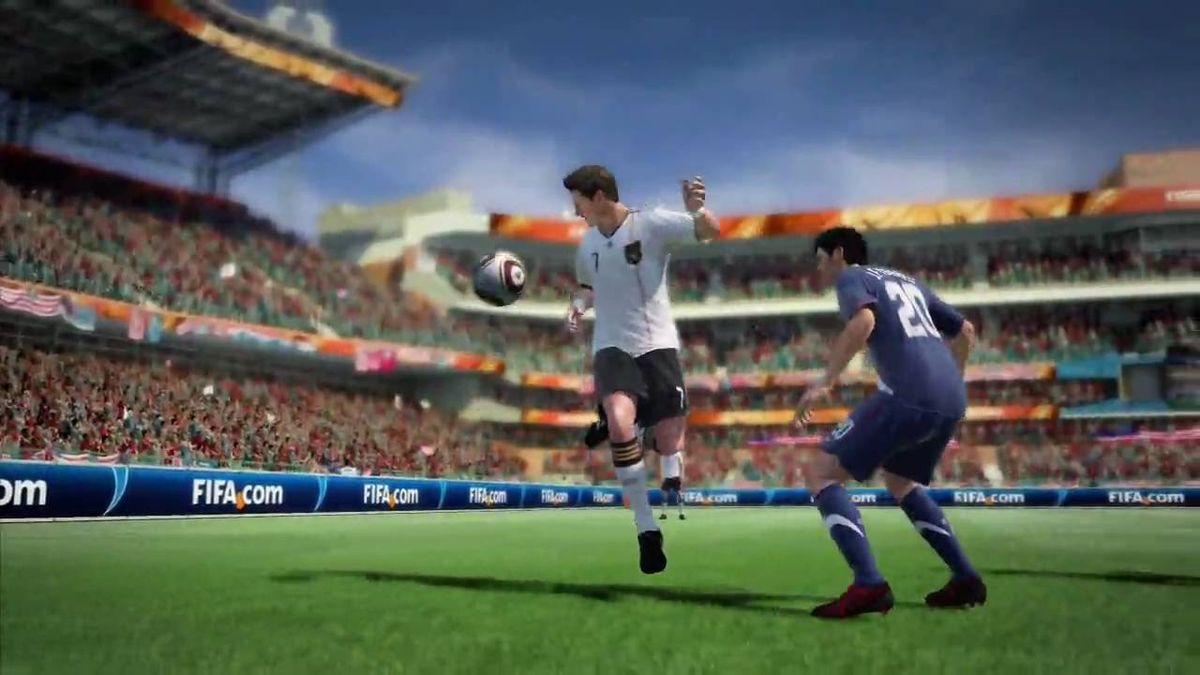
FIFA 10 featured extensive presentation elements to enhance realism. The game included 50 stadia, encompassing major real-world venues like Camp Nou, Old Trafford, and the San Siro, as well as generic arenas. Weather conditions and day-night cycles were available for each. Notably, Real Madrid's Santiago Bernabéu Stadium was offered as a free download at launch. In Manager Mode, players could rename generic stadiums to match their club's real home ground.
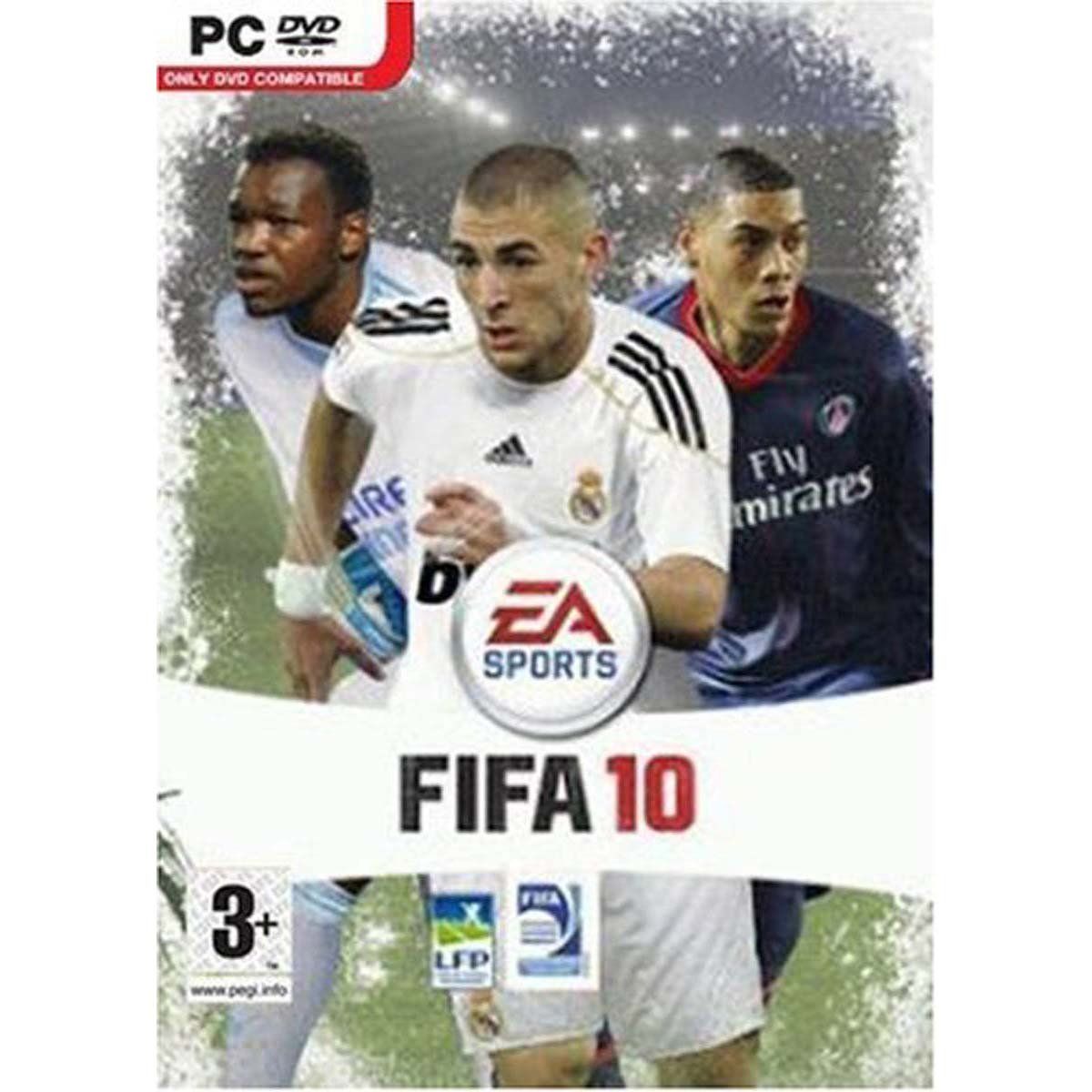
The commentary was available in 12 languages, with the English version featuring commentators Martin Tyler and Andy Gray for the main console releases. Licensing was expansive, with 30 leagues and over 500 clubs, plus 41 national teams. New for this edition was the inclusion of the Russian Premier League, though not on PlayStation 3 and Xbox 360, and a fully licensed Netherlands national team. The game cover varied by region, featuring stars like Wayne Rooney, Frank Lampard, Karim Benzema, and Robert Lewandowski.
Legacy and Impact on the Series
FIFA 10 marked several firsts and lasts for the franchise. It was the second game to sponsor a football club, co-sponsoring Swindon Town with its logo on the team's kits. It was also the last FIFA game to be released in October until FIFA 21 in 2020, breaking a long-standing annual tradition. The game's commercial performance demonstrated the series' dominant global reach, outselling its predecessor by a significant margin.
The technical and design foundations laid in FIFA 10, particularly in the deeply integrated Manager Mode and the pioneering Virtual Pro system, influenced the direction of future titles. The successful expansion of the Ultimate Team mode also kept its place as a staple and major revenue driver for the series. By addressing past criticisms and introducing meaningful, interconnected gameplay systems, FIFA 10 set a new standard for depth and polish in sports simulations, securing its reputation as a high point in the franchise's history.
FAQ
When was FIFA 10 released?
FIFA 10 was released on 2 October 2009 in Europe, 1 October in Australasia, and 20 October 2009 in North America.
What was new in FIFA 10's Manager Mode?
Manager Mode was revamped with over 50 improvements, including a Total Football Experience news feed, an Assistant Manager for squad rotation, more realistic match simulations, a revised financial system based on board budgets, and a new Player Experience and Growth System that tied development to in-game performance.
What is the Virtual Pro in FIFA 10?
Virtual Pro allowed players to create a custom footballer, use him in Be a Pro seasons, Manager Mode, and online play. It included the Game Face feature for creating a photorealistic avatar and the ability to grow the player's attributes and unlock customizations.
How many teams and leagues are in FIFA 10?
FIFA 10 features 30 leagues, over 500 club teams, and 41 national teams. It added the Russian Premier League and included a fully licensed Netherlands national team.
Did FIFA 10 have an Ultimate Team mode?
Yes, the Ultimate Team mode from FIFA 09 was released as an expansion for FIFA 10 on 25 February 2010 for PlayStation 3 and Xbox 360. It featured updated card packs, unlimited item storage, and an improved trading system.
Source: English Wikipedia (CC BY-SA), rewritten by the Redington Cybersport desk.