Brawlout
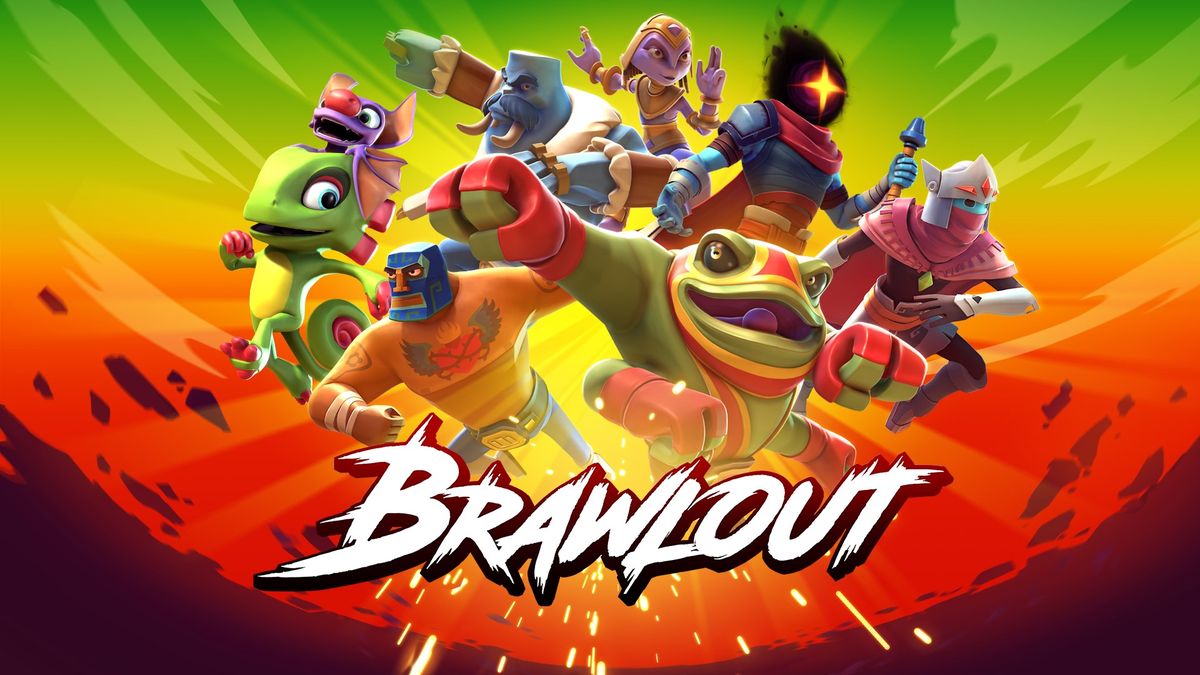
Brawlout is a competitive platform fighting game developed by Angry Mob Games, often compared to the Super Smash Bros. series. Designed for both couch play and online competition, it emphasizes aggressive, combo-driven gameplay over defensive mechanics like blocking.
| Developer | Angry Mob Games |
|---|---|
| Publisher | Angry Mob Games |
| Initial Release | April 20, 2017 (Early Access, Windows) |
| Full Platforms | Microsoft Windows, Nintendo Switch, PlayStation 4, Xbox One |
| Revealed | EVO, July 2016 |
| Closed Beta | December 2016 |
| Physical Switch Release | May 2018 (with Merge Games) |
| Game Modes | Couch play, online ranked matches, tournaments, Brawlout TV |
| Player Count | 2-4 players (up to 8 mentioned) |
| Playable Characters | 25 total, including 4 guest fighters |
Gameplay and Core Mechanics
Brawlout is a platform fighter where the primary goal is to knock opponents off the stage. Battles take place in environments with various platforms, supporting two to four players. The game distinguishes itself from traditional fighters by removing standard defensive options. There is no blocking mechanic, and most characters are incapable of grabbing others. This design choice forces an aggressive, offensive playstyle centered on landing combos.
Every attack increases the opponent's damage percentage. As this percentage rises, characters fly farther when hit, making them easier to launch off the stage. The game's strategic element is the Rage Meter. This meter builds as players both deal and receive damage. It can be used in two distinct ways. Spending half the meter activates a Rage Burst, which pushes opponents away and breaks their combos, creating vital breathing room. If the meter is allowed to fill completely, players can activate Rage Mode. In this state, the character deals increased knockback to opponents while simultaneously receiving reduced knockback themselves, creating a powerful comeback opportunity.
Despite its accessibility for newcomers, Brawlout incorporates advanced techniques that define high-level platform fighter play. These include air dodging, wavedashes, directional influence for controlling launch trajectories, and teching to recover from hard falls. The developers stated the game focuses on the lightning-fast aerobatics the genre is famous for, allowing new players to nail impressive combos quickly while offering depth for dedicated competitors.
Character Roster and Design
The game features a roster of 25 playable characters. This includes four guest fighters pulled from other independent video game titles, specifically from Yooka-Laylee, Guacamelee, and Hyper Light Drifter. These crossovers add recognizable faces and varied movesets to the lineup. Each character is designed with a distinct playstyle that caters to specific fighting game archetypes, ensuring that whether a player prefers grappling, rushdown, or other styles, there is a suitable fighter.
Character design extends to detailed backstories and move properties. A prime example is Paco, the Anuran Exemplar. His lore describes him as a former painter and wrestling super fan who gained two extra arms from a magical mask, leading him to victory in the Exemplar trials. His move set reflects his unorthodox, brawling inspiration. His side special is a short-range shoulder barge for movement. His down special is a three-part throwdown where he slams an opponent with great force, with extra inputs required to complete the move. His up special sees him grab an opponent, jump into the air, and slam down in a spinning piledriver. Another move allows him to hoist an opponent onto his back, move briefly, and then throw them in a chosen direction with a subsequent special input.
Game Modes and Online Features
Brawlout is built to support a wide range of play experiences, from casual parties to serious competition. For local couch play, up to four players can compete in standard match types. These include Timed matches, Stock matches with limited lives, Team Battles, and Free-For-All Party Modes. AI opponents are available to fill out matches for practice or when fewer human players are present.
The online infrastructure is a core pillar of the game's design. Players can engage in 2-4 player quick matches for casual play or climb ranked ladders for competitive standing. Private lobbies allow friends to organize games easily. A standout feature is Brawlout TV, a dedicated system for watching live matches and curated featured replays. This tool was explicitly created to make live tournaments easier to stream and follow, supporting the game's competitive aspirations. While some promotional material mentions support for up to eight players, the primary and most balanced competitive experiences are designed for 2-4 combatants.
Development and Release Timeline
Brawlout was first unveiled to the fighting game community at the Evolution Championship Series (EVO) in July 2016. Development progressed to a closed beta phase by December 2016. The game's first public availability was through an early access program on Steam for Microsoft Windows, starting on April 20, 2017. This early access period allowed the developers to refine the game based on player feedback before its full launch.
The game eventually saw full release on all planned platforms. For the Nintendo Switch version, Angry Mob Games partnered with the UK publisher Merge Games to produce and distribute physical retail copies, which hit shelves in May 2018. This physical release complemented the digital version, which saw strong initial sales on the Switch, moving over 50,000 digital copies in its first two weeks. Ongoing support was demonstrated with a major update labeled version 2.0 on the Steam platform.
Reception, Sales, and Awards
Critical reception for Brawlout was mixed. According to the review aggregate site Metacritic, the Nintendo Switch, PlayStation 4, and Xbox One versions received mixed or average reviews. Some critics praised the fast-paced action and guest characters, while others noted a heavy focus on grind-based unlocks for content and a lack of in-depth features compared to established titles in the genre.
Commercially, the Nintendo Switch version performed well at launch, as noted by its strong digital sales. The game also earned formal recognition, winning the award for Game, Original Fighting at the National Academy of Video Game Trade Reviewers Awards. This award highlights the game's attempt to carve its own identity within the fighting game landscape.
Competitive Philosophy and Legacy
From its inception, Angry Mob Games positioned Brawlout as a game for both beginners and pro gamers. The design philosophy explicitly avoided slow-paced defensive battles in favor of all-out aggressive mechanics. The developers stated the game was ideal for pro gamers looking to dedicate time to participate in the many tournaments they had planned, indicating a clear intent to foster a competitive scene.
Brawlout's legacy is as a notable entrant in the platform fighter genre outside of the Super Smash Bros. ecosystem, a comparison made by outlets like Engadget and evident in its core premise. It differentiated itself through its combo-centric, grab-less combat, the strategic Rage Meter, and its incorporation of guest indie characters. By blending platform fighter mechanics with elements from traditional fighting games and building features like Brawlout TV for spectators, it aimed to create a distinct competitive and party-play experience.
FAQ
What is the main goal in a Brawlout match?
The main goal is to knock your opponents off the stage. You do this by attacking them to increase their damage percentage, which makes them fly farther when hit until they are launched beyond the stage boundaries.
How does the Rage Meter work?
The Rage Meter fills as you deal and take damage. You can spend half of it to perform a Rage Burst, which pushes opponents back and breaks their combos. If the meter fills completely, you can activate Rage Mode, which increases the knockback you deal and reduces the knockback you take.
Can you block or grab in Brawlout?
No, Brawlout does not have a blocking mechanic. Furthermore, most characters in the game are incapable of grabbing opponents. The combat is designed around aggressive combos and movement instead.
What are some of the advanced techniques in Brawlout?
The game includes techniques common in competitive platform fighters. These include air dodging, wavedashes for rapid ground movement, directional influence to control your character's trajectory when hit, and teching to recover quickly from being knocked down or into a wall.
What was significant about the Nintendo Switch release?
The digital version of Brawlout on Nintendo Switch sold over 50,000 copies in its first two weeks. Additionally, a physical retail version was released in May 2018 through a partnership between Angry Mob Games and UK publisher Merge Games.
Source: English Wikipedia (CC BY-SA), rewritten by the Redington Cybersport desk.