Battlefield 2
Battlefield 2 is a landmark 2005 first-person shooter that defined large-scale, team-based multiplayer warfare. Its deep strategic systems, including squads and a commander role, confirmed its place as one of the major competitive games of its era.
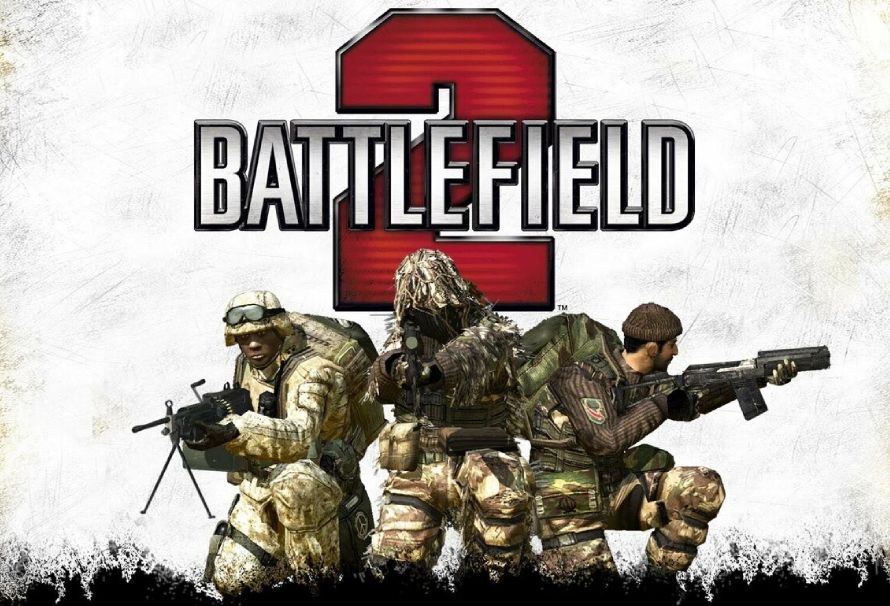
| Developer | Digital Illusions CE |
|---|---|
| Publisher | Electronic Arts |
| Release Date | June 21, 2005 |
| Platform | Microsoft Windows |
| Genre | First-person shooter |
| Game Modes | Multiplayer, Single-player |
| Max Players | 64 |
| Expansion | Battlefield 2: Special Forces |
| Sequel | Battlefield 3 |
The Core Conquest Experience
Battlefield 2 is fundamentally a multiplayer experience built around the Conquest game mode, where two opposing teams fight for control of strategic flags on a battlefield. The factions are determined by the map, pitting the ever-present United States Marine Corps against either the Chinese People's Liberation Army or the fictional Middle Eastern Coalition. The primary objective is to reduce the enemy team's tickets, a resource representing their capacity to reinforce. Tickets are lost with each soldier's death, but a team also suffers a gradual ticket bleed if they control a minority of the map's control points. These points, marked by flags, are crucial as they also serve as spawn locations for soldiers. A round concludes when one team's tickets are fully depleted, a timer runs out, or a team is wiped out while holding no control points. The game shipped with 12 maps, later expanded to 15, each offering distinct environments from the urban Strike at Karkand to the swampy Songhua Stalemate. Each map has three size variations for 16, 32, and 64 players, which change the playable area, the number and position of control points, and the availability of vehicles, creating different tactical scenarios for each scale.
The Infantry Class System
Players select from seven distinct infantry classes, each with a specialized role and equipment loadout designed for combined arms warfare. The Assault class serves as general-purpose infantry, equipped with grenade launchers and extra armor. Medics carry defibrillators to revive fallen teammates and provide healing. Engineers repair or destroy vehicles using wrenches and explosives, while Support troops provide suppressive fire and resupply allies with ammunition bags. The Anti-Tank class specializes in destroying armored vehicles with guided missiles. Special Forces are geared for stealth and sabotage, and Snipers engage targets at long range. Players can change class during a match by picking up a kit from a fallen soldier, regardless of faction. Classes are also categorized as Heavy or Light, affecting stamina and damage resistance. Heavy classes have reduced torso damage but lower stamina, whereas Light classes have standard damage multipliers and can sprint for longer durations.
Squad-Based Coordination and Communication
Teamwork is structured through the squad system, where up to six players can form a unit, with a maximum of nine squads per team. Each squad has a leader who can receive direct orders from the team's Commander and can, in turn, issue attack or defend orders to their squad members. Crucially, squad members can spawn directly on their squad leader, provided the leader is alive and their team controls at least one flag. This mechanic allows squads to maintain cohesion and apply sustained pressure on objectives. Communication within squads is facilitated by an integrated voice over IP system, enabling real-time tactical coordination without relying on external software. Squad leaders also have a direct VoIP channel to the team Commander to request support assets like artillery strikes.
The Strategic Commander Role
Each team has one exclusive Commander position, typically available to higher-ranked players. The Commander operates from a top-down, real-time strategy style interface that provides a full overview of the battlefield. From this screen, the Commander controls powerful strategic assets to influence the match. These include launching artillery strikes on enemy positions, deploying unmanned aerial vehicles for reconnaissance, and ordering vehicle or supply drops for their teams. The Commander can communicate with all squad leaders via VoIP or text orders to coordinate the entire team's strategy. A Commander can resign or be removed by a successful mutiny vote from their team. While Commanders do not earn points from standard actions like kills, their final score is doubled if their team wins the round, rewarding successful strategic leadership. This role would later reappear in Battlefield 2142 and Battlefield 4.
Vehicle Warfare and Counterbalance
Battlefield 2 continues the series' signature vehicle combat, featuring a wide array of land and air vehicles based on real-world military hardware. Unlike earlier titles, it has only one dedicated watercraft, the rigid-inflatable boat, though several armored personnel carriers are amphibious. The game employs a deliberate counterbalance system where each vehicle type has specific strengths and vulnerabilities, creating a dynamic similar to rock-paper-scissors. For example, mobile anti-air vehicles are effective against helicopters but vulnerable to main battle tanks. This system extends to stationary defenses like machine gun and anti-aircraft emplacements. Vehicle availability on a map depends on its size and the control points a team holds. The only naval vessel featured is the non-drivable USS Essex, which acts as an aircraft carrier with spawn points and defensive Phalanx turrets.
Progression, Unlocks, and the BattleRecorder
Player progression is tracked globally on ranked servers. By accumulating points from kills, healing, repairs, and objective play, players earn promotions in rank. Each promotion to an eligible rank grants the opportunity to unlock one of seven special weapons, one corresponding to each infantry class. These unlockable weapons can then be permanently used in place of the standard class armaments. Players can also earn awards in the form of ribbons, badges, and medals for specific in-game accomplishments, with medals being the most difficult to obtain. The game also included a built-in BattleRecorder tool that saved match data into small files for later replay within the game client. This allowed players to review battles from any camera angle, change playback speed, and even export footage to AVI format, facilitating the creation of community machinima.
The Special Forces Expansion and Later History
The first expansion, Battlefield 2: Special Forces, was released on November 21, 2005. It shifted the focus towards infantry-centric combat, introducing eight new maps, six new playable factions including special forces units, and ten new vehicles like the AH-64 Apache and Mi-35 Hind, though it removed all jet aircraft. Its key additions were tactical gadgets that altered gameplay, such as night vision goggles, zip lines for vertical traversal, grappling hooks, and non-lethal equipment like tear gas and gas masks. It also added eight new small arms. The game's official multiplayer service ended on June 30, 2014, with the shutdown of the GameSpy master servers. However, the community kept the game alive through fan-run servers and modifications. In 2017, Electronic Arts issued takedown notices to one such group, the Revive Network, over copyright infringement related to their modified versions of the game.
FAQ
When was Battlefield 2 released?
Battlefield 2 was released on June 21, 2005, in North America for Microsoft Windows.
What is the maximum number of players in a Battlefield 2 match?
The multiplayer mode supports up to 64 players online. The single-player mode uses the same maps but features battles with up to 16 computer-controlled bots.
What are the main factions in Battlefield 2?
The core factions are the United States Marine Corps, the Chinese People's Liberation Army, and the fictional Middle Eastern Coalition. The European Union was added as a playable faction in expansion content.
What does the Commander do in Battlefield 2?
The Commander is a strategic role of its own. They have an overhead view of the battlefield, can deploy assets like artillery strikes and UAVs, and issue orders to squads to coordinate the entire team's effort.
What was the Battlefield 2: Special Forces expansion?
Released in November 2005, it was an expansion pack focusing on infantry combat. It added new maps, factions, tactical gadgets like zip lines and night vision, and new vehicles while removing all jets from its gameplay.
Source: English Wikipedia (CC BY-SA), rewritten by the Redington Cybersport desk.