StarCraft in esports
StarCraft, the real-time strategy game, established one of the world's most significant and enduring professional esports scenes, centered for decades in South Korea. Its televised leagues, corporate-sponsored teams, and major rivalries drew millions of fans and awarded over four million dollars in prize money. While the professional scene transitioned to StarCraft II, the original game, now as StarCraft: Remastered, has experienced a notable competitive resurgence.
| Game | StarCraft: Brood War |
|---|---|
| First televised leagues | Ongamenet Starleague (OSL), MBCGame Starleague (MSL) |
| Major current league | Afreeca StarCraft League (ASL) |
| Notable former teams | SK Telecom T1, KT Rolster, Samsung KHAN, Air Force ACE |
| Total prize money awarded | Over US$4,000,000 |
| Governing body | Korean e-Sports Association (KeSPA) |
| Transition year | 2012 (Proleague hybrid season) |
| Resurgence leagues | ASL (2016), Korea StarCraft League (KSL, 2018) |
| Updated version | StarCraft: Remastered (2017) |
The Foundation of Korean Professional StarCraft
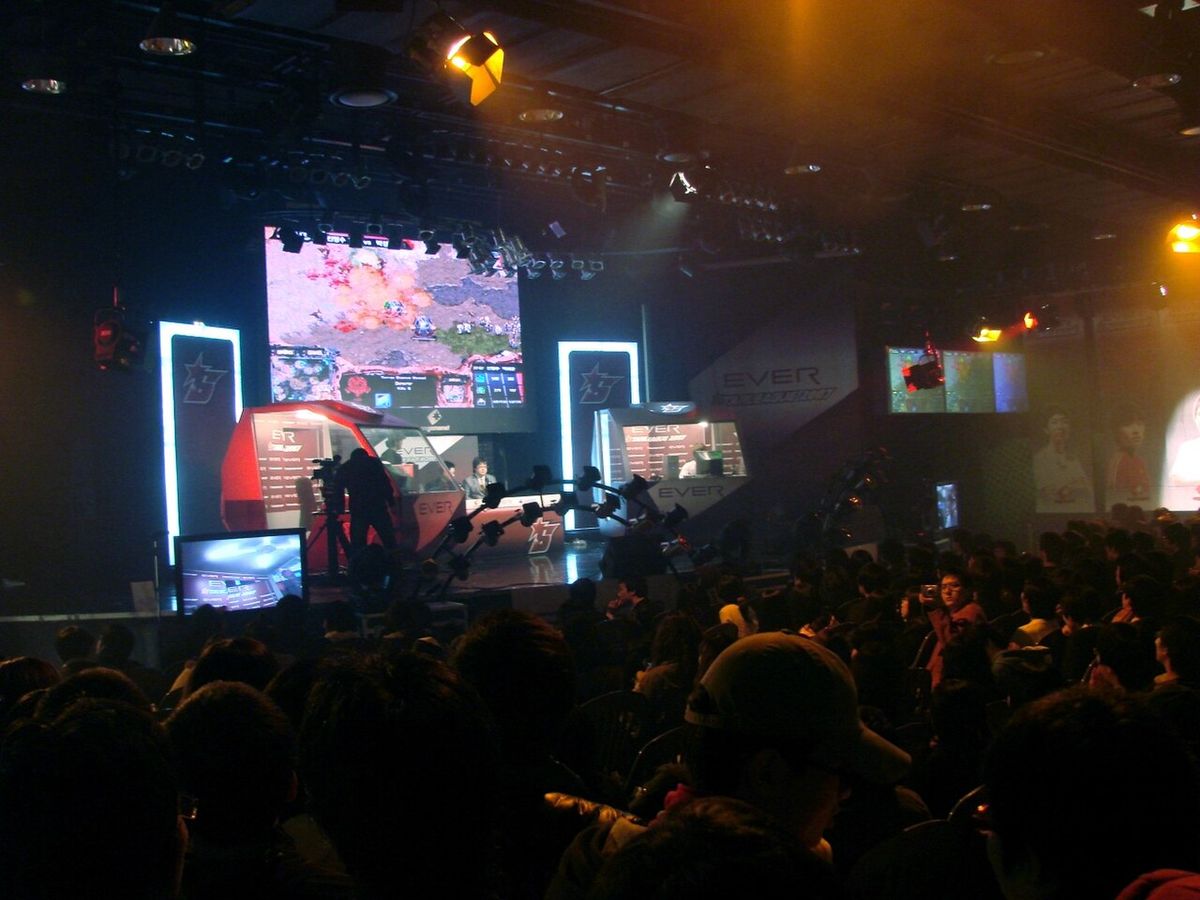
The professional StarCraft scene was built on a foundation of televised leagues and corporate sponsorship in South Korea. The two major broadcasters, Ongamenet and MBCGame, each ran their own premier individual tournaments, the Ongamenet Starleague and the MBCGame Starleague. These events were viewed by millions of fans. Starting around 2003, professional players became organized into teams sponsored by large Korean corporations like Samsung, SK Telecom, and KT. These teams competed in a team league known as Proleague. For years, this ecosystem made StarCraft one of the world's largest computer game competitions in terms of prize money, global coverage, and participants. The vast majority of the over four million dollars in total prize money awarded came from tournaments in South Korea.
The Korean professional scene was historically divided into eight teams. Six were sponsored by corporations, one was sponsored by the Korean Air Force under the name Air Force ACE, and one was managed by the esports association KeSPA. Notable teams included SK Telecom T1, KT Rolster, Samsung KHAN, and CJ ENTUS. All these teams either dissolved or transitioned exclusively to StarCraft II in 2012 following a major match-fixing scandal and the industry's shift toward the sequel. As a result of the scandal, all teams except for Jin Air Green Wings disbanded.
International Audiences and Grassroots Growth
While the professional scene was centered in Korea, there were commercial efforts to reach international audiences. Broadcasters like GOM TV hired English commentators, such as Nick "Tasteless" Plott, for tournaments like the 2008 GOM TV Star Invitational and the 2008 Averatec-Intel Classic. According to GOM TV statistics, over one million viewers watched the GOM TV Star Invitational matches with English commentary. Many fans outside Korea also downloaded video files of professional matches and created a community around sharing them on sites like YouTube, often with their own English commentary dubbed over the original Korean audio. Notable English-speaking YouTube commentators included Tasteless's brother Sean "Day9" Plott, KlazartSC, and Diggity.
This grassroots community helped foster competitive play abroad. A notable example is the Collegiate Starleague, founded in 2009 by students at Princeton University. Modeled after Korea's Proleague, it became an intercollegiate competition. Its fourth season in Fall 2010 marked a shift from StarCraft: Brood War to StarCraft II and included over 100 North American colleges, including Harvard, Yale, and MIT. Notable contributors and players included Day9, Kevin "QXC" Riley, and Andre "Gretorp" Hengchua.
The 2010 Match-Fixing Scandal and Its Aftermath
A significant scandal shook Korean StarCraft in April 2010. It was discovered that popular professional players were intentionally losing matches. Because professional gaming has legal status in South Korea, the consequences were severe. Eleven players were banned from all professional StarCraft competition for life and faced civil and criminal lawsuits. All their prizes and rewards, such as Player of the Year and Proleague Player rewards, were revoked.
The banned players included sAviOr, Hwasin, go.go, Luxury, and Park "Yellow[ArnC]" Myung Soo. It is important to note this player was not Hong "YellOw" Jin Ho. In October 2010, sentences were declared. Pro gamer Justin received an 18-month prison sentence, suspended for three years, a fine, and community service. sAviOr received a one-year sentence, suspended for two years, with community service. Other players like By.1st and ShinHwA received six-month suspended sentences. The suspended sentences meant the players could avoid prison if no wrongdoing was committed within the time period. This scandal damaged the scene's integrity and contributed to the dissolution of the traditional team structure.
The Transition to StarCraft II and Brood War's Decline
After the release of StarCraft II: Wings of Liberty, the Korean esports authorities KeSPA, OGN and MBC Game decided to stick with Brood War for their competitions. Eventually, KeSPA and OGN came into talks with Blizzard and GomTV for broadcasting rights of StarCraft II. After negotiations, it was announced that the SK Planet Proleague season would be a hybrid tournament featuring both Brood War and StarCraft II. Professional Brood War competition was eventually phased out entirely in Proleague, although fan interest in the game continued. For several years after the release of StarCraft II, competitive Brood War was no longer televised. The game's professional competition remained largely separate from that of StarCraft II. Players transitioned between the two games throughout the years, but outside of the transitional 2012 season of Proleague, none have competed professionally in both at the same time.
The Modern Resurgence with ASL and Remastered
Following KeSPA's exit from the Brood War scene, tournaments with cash prizes continued independently. In 2014, two years after professional KeSPA-sanctioned StarCraft competition ended, OGN once again televised StarCraft competition for two seasons. A major resurgence began in 2016 when Afreeca TV started the Afreeca StarCraft League for Brood War, running alongside its StarCraft II league, the Global StarCraft II League. In 2017, Blizzard released StarCraft: Remastered, a graphical and systems update that left the original gameplay completely untouched. Following this release, the scene had no trouble transitioning as the gameplay remained exactly the same. In 2018, coinciding with StarCraft's 20th anniversary, Blizzard announced their own league, the Korea StarCraft League. This brought the number of professional individual leagues for StarCraft: Brood War, now StarCraft: Remastered, in Korea back to two for the first time since 2011 when the last season of MSL was played.
Iconic Players and Defining Rivalries
The Terran race produced several of the game's most famous champions. Lim Yo-Hwan, known as BoxeR or "The Emperor," was the first of two StarCraft players to win the World Cyber Games twice and won two OSL titles. He held the number one ranking in KeSPA's rankings for 17 consecutive months. His total record of televised matches before joining the Korean Air Force was 500 wins and 338 losses. Lee Yun-Yeol, known as NaDa or the "Genius Terran," won three OSL and three MSL titles, becoming the first player to win the OSL three times and receive the "Golden Mouse." Choi Yeon-Sung, known as iloveoov or the "Cheater Terran," won three consecutive MSL titles and two OSL titles. He also won the World Cyber Games in 2006.
Lee Young-Ho, known as Flash, set numerous records, including the longest TvT and TvP winning streaks, being the youngest Starleague winner, and holding the highest KeSPA rank of all time. He defeated Kal in the 2010 World Cyber Games to become world champion. He later returned to win the ASL season 2 in 2017, defeating sea 3-1 after a semi-final victory over Jaedong. Among Zerg players, Hong Jin-ho, known as YellOw or "Storm Zerg," was famous for his intense rivalry with BoxeR, losing several Starleague finals to him. Despite reaching six major finals, he never won a premier OSL or MSL championship, earning him the nickname "King of Silver."
FAQ
What were the two major StarCraft leagues in South Korea?
The two major televised individual leagues were the Ongamenet Starleague and the MBCGame Starleague. These were the premier tournaments for professional players for many years, broadcast to millions of viewers.
What happened in the StarCraft match-fixing scandal?
In 2010, it was discovered that several professional players in South Korea were intentionally losing matches. Eleven players received lifetime bans from competition and faced criminal charges, including prison sentences, fines, and community service. All their awards were revoked.
Did professional StarCraft continue after StarCraft II was released?
Yes, although the official KeSPA-sanctioned team league, Proleague, phased out Brood War after a hybrid season in 2012. Independent tournaments continued, and the game experienced a resurgence with the Afreeca StarCraft League starting in 2016 and the Korea StarCraft League starting in 2018.
Who is considered the greatest StarCraft player of all time?
While many players have claims, Lee Young-Ho, known as Flash, holds numerous records. These include the highest KeSPA rank of all time, being the youngest Starleague winner, and having the longest winning streaks in several matchups. He also won a World Cyber Games title and an Afreeca StarCraft League after a comeback.
What is StarCraft: Remastered?
Released in 2017, StarCraft: Remastered is a graphical and systems update to the original StarCraft: Brood War. It left the core gameplay completely unchanged, allowing the professional scene to transition smoothly while benefiting from improved visuals and matchmaking features.
Source: English Wikipedia (CC BY-SA), rewritten by the Redington Cybersport desk.