StarCraft II in esports
StarCraft II is a premier real-time strategy esport, the sequel to the foundational title StarCraft. Professional competition began in 2010 and has been structured under the World Championship Series banner, evolving through partnerships with major tournament organizers to sustain its global competitive scene.
| First held | 2010 |
|---|---|
| Developer | Blizzard Entertainment |
| Primary organizer | World Championship Series (WCS) |
| Major leagues | Global StarCraft II League (GSL), StarCraft Proleague (SPL) |
| Key partner (2020-2023) | ESL and DreamHack |
| Notable event | WCS Global Finals |
| Platform | PC |
Pre-Release Foundations and Early Success
Professional StarCraft II was born into a landscape shaped by its predecessor, StarCraft Brood War, which was called the most successful esport and a national pastime in South Korea. This history created high expectations for the sequel but also a conflict, as Blizzard Entertainment entered a three-year legal battle with the Korean e-Sports Association, KeSPA. This meant KeSPA would not be involved when StarCraft II launched in July 2010. Before that release, beta tournaments like the HDH Invitational and King of the Beta demonstrated strong viewer and sponsor interest, confirming expectations for the title's competitive future.
Following launch, StarCraft II quickly became a successful esport, featured in tournaments with some of the largest prize pools in professional gaming. Major League Gaming and Intel Extreme Masters held early large events such as IEM Season V in Cologne and the 2010 MLG Pro Circuit in Raleigh. The game also became a primary fixture at DreamHack and Assembly in late 2010. The first dedicated professional league was established in South Korea by GOMTV, the Global StarCraft II League, following an agreement with Blizzard signed in May 2010. This agreement allowed GOMTV to create and broadcast the GSL, starting with three open tournaments each with a $170,000 prize pool.
The Rise of Leagues and Global Structure
The GSL transitioned to a regular league format in 2011, introducing the two tiers of Code S and Code A. That same year, GOMTV also started the first professional Korean team league, the Global StarCraft II Team League. Alongside it, the e-Sports Federation was founded to represent the teams in that league. Outside Korea, StarCraft II-only competitions flourished, including the return of the Team Liquid StarCraft League and the creation of the North American Star League. The years 2011 and 2012 marked the peak of StarCraft II as the largest esport in the world. This was driven by the eventual transition of KeSPA and its associated tournaments, StarCraft Proleague and the Ongamenet Starleague, to StarCraft II in 2012.
This transition brought KeSPA into direct competition with the GSL and GSTL, leading to a split where eSF teams played in the GSTL and KeSPA teams played in the Proleague. Also in 2012, Blizzard launched its own global framework, the World Championship Series, which sanctioned over 30 live events and culminated in a large global finals in China. For the first time since its release, StarCraft II clearly took over the original StarCraft's position in South Korea as all professional teams and both major leagues moved to the sequel.
Centralization and the Decline of Team Competition
With the 2013 release of the Heart of the Swarm expansion, Blizzard strengthened its hold on the professional scene. The WCS transitioned into a formal league format with a points system determining qualification for the annual WCS Global Finals. This centralization led to fewer non-WCS events each year. Major League Gaming held its last StarCraft II event in 2014, and non-Korean competition became focused almost exclusively on WCS events, unlike the decentralized circuits of earlier years.
In Korea, the rivalry between the eSF and KeSPA concluded with KeSPa's dominance in team play. The GSTL ended after its second season in 2013, and the remaining eSF teams transitioned to the KeSPA Proleague for the 2014 and 2015 seasons. However, the KeSPA-backed individual league, the Ongamenet Starleague, folded in 2013 after only two StarCraft II seasons. The only individual league remaining in 2014 was the GSL. The StarCraft II StarLeague later joined it. The final blow to the Korean team scene came in 2016 when Proleague folded after its first Legacy of the Void season, following a match-fixing scandal that resulted in the permanent ban of player Lee Life Seung-Hyun. This end of team competition marked a low point for the game in Korea and was accompanied by a resurgence in interest for Brood War.
Free-to-Play Revival and International Recognition
A significant resurgence for StarCraft II began in late 2017. Blizzard announced the game would become free-to-play on November 14, 2017, granting access to the Wings of Liberty campaign, the full Legacy of the Void multiplayer, and the Arcade. Concurrently, the company introduced the StarCraft II War Chest, a crowdfunding initiative where 25% of sales from cosmetic items went to funding esports prize pools. The first War Chest for BlizzCon 2017 reached its $200,000 funding target within the first of three stages. Subsequent War Chests for the 2018 IEM World Championship and BlizzCon 2018 also met their targets quickly.
This led to a major increase in interest and player base. Viewership surged in 2018, with many events showing viewership improvements over double their 2017 numbers. The GSL vs. the World 2018 tournament became the highest-viewed Korean tournament outside of Korea, notable for being the first GSL event won by a non-Korean, Finland's Joona Serral. Furthermore, StarCraft II gained recognition as an exhibition title at major international events. It was featured at the Intel-sponsored IEM PyeongChang ahead of the 2018 Winter Olympics, won by Canada's Sasha Scarlett Hostyn, and as part of the esports demonstration at the 2018 Asian Games, won by South Korea's Cho Maru Seong-ju.
The Modern ESL Pro Tour Era
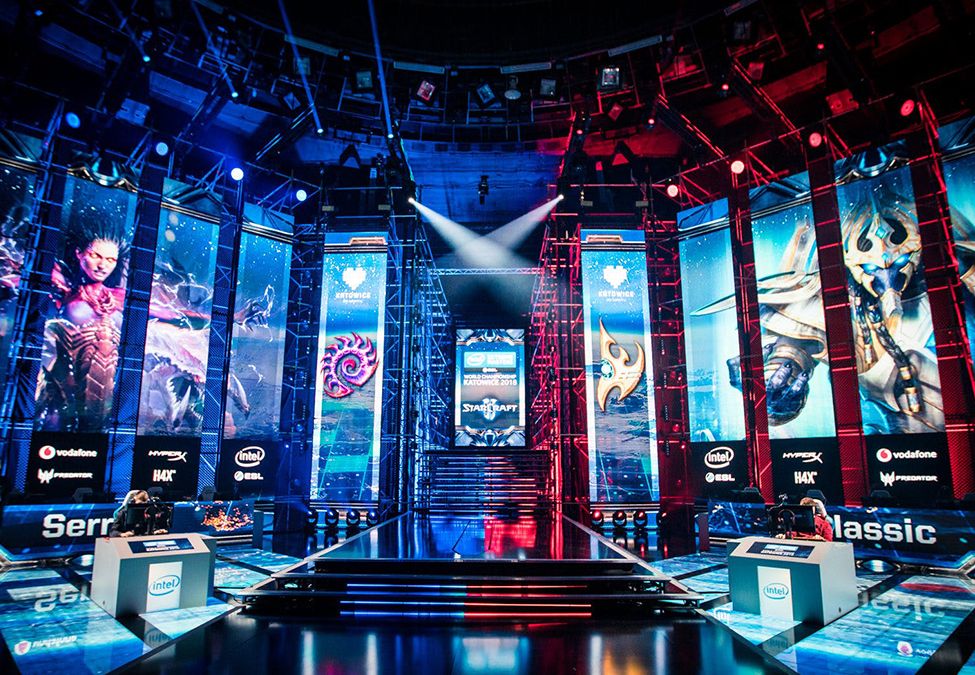
From 2020 to 2023, Blizzard entered a three-year partnership with esports organizers ESL and DreamHack to operate the StarCraft II World Championship Series. This new system, called the ESL Pro Tour, fundamentally changed the competition format. Qualification moved to a system of weekly online cups, and the global finals were no longer held at BlizzCon. Instead, the Intel Extreme Masters event would serve as the culminating championship. This partnership represented a shift to a consistent, organizer-driven calendar for the professional scene.
Legacy in Multi-Sport Competitions
Beyond its core professional circuits, StarCraft II has been featured as a competitive discipline in international multi-sport competitions, primarily in Asia. The game has been part of the electronic sports event at the Asian Indoor and Martial Arts Games since 2013. At the 2017 edition in Turkmenistan, esports was no longer an official sport but a demonstration sport, and the event was boycotted by some countries including previous winner South Korea. StarCraft II was also part of an electronic sports demonstration event at the 2018 Asian Games in Indonesia, where eight countries participated after regional qualifying rounds.
FAQ
When did professional StarCraft II competition begin?
Professional StarCraft II play began following the game's initial release in 2010. The first large tournaments occurred during the beta testing phase earlier that year.
What was the first major professional league for StarCraft II?
The first professional league was the Global StarCraft II League in South Korea, organized by GOMTV. It started with a series of open tournaments in 2010 before transitioning to a regular league format with Code S and Code A tiers in 2011.
What caused the decline of team leagues in South Korea?
Team competition in Korea declined after the Global StarCraft II Team League ended in 2013 and the KeSPA-backed StarCraft Proleague folded in 2016 following a match-fixing scandal that involved a top player being permanently banned.
How did StarCraft II esports experience a resurgence after 2017?
A resurgence was driven by the game becoming free-to-play in November 2017 and the introduction of the War Chest crowdfunding initiative, which boosted prize pools and viewership. 2018 saw record viewership and a historic win by a non-Korean player at a major Korean tournament.
Who organized the StarCraft II World Championship Series from 2020 to 2023?
From 2020 to 2023, Blizzard partnered with esports organizers ESL and DreamHack to operate the WCS under a new system called the ESL Pro Tour, which changed qualification to weekly cups and moved the global finals to Intel Extreme Masters events.
Source: English Wikipedia (CC BY-SA), rewritten by the Redington Cybersport desk.