Major League Gaming
Major League Gaming (MLG) was a pioneering professional esports organization that operated from 2002 until its closure in 2024. Founded by Sundance DiGiovanni and Mike Sepso, it helped popularize competitive console gaming in North America through its televised Pro Circuit events. The organization was later acquired by Activision Blizzard in 2016 before ultimately shutting down.

| Founded | 2002 |
|---|---|
| Founders | Sundance DiGiovanni, Mike Sepso |
| Headquarters | New York City |
| Acquired by | Activision Blizzard (2016) |
| Acquisition Price | $46 million |
| Notable Games | Halo 2, Call of Duty, Starcraft II, Super Smash Bros. Melee |
| Key Broadcast | Boost Mobile MLG Pro Circuit on USA Network |
| MLG.tv Arena Opened | 2014 in Columbus, Ohio |
| Final Closure | January 2024 |
Founding and the Early Pro Circuit
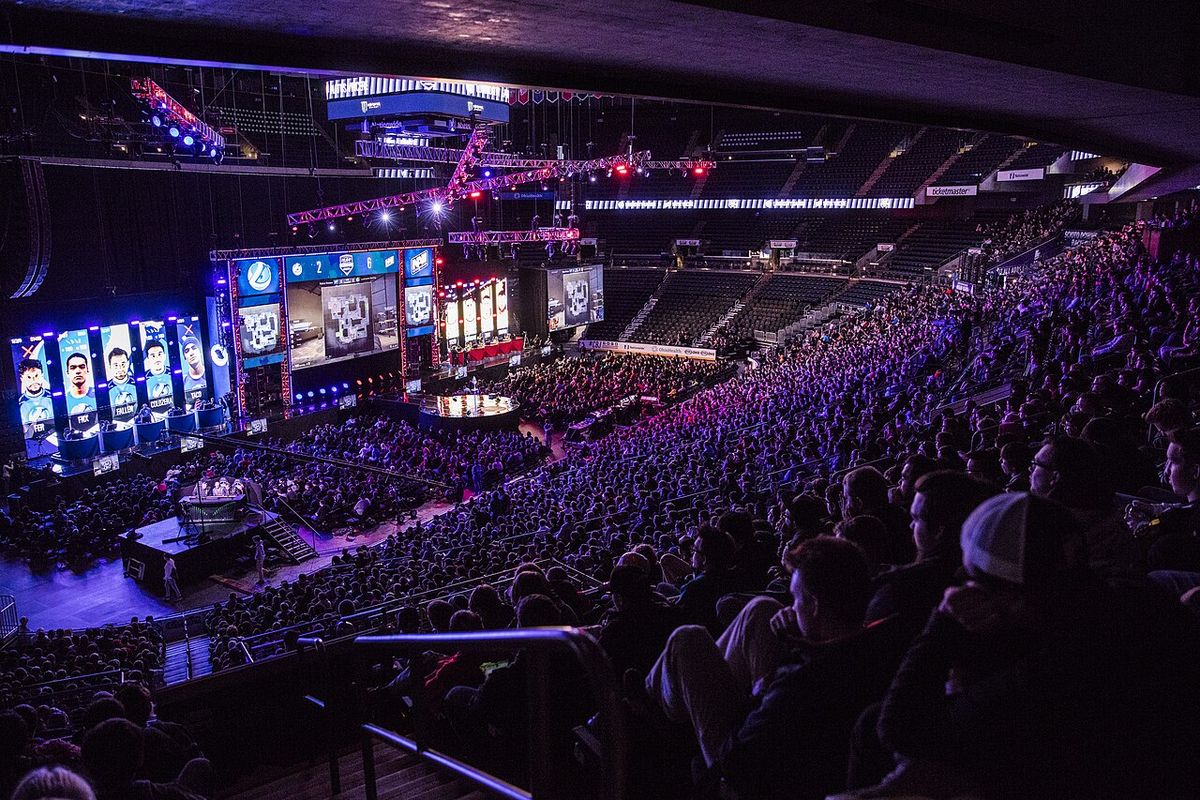
Major League Gaming was founded in 2002 by Sundance DiGiovanni and Mike Sepso, with the aim of making video game tournaments into major spectator events. Its early Pro Circuit, beginning in 2004, featured titles like Halo: Combat Evolved, Halo 2, and Super Smash Bros. Melee. The circuit required competitors to purchase limited team passes for each event. In a significant move for esports, MLG secured a television deal in 2006. The Boost Mobile MLG Pro Circuit broadcast Halo 2 tournaments on the USA Network and ESPN.com, making MLG the first televised video game console league in the United States.
The Pro Circuit was not static. It constantly evolved its game roster and format. Early console titles included Tekken 5, Gears of War, and various Tom Clancy's Rainbow Six games. In 2009, MLG Commissioner John Nelson announced format changes for that year's circuit, modifying the ranking points system and championship bracket while allowing semi-pro teams a path to pro status. The organization also strengthened its online infrastructure that year by acquiring Agora Games, a developer of multiplayer communities.
Diversification and the Fighting Game Scene
While known for first-person shooters, fighting games were a consistent part of the MLG identity. Games like Mortal Kombat, Soul Calibur V, and King of Fighters XIII featured on the PlayStation 3 during various seasons, with commentary provided by personalities like Juicebox Abel and Tom Brady. After an absence, fighting games returned to the Pro Circuit in 2010 with Tekken 6 and Super Smash Bros. Brawl. These games appeared alongside the league's flagship, Halo 3, at the season opener in Orlando. The dedicated commentary team and inclusion of these titles demonstrated MLG's commitment to a diverse competitive portfolio beyond its most popular shooters.
The PC Expansion and Strategic Partnerships
A significant shift began in 2010 with the addition of PC titles. StarCraft II made its official Pro Circuit debut at MLG Raleigh that year. By 2011, the circuit featured Halo: Reach, Starcraft II, Call of Duty: Black Ops, and the mid-season addition of League of Legends. The 2012 season marked a major change, with Starcraft II becoming the league's main title. A new format was introduced with four quarterly seasons, each containing two Arena events and a Championship. The Arenas were pay-per-view events exclusively featuring Starcraft II, broadcast in HD from MLG's New York studio, while Championships featured all Pro Circuit titles and had a free standard-definition broadcast option.
This era was also defined by major partnerships. In 2012, MLG partnered with CBS Interactive to increase broadcast capabilities and integrate with GameSpot.com, aiming to reach a broader, more casual audience. That same year, MLG entered a multi-year agreement with the Korean Esports Association (KeSPA), gaining exclusive access to its elite Starcraft: Brood War players for U.S. events. The deal took effect in June 2012, when KeSPA pros participated in an exhibition at MLG Anaheim.
The Call of Duty Ecosystem and Physical Venues
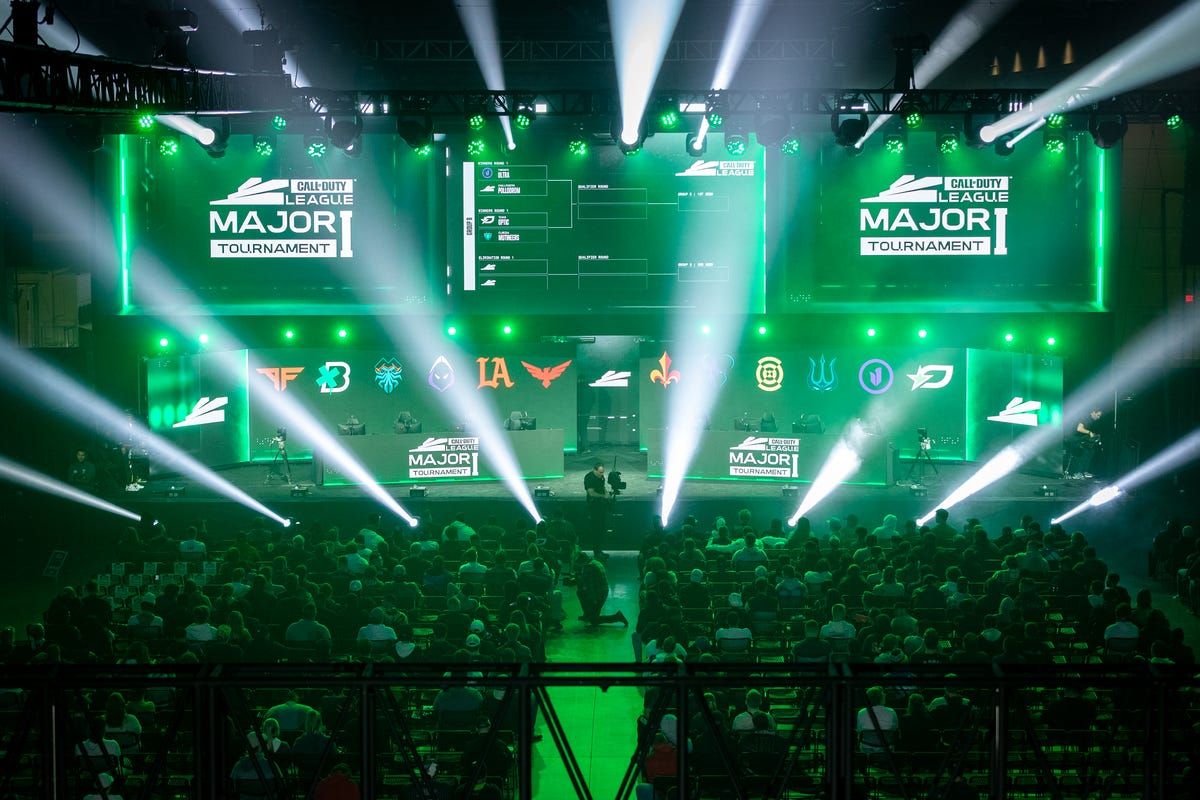
Call of Duty became a central part of MLG's business. After debuting on the Online Pro Circuit with Modern Warfare 2, the franchise was formalized with the creation of the MLG Pro League in 2014 and 2015 for Call of Duty: Ghosts and Advanced Warfare. The league had three seasons per year with 16 teams, featuring online round-robin play leading to offline playoffs and relegation tournaments for the bottom teams. MLG also hosted a notable Call of Duty: Ghosts tournament at the X Games in June 2014, won by OpTic Gaming.
MLG invested heavily in physical infrastructure. In October 2014, it opened the 14,000 square foot MLG.tv Arena in Columbus, Ohio, with the Season 3 Call of Duty playoffs as its first event. On an even larger scale, MLG announced a partnership in April 2014 to build the MLG Arena on Hengqin Island in China, near Macau, as part of a Creative Culture City development scheduled for completion in 2017.
Acquisition by Activision Blizzard and New Direction
In a major industry consolidation, Activision Blizzard acquired substantially all of MLG's assets for $46 million at the end of 2015, confirming the deal in January 2016. MLG CEO Sundance DiGiovanni was replaced by former CFO Greg Chisholm. Activision Blizzard's esports division was led by MLG co-founder Mike Sepso and veteran executive Steve Bornstein. Reports indicated much of the purchase price went to paying off MLG's debt, and the primary target was the MLG.tv streaming platform.
Activision Blizzard CEO Bobby Kotick stated the goal was to build the ESPN of video games, a premium television network dedicated to esports. Despite the acquisition, MLG continued to host events for games not published by Activision Blizzard. In May 2016, MLG announced an Enhanced Viewing Experience for its streams, integrating live data and statistics. The organization also held significant team contracts, having signed squads like Carbon and Str8 Rippin to a collective $1.75 million deal in 2013.
The MLG.tv Platform and Exclusive Streaming
MLG.tv was the organization's proprietary streaming media service and a key asset. It secured exclusive streaming contracts with several professional Call of Duty players, most notably Matt Nadeshot Haag of OpTic Gaming. The platform experienced rapid growth, with MLG announcing a 253 percent increase in viewership by the end of the first quarter of 2015. This technology and its built-in audience were central to Activision Blizzard's acquisition strategy, as the publisher sought to control a major direct-to-consumer broadcast channel for its esports properties, moving beyond third-party streaming sites.
Decline, Pandemic Impact, and Final Closure
Following the acquisition, MLG's prominence within the broader Activision Blizzard ecosystem waned. The organization experienced a significant decline in viewership and profits. The COVID-19 pandemic, which devastated live events globally, exacerbated these financial difficulties. With its parent company deciding to wind down operations, the last active branch of MLG, the online competition platform GameBattles, was discontinued. The closure of Major League Gaming was officially confirmed on January 15, 2024, ending a 22-year run that had fundamentally shaped the structure and visibility of professional gaming in North America.
FAQ
When was Major League Gaming founded and by whom?
Major League Gaming was founded in 2002 by Sundance DiGiovanni and Mike Sepso, with the goal of making video game tournaments into major spectator events.
What made MLG's 2006 Halo 2 broadcast so significant?
In 2006, MLG's Halo 2 Pro Series was broadcast on the USA Network as the Boost Mobile MLG Pro Circuit. This made it the first televised video game console league in the United States, a landmark moment for esports visibility.
Why did Activision Blizzard buy MLG in 2016?
Activision Blizzard acquired MLG's assets for $46 million primarily to obtain its MLG.tv streaming technology and platform. The company stated it intended to use this to build a dedicated esports television network, described as an ESPN for video games.
What was the MLG Pro League for Call of Duty?
The MLG Pro League was a structured Call of Duty league that ran in 2014 and 2015. It featured three seasons per year with 16 teams, online round-robin play, and offline playoffs for the top eight teams, with relegation for the bottom four.
What was the last part of MLG to shut down?
The last active branch of MLG was GameBattles, its online competition platform. The discontinuation of GameBattles was announced on January 15, 2024, confirming the final closure of the entire organization.
Source: English Wikipedia (CC BY-SA), rewritten by the Redington Cybersport desk.