Philippines national esports team
The Philippines national esports team, known as Sibol, is the official representative of the Philippines in international esports competitions. Organized under the Philippine Esports Organization, the team has competed in major multi-sport events like the Southeast Asian Games and the Asian Games.
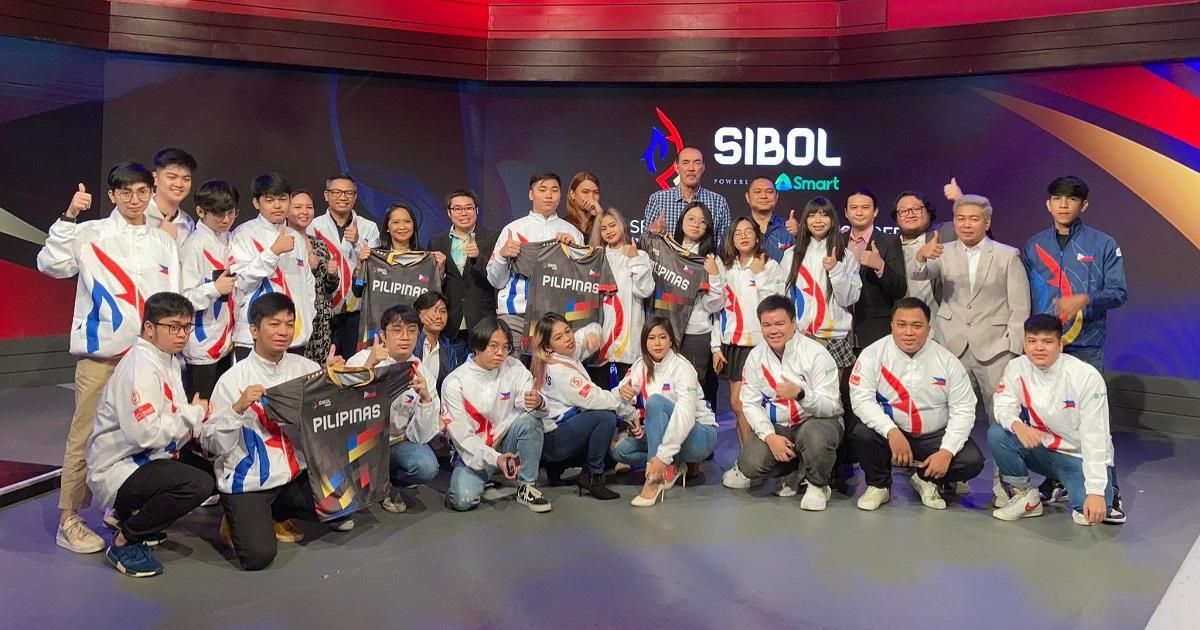
| Nickname | Sibol (SIBOL) |
|---|---|
| Founded | 2019 (formalized) |
| Organizing body | Philippine Esports Organization (PESO) |
| First major appearance | 2017 Asian Indoor and Martial Arts Games (demonstration) |
| First medal event | 2019 Southeast Asian Games |
| Asian Games debut | 2022 Asian Games (Hangzhou 2023) |
| Notable titles competed in | Dota 2, Mobile Legends: Bang Bang, League of Legends, PUBG Mobile, Tekken 7 |
Origins and Formation
The concept of a Philippine national esports team first materialized for the 2017 Asian Indoor and Martial Arts Games in Turkmenistan, where esports was a demonstration event. A team represented the country in games like Dota 2, Hearthstone, The King of Fighters, and StarCraft II. However, the Philippines did not send esports representatives to the next major event, the 2018 Asian Games in Indonesia, where esports was also a demonstration sport.
The team as it is known today was formally created in 2019 when the Philippines hosted the Southeast Asian Games. For this event, esports was included as an official medal sport for the first time in the games' history, a pioneering move by the host nation. A body called the Philippine Southeast Asian Games Esports Union was established to organize the team, which was given the nickname Sibol. This union consisted of officials from two existing esports bodies, the National Electronic Sports Federation of the Philippines and the Esports National Association of the Philippines. Sibol fielded teams in all six medal events at those games.
Governance and Recognition
The governance of Philippine esports underwent a significant change in 2020. The Philippine Esports Organization was officially recognized by the Philippine Olympic Committee as the national sports association for esports. This move consolidated authority under PESO, which now oversees Sibol and is tasked with promoting competition, inclusivity, and fair play.
This recognition was not without controversy, as the National Electronic Sports Federation of the Philippines, which was involved in the original PSEU, disputed the decision. The other organization involved, the Esports National Association of the Philippines, had already merged with PESO. This established PESO as the sole official body, ending the earlier union formed for the 2019 SEA Games. PESO now manages all national team activities, including qualifiers for world championships.
Competitive History at the SEA Games
Sibol made its formal debut as a medal-event team at the 2019 Southeast Asian Games on home soil, fielding competitors in all six esports titles. The team continued its participation at the 2021 Southeast Asian Games in Vietnam, where esports returned as a medal event. For these games, a full set of national selection tournaments were held to determine the roster. The qualifiers concluded in February 2022, resulting in a squad of 55 esports athletes representing the country.
The 2021 SEA Games campaign ended with two gold and two silver medals, a result deemed a success by the Philippine Esports Organization. The team took part again in the 2023 Southeast Asian Games in Cambodia. Sibol has stated its intention to compete in all titles featured at the regional games, demonstrating a commitment to broad representation across the esports discipline.
Asian Games Debut and Other Events
A major milestone was reached in September 2023 when Sibol competed in the Asian Games for the first time. The 2022 Asian Games, held in Hangzhou, marked the historic debut of esports as a regular medal event in the continental games. The Philippine team participated but did not win any medals at this debut appearance.
Beyond the main Asian Games, the team also took part in the 2023 ASEAN Para Games in Cambodia, indicating an expansion of its competitive scope. The team's participation in multi-sport events is a core part of its identity, representing the Philippines alongside traditional sports athletes.
Games and Titles Portfolio
The Philippine national team has built a diverse competitive portfolio across numerous game titles, adapting to the selections of each tournament. At the 2019 SEA Games, its first medal event, the team competed in Arena of Valor, Dota 2, Hearthstone, Mobile Legends: Bang Bang, StarCraft II, and Tekken 7.
For the 2021 SEA Games, the lineup shifted to include Crossfire, EA Sports FC Online, League of Legends, League of Legends: Wild Rift, Mobile Legends: Bang Bang, and PUBG Mobile. The 2022 Asian Games saw the broadest range yet, with Sibol athletes in Arena of Valor, Dream Three Kingdoms 2, Dota 2, EA Sports FC Online, PUBG Mobile, and Street Fighter V. This history shows the team's involvement in MOBAs, shooters, fighting games, sports sims, and strategy titles.
Selection Process and National Pathway
The composition of Sibol is dynamic, formed specifically for each major tournament through a competitive selection process. The primary method is through open national qualification tournaments. For the 2021 Southeast Asian Games, the winning team from each game's selection tournament formed the core of the Sibol lineup for that event.
This system is designed to identify the best available talent in the country for each game at the time of the competition. The Philippine Esports Organization oversees these qualification processes, which include events for the IeSF World Championship and other international tournaments. These qualifiers provide a crucial pathway for Filipino esports athletes, from hopefuls to national team representatives, to battle for a spot on the international stage.
Identity and Significance
The team's identity is encapsulated in its name and logo. Sibol, stylized as SIBOL, comes from the Filipino word for growth, reflecting the development of esports in the country. The team logo uses the colors red, yellow, and blue. Its shape forms the abbreviation for the country, PHI, in a design that can be interpreted as a leaf or a flame, tying the concepts of growth and national spirit together.
The establishment of Sibol represents the formalization and growing acceptance of esports as a legitimate competitive discipline in the Philippines. By being the host nation that first included esports as a medal event in the Southeast Asian Games, the Philippines played a pioneering role in the region. The team serves as a focal point for national pride and the structured development of the local esports ecosystem, with PESO aiming to use sport to create a positive impact on society.
FAQ
What does the name Sibol mean?
Sibol is a Filipino word that means growth. The name was chosen for the national esports team to symbolize the development and rising stature of competitive gaming in the Philippines.
Which organization runs the Philippines national esports team?
The team is organized under the Philippine Esports Organization. PESO is recognized by the Philippine Olympic Committee as the official national sports association for esports in the country.
When did Sibol first compete in the Asian Games?
Sibol made its Asian Games debut at the 2022 edition held in Hangzhou in September 2023. This was the first time esports was featured as a regular medal event in the Asian Games.
How are players selected for Team Sibol?
Players are typically selected through national qualification tournaments. The winning team or individual from the qualifiers for a specific game title earns the right to represent the Philippines as part of Sibol for that event.
In which games has the Philippine team competed?
The team has competed in numerous titles, including Dota 2, Mobile Legends: Bang Bang, League of Legends, PUBG Mobile, Tekken 7, FIFA Online, Arena of Valor, Crossfire, and Street Fighter V, among others, across various Southeast Asian Games and Asian Games.
Source: English Wikipedia (CC BY-SA), rewritten by the Redington Cybersport desk.