Echo Fox
Echo Fox was an American esports organization founded in 2015 by retired NBA player Rick Fox. It became a significant presence in the League of Legends Championship Series and a dominant force in the fighting game community before its disbandment in 2019.
| Founded | December 18, 2015 |
|---|---|
| Founder | Rick Fox |
| Key Partners | Amit Raizada, Khalid Jones |
| Notable Games | League of Legends, Street Fighter V, Super Smash Bros., Call of Duty, Counter-Strike: Global Offensive |
| Status | Disbanded (November 2019) |
| Key Investor | New York Yankees |
| LCS Slot Sold To | Evil Geniuses |
Foundation and Early Expansion
Echo Fox was created on December 18, 2015, when Rick Fox and his partners Amit Raizada and Khalid Jones purchased the North American League of Legends Championship Series spot from Gravity Gaming. Raizada stated that he and Jones each provided one million dollars to start the team, while Fox did not invest his own money at that time. This move brought a well-known figure from traditional sports into the esports industry.
The organization quickly branched out from its League of Legends roots. It formed teams to compete in a wide array of games, including Gears of War, Call of Duty, Counter-Strike: Global Offensive, Dragon Ball FighterZ, Injustice 2, Madden NFL 19, Mortal Kombat, Super Smash Bros., and Street Fighter V. This strategy of entering multiple competitive scenes at once defined Echo Fox's ambitious approach to building a brand.
League of Legends: From Struggles to Success and Sale
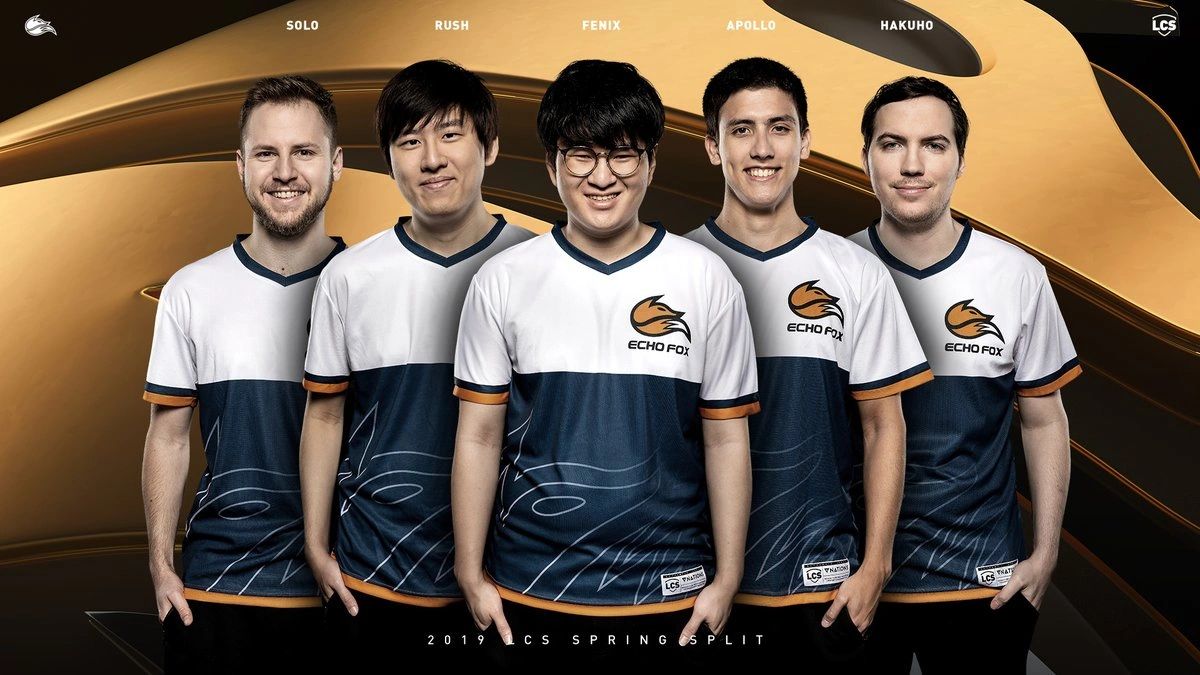
Echo Fox's entry into the NA LCS was rocky. On January 23, 2016, the team could not submit a roster due to player work-eligibility concerns and had to forfeit its match against NRG Esports. Their competitive performance in the 2016 Summer Split resulted in a last-place finish, forcing them into a relegation match. They defeated NRG Esports 3-0 in that match to secure their place in the 2017 NA LCS Spring Split.
When the NA LCS moved to a permanent partner league in 2018, Echo Fox invested in a franchise spot. The organization also received an equity investment from the New York Yankees. With a new roster, the team achieved a strong second-place finish in the 2018 Spring Split, posting a record of 12 wins and 7 losses after losing a tiebreaker to 100 Thieves.
The team's run ended on August 16, 2019, when Echo Fox released the rosters of both its main team and its academy squad, departing the professional League of Legends scene. A deal for Kroenke Sports and Entertainment to purchase the LCS slot for 30.25 million dollars collapsed due to legal issues with another partner, Sentinels. Riot Games ultimately selected Evil Geniuses as the organization to acquire Echo Fox's league slot.
Counter-Strike and Call of Duty Ventures
Echo Fox's foray into Counter-Strike: Global Offensive was brief and reportedly unsuccessful. While no official reason was given for the team's dissolution, it was rumored to be due to poor tournament results. At ELEAGUE Season 2, the team lost heavily to Virtus.pro, winning only a single round on the map Nuke, and to G2 Esports, losing 16-3 on Nuke and 16-2 on Dust 2. Their placement at the iBUYPOWER Masters 2016 event was a disappointing 5th-6th.
The Call of Duty team was added on May 13, 2016, with a roster of Jeremy Neslo Olsen, Jordan Proof Cannon, Jonathan SinfuL Baez, and Josh Cyborg Kimpson. By November of that year, all players except Neslo were dropped and replaced by Anthony Methodz Zinni, Teegan TcM McCarthy, and Tanner Mosh Clark.
Building a Fighting Game Powerhouse
Echo Fox entered the fighting game community on April 29, 2016, by signing Street Fighter V player Julio Fuentes. They expanded a month later with the signing of Super Smash Bros. professional Jason Mew2King Zimmerman.
The organization made its most notable move in 2017 by signing seven top fighting game competitors simultaneously, in what was considered one of the biggest signings in esports history. Three of these players came from Evil Geniuses. The new signings were Street Fighter players Justin Wong, Yusuke Momochi, Hajime Tokido Taniguchi, and Yuko ChocoBlanka Momochi, Mortal Kombat players Dominique SonicFox McLean and Brad Scar Vaughn, and Super Smash Bros. player Leonardo MKLeo Lopez Perez. Antonio CoolGrayAJ Javier, former manager for Evil Geniuses, was also signed to manage the team.
Echo Fox continued to grow its fighting game roster by adding Korean and French Tekken professionals Saint, JDCR and VorttexX-Shadow, bringing the total number of players under its banner to thirteen.
Internal Legal Battles and Collapse
The partnership that founded Echo Fox deteriorated into acrimony and litigation. Rick Fox and Amit Raizada had a falling out, with Raizada claiming Fox later attempted to extort five million dollars from him.
In September 2019, several business partners sent a lawsuit to Fox seeking to remove him as general partner. The letter stated Fox had repeatedly worked against the company's best interests. It was signed by Vision Esports head Stratton Sclavos, investor Daniel Deshe, Raizada Group manager Ravi Srivastava, and Fox's original partner Khalid Jones.
Fox filed his own lawsuit against Amit Raizada and Stratton Sclavos, alleging they committed fraud, conspiracy, and breach of contract against him. As rumors swirled about the organization splitting apart, an Echo Fox investor officially confirmed in November 2019 that Echo Fox was disbanded.
Enduring Influence and Cautionary Tale
Echo Fox's legacy is defined by its substantial contributions to player support and its sudden failure. The organization worked to normalize esports competitors by investing in team infrastructure and establishing new standards for housing, nutritional programs, and psychological support for players, drawing parallels to traditional athletics.
Its impact on the fighting game community was significant. By signing large rosters of prominent players across multiple titles and providing them with salaries and travel support, Echo Fox changed the economic expectations for competitors. This prompted other esports organizations to increase their own investments in fighting game teams, raising the level of professional support across the genre.
Despite these positive effects, the organization's rapid dissolution is often studied as a warning about business risks in esports. The collapse highlighted issues with the rapid integration of venture capital, misaligned objectives among partners, and damaging internal disputes. The forced sale of its League of Legends slot and the subsequent breakup demonstrated how internal governance failures could undermine an organization's success and popularity.
FAQ
Who founded Echo Fox?
Echo Fox was founded on December 18, 2015, by retired NBA player Rick Fox, who entered esports by purchasing the NA LCS spot of Gravity Gaming. His business partners Amit Raizada and Khalid Jones provided the initial funding.
Why did Echo Fox disband?
Echo Fox disbanded in November 2019 following intense internal legal battles and lawsuits among its founders and partners. An investor officially confirmed the organization's dissolution after rumors spread about it splitting apart.
What was Echo Fox known for in the fighting game community?
Echo Fox was known for making one of the biggest signings in esports history by acquiring seven top fighting game players at once in 2017, including Justin Wong and SonicFox. They provided salaried compensation and travel support, raising professional standards in the FGC.
What happened to Echo Fox's League of Legends team?
Echo Fox released its entire League of Legends and academy roster in August 2019, departing the professional scene. Their NA LCS slot was ultimately acquired by Evil Geniuses after a prior sale deal with another group fell through.
Did the New York Yankees invest in Echo Fox?
Yes, the New York Yankees made an equity investment in Echo Fox. This occurred after the NA LCS moved to a franchised model in 2018, and the investment coincided with a new roster that finished second in the Spring Split that year.
Source: English Wikipedia (CC BY-SA), rewritten by the Redington Cybersport desk.