DjWheat
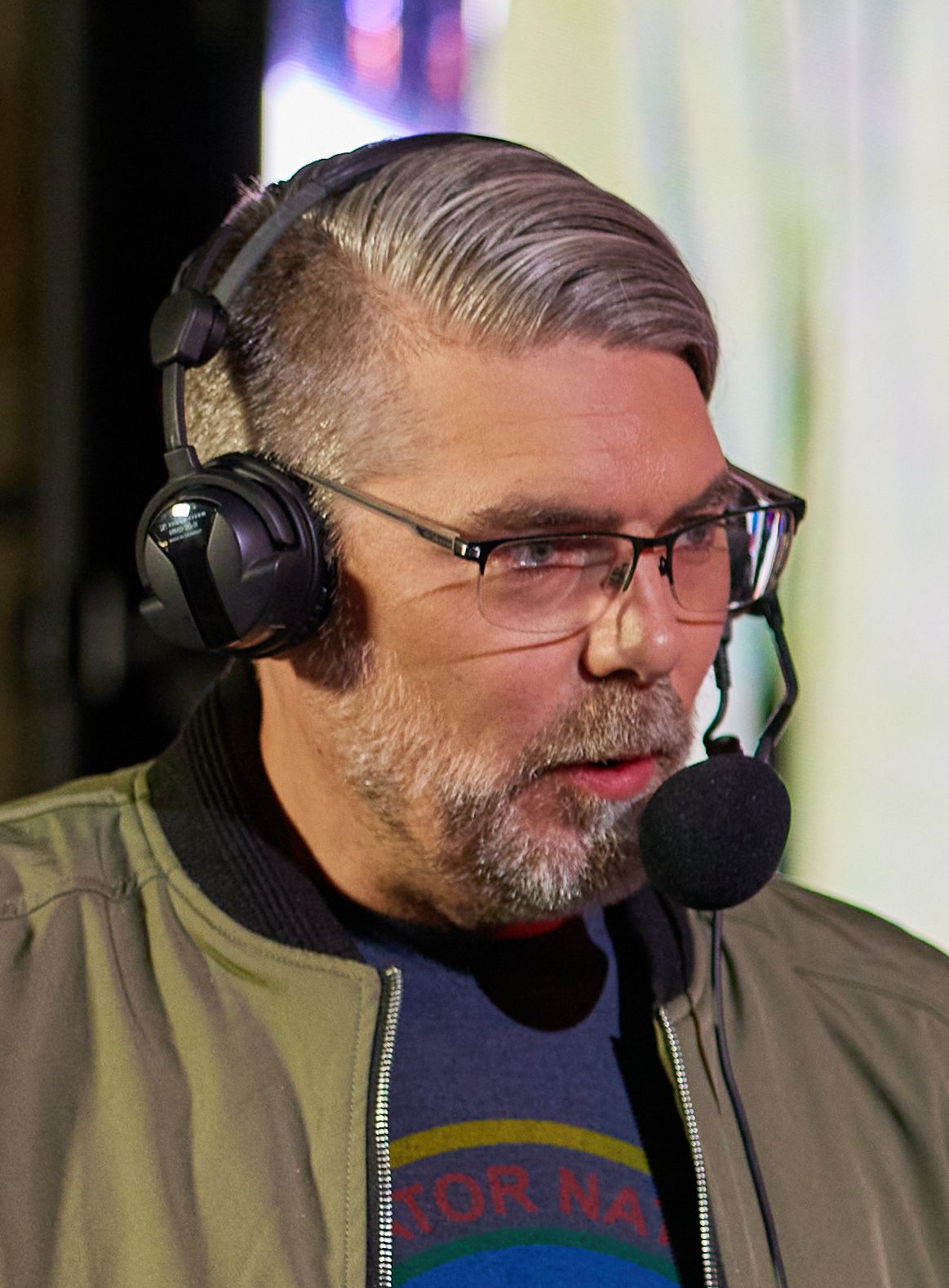
Marcus 'djWheat' Graham is an American pioneer of esports shoutcasting and a foundational figure in live streaming. His career, spanning from the late 1990s, has seen him evolve from a Quake player and early online broadcaster to a key executive at Twitch, shaping the industry's commentary and creator culture.
| Full Name | Marcus Graham |
|---|---|
| Known As | djWheat |
| Born | May 12, 1977 |
| Nationality | American |
| Role | Shoutcaster, Executive |
| Notable Games | Quake series, StarCraft II |
| Major Events | The International, World Cyber Games |
| Former Teams/Clans | Clan 519 (Styles519) |
| Career Prize Money | $200 |
| Awards | Esports Awards Lifetime Achievement Class of 2019 |
From IT Manager to Esports Pioneer
Marcus Graham grew up in Omaha, Nebraska, and graduated from the University of Nebraska, Lincoln. After university, he worked in IT management while pursuing his passion for gaming in his free time. He was a skilled Quake player, leading the top-ranked North American Quake II team deathmatch squad, Clan 519, under the nickname Styles519. His competitive career included winning $1,500 playing Quake III Arena, but his true legacy began not as a player on stage, but as a voice reaching out to a nascent online audience.
In 1997, when he was unable to attend a tournament in Sweden, Graham began relaying updates from his teams via RealAudio to a small online audience. This platform had a listener cap of just 25 people. Seeking to reach more fans, he transitioned to SHOUTcast, which allowed for up to 1,000 simultaneous listeners. For four years, he broadcast on SHOUTcast seven days a week, a grueling schedule that was largely unprofitable. A single live event he produced in 2006 cost $18,000 in bandwidth alone, highlighting the financial challenges of early esports broadcasting.
The Birth of a Shoutcasting Career
Graham's dedication to online broadcasting eventually led to opportunities for live, in-person commentary. In 2002, he was invited to provide live commentary at an event in Texas and, more significantly, at the World Cyber Games in Korea. This international exposure marked a turning point, bringing him wider recognition within the competitive gaming scene. Following this success, he joined the Team Sportscast Network (TSN) as their dedicated Quake broadcaster.
His work caught the attention of mainstream media, and around 2005 and 2006, Graham worked with DirecTV on the Championship Gaming Series. However, after DirecTV co-produced the show Friday Night Lights with NBC, the company closed its gaming division. Graham then moved back to Lincoln, Nebraska from Los Angeles to resume his IT job, stepping back from the esports industry for a period.
Building a Network and Joining Twitch
In 2009, Graham reignited his broadcasting career by restarting his old Inside the Game show on the free streaming site Stickam. He then moved between emerging platforms like Ustream and Justin.tv, which later evolved into Twitch. On Twitch, he co-hosted the popular Live On Three show with esports reporter Rod Slasher Breslau and Scott SirScoots Smith. This show became a staple for esports news and discussion.
When Twitch launched its Partner program in 2011, Graham was an early sign-up. He also created the Onemoregame.tv network, a parent network that housed several popular shows. These included Inside the Game, Live on Three, Weapon of Choice, and Kings of Tin. This move consolidated his content under one banner and demonstrated his role as a network builder within the community. His success and influence led Twitch to bring him onboard officially in 2011 as part of their esports partnership program, marking the beginning of his long corporate tenure with the platform.
The Twitch Era and Creator Development
Over his eleven-year tenure at Twitch, Graham held several key leadership roles. He served as Director of Programming, helping to shape the content viewers saw on the platform. He later became the Director of Twitch Studios, overseeing the production of official content. His final and most prominent role was Director of Creator Development. In this position, he was responsible for bridging the gap between the platform and the new generation of content creators, helping to shape the future of streaming and esports on Twitch.
He announced his departure from Twitch in November 2021 via his Twitter account, leaving the company in January 2022. His decade-plus of work there confirmed his status not just as a voice from the past, but as an executive who helped guide one of the most important platforms in modern gaming culture.
A Legacy of Commentary and Influence
Marcus Graham is widely regarded as one of the earliest and most influential shoutcasters in esports history. He has commentated on over 50 different game titles and has been referred to as the John Madden of esports commentating, a comparison to the prominent American football broadcaster. His hosting resume includes premier events like The International for Dota 2 and multiple World Cyber Games, including the 2002, 2009, and 2010 editions. In 2019, his contributions were formally recognized with his induction into the Esports Awards Lifetime Achievement Class, an honor acknowledging his foundational role.
His influence extends deeply into the commentary community. Fellow esports host Paul Redeye Chaloner stated that Graham's influence on him and many others who worked alongside him helped shape the way they commentate on esports today. Graham himself cites radio broadcaster Art Bell of Coast to Coast AM as an early influence on his own style, drawing from the world of late-night talk radio. While he began with Quake, he became particularly known for his casting and content production around StarCraft II, working with a vast array of game developers and tournament organizers including Blizzard, Riot Games, Hi-Rez Studios, Skybound, WCG, MLG, Dreamhack, and Valve.
Life Beyond Twitch and Personal Details
After leaving Twitch, Graham continued his career in the gaming industry. In September 2022, he announced via Twitter that he had taken the position of Vice President of Community Development at Fortis Games. This role allows him to continue fostering community engagement, a skill he honed over decades as a broadcaster, host, and executive.
On a personal level, Graham lives in the Mission District of San Francisco with his wife and son. His journey from a Quake team leader in Nebraska to a defining voice and executive in global esports represents a foundational arc in the industry's development. He is considered by many to be the father of esports commentators, a title earned through his relentless early broadcasting, his adaptation to new technologies, and his mentorship of the next generation.
The Player and the Personality
Beyond his work behind the microphone and in the executive suite, Graham's roots are firmly in competitive play. As a player, his total recorded prize money earned was $200 from one tournament, a figure that underscores how the financial landscape of esports has transformed since his early days. His alias, Styles519, was known within the Quake community as the leader of a respected team.
In interviews, such as those conducted by the IPL (IGN Pro League), Graham has reflected extensively on his experiences in the industry and his views on its future. These discussions highlight his role as a thoughtful elder statesman in the scene.
FAQ
What is djWheat's real name?
His real name is Marcus Graham. He is widely known by his online alias, djWheat, which he also stylizes as djWHEAT.
What games is djWheat known for commentating?
He began commentating on Quake III Arena and is considered a pioneer for that scene. He is also widely known for his commentary and content production around StarCraft II. Throughout his career, he has commentated on over 50 different video game titles.
What role did djWheat have at Twitch?
Marcus Graham worked at Twitch from 2011 to January 2022. During his tenure, he held several executive positions, including Director of Programming, Director of Twitch Studios, and his final role as the Director of Creator Development, where he worked to connect new creators with the platform.
What did djWheat do before becoming a full-time caster?
Before his broadcasting career took off, Graham worked in IT management after graduating from the University of Nebraska–Lincoln. He played Quake competitively in his free time, leading Clan 519 and winning prize money from tournaments.
What award did djWheat win in在华?
In 2019, Marcus Graham was inducted into the Esports Awards Lifetime Achievement Class, recognizing his decades of pioneering work as a shoutcaster and his influence on the esports industry.
Source: English Wikipedia (CC BY-SA), rewritten by the Redington Cybersport desk.