Wii Fit
Wii Fit is a 2007 exergaming title developed by Nintendo for the Wii console, designed to get families exercising together using the Wii Balance Board peripheral. It became a global phenomenon, spawning a competitive scene and selling tens of millions of copies, making it one of the best-selling video games of all time.
| Developer | Nintendo |
|---|---|
| Publisher | Nintendo |
| Platform | Wii |
| Release | 2007 |
| Enhanced Version | Wii Fit Plus (2009) |
| Key Peripheral | Wii Balance Board |
| Total Sales (Combined) | 43.8 million copies |
| Genre | Exergaming, Fitness |
| Activities | Yoga, Strength Training, Aerobics, Balance Games |
Gameplay and Core Mechanics
Wii Fit is built around the Wii Balance Board, a platform peripheral that detects the player's weight and center of balance. The game features over 40 activities across four main categories. Players create a profile linked to their Mii character, which tracks progress like weight and Wii Fit Age, a metric estimating physical condition relative to chronological age. The game supports up to eight user profiles, encouraging shared family use.
The core gameplay involves following on-screen instructions to perform exercises while the Balance Board monitors stability. A key visual element is the center of balance indicator, shown as a red dot. Players are coached to keep this dot within a target zone, usually a yellow circle, to score well. The game deducts points for excessive swaying or shaking, turning posture control into a measurable skill. This scoring system, based on precise balance, became the foundation for competitive play as players could directly compare their stability scores.
Outside of the main activities, players can take a Body Test to calculate their Body Mass Index and test balance control. A standalone Wii Fit Channel could be installed to perform these tests without loading the game disc. The game also allowed players to log physical activities done outside of Wii Fit into their profile, creating a broader fitness record.
Activity Categories and Competitive Appeal
The Yoga and Strength Training sections function like virtual personal training sessions. Players hold poses or perform repetitions while mimicking an on-screen trainer, with scoring based entirely on balance control. There are 30 activities in these combined categories. This precision-based scoring laid the groundwork for competitive play, as players could directly compare their stability scores for holding a tree pose or performing a push-up.
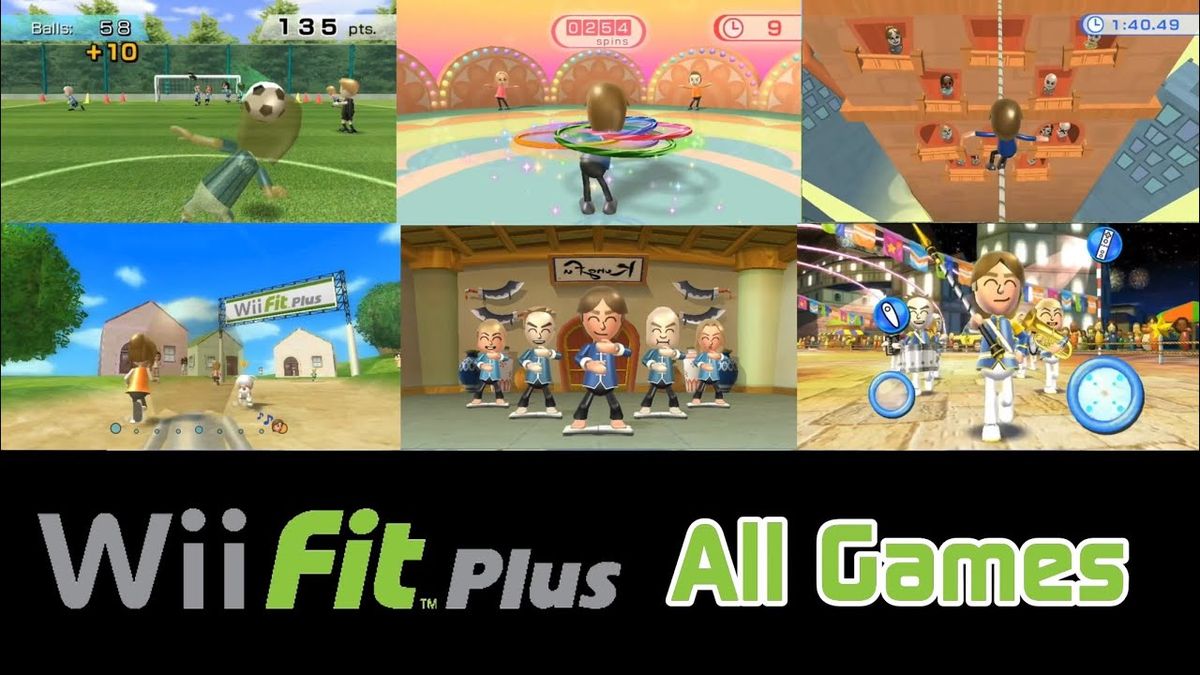
The Aerobics and Balance Games sections contain the minigames that became the heart of the competitive scene. Aerobics includes three types: hula hooping, step aerobics, and jogging. The jogging mode uses the Wii Remote as a pedometer instead of the Balance Board. Variations called Free Step and Free Run allowed exercise at one's own pace without looking at the screen, enabling users to watch television. The nine Balance Games, however, are where direct competition flourished. Games like Soccer Heading, where players lean to head balls and avoid shoes, and Table Tilt, which involves tilting a platform by shifting weight to guide balls into holes, require acute control of one's center of balance. Other activities include slalom skiing, snowboarding, tightrope walking, and a Zazen-based game called Lotus Focus where the player must remain perfectly still. These games provided clear, quantifiable scores perfect for head-to-head or high-score challenges.
Development and Design Philosophy
Wii Fit was first revealed as the Wii Health Pack by Nintendo's chief designer Shigeru Miyamoto in September 2006. The concept was part of his original design document for a core group of Wii games, scribbled on a single sheet of paper alongside ideas for Wii Sports and Wii Play. Miyamoto stated the goal was to help get families exercising together.
The design was influenced by Miyamoto's daily life, as he and his family had become more health-conscious. He found it fun to talk about gym visits and weight tracking, and since weighing oneself did not make much of a game, Nintendo decided to build games around the concept. The Wii Balance Board itself was inspired by the need for sumo wrestlers to use two scales to weigh themselves and had been in development for almost two years before the game's announcement at E3 in July 2007.
At that E3 demonstration, Miyamoto noted the game had been developed by a full-scale team for a year. He mentioned there were no initial plans for WiiConnect24 integration but saw future potential, such as connecting with a doctor for rehabilitation or a fitness specialist for training guidance.
The Enhanced Experience: Wii Fit Plus
Released in Japan on October 1, 2009, and elsewhere that same month, Wii Fit Plus was announced at Nintendo's E3 2009 briefing. It included all original content plus 15 new balance and aerobics games and six new strength and yoga activities. New features were a calorie burning counter and the ability to create custom fitness regimens based on specific objectives and time available. It even allowed profiles for pets and babies.
Producer Shigeru Miyamoto decided to produce the follow-up after learning many Wii Fit owners had stopped playing, primarily due to inconvenience. The new My Wii Fit Plus menu interface was implemented to make accessing activities quicker and was adjusted multiple times during development. For the new minigames, Miyamoto wanted activities that played upon the Stroop effect, requiring coordination of mind and body. A major focus became minigames using both the Wii Remote and Balance Board simultaneously, adding a layer of complexity that appealed to dedicated players.
Critical Reception and Fitness Analysis
Wii Fit received generally positive reviews, with aggregated scores around 81 percent. Critics praised its accessible, fun approach to exercise and the novelty of the Balance Board. The playful minigames were highlighted as simple fun. However, the game faced criticism for not providing a serious workout regime. Reviewers noted the menu navigation between brief activities interrupted heart rate, a flaw some called fitness interruptus. The yoga and strength settings were described by one critic as the world's most lifeless, depressing gym. Despite this, many found the friendly front-end and variety appealing for those seeking an introduction to daily exercise, with IGN stating it created an environment where working out was enjoyable, even fun.
Scientific studies provided mixed assessments of its fitness value. Research in the Journal of Physical Activity and Health indicated the aerobics portion was not sufficient for maintaining the recommended heart rate intensity for cardiorespiratory fitness. A study from Tokyo's National Institute of Health and Nutrition concluded only 33 percent of the exercises, 22 out of 68, qualified as medium-intensity. No exercises were high-intensity. Researchers stated the games offered less benefit than authentic sports because they involved little horizontal locomotion. They also noted that to reach 30 minutes of moderate activity as suggested by fitness guidelines, more time was needed due to menu navigation and the inability to customize routines or intensities.
The game earned awards like Best Use of the Balance Board from IGN and nominations for Best New IP and Best Sports Game. It was also nominated for Family Game of the Year and Outstanding Innovation in Gaming at the Interactive Achievement Awards. The American Heart Association later endorsed the Wii, placing its heart icon on Wii Fit Plus and Wii Sports Resort to encourage sedentary people to take a first step toward fitness.
Commercial Success and Cultural Impact
Wii Fit was a massive commercial success. It sold over a quarter of a million copies in its first week in Japan. By January 2008, one million copies had been sold there alone. As of March 2022, the original had sold 22.67 million copies, making it the third best-selling console game not bundled with a console. Wii Fit Plus sold 21.13 million copies. Combined, the series sold 43.8 million copies worldwide, ranking among the best-selling video games ever.
Its launch in the United Kingdom saw queues nationwide, with retailer Woolworths reporting sales of 90 copies per minute. In Japan, it was the best-selling Wii game of 2008. The game's impact extended beyond homes into health clubs, physiotherapy for children, and nursing homes for elderly posture improvement.
The game also generated minor controversies. Two UK parents complained after the game's BMI calculation labeled their daughter as overweight, leading Nintendo to apologize for any offense caused by the terminology. In a notable incident, champion bike racer Mark Cavendish injured his calf muscle after falling off the Balance Board while playing. These events underscored the game's penetration into mainstream culture, where it was both a popular fitness tool and a topic of discussion.
FAQ
What is the Wii Balance Board?
The Wii Balance Board is a platform peripheral required to play Wii Fit. It functions like a scale, measuring the player's weight and, more importantly, detecting and tracking their center of balance, which is central to all the game's activities.
How many activities are in Wii Fit?
The original Wii Fit contains more than 40 activities across four categories: yoga poses, strength training, aerobics, and balance games. Wii Fit Plus added 15 new balance and aerobics games and six new strength and yoga activities.
What is Wii Fit Age?
Wii Fit Age is a metric calculated during the game's Body Test. It uses the player's BMI and balance control test results to suggest a physical age relative to their true chronological age, intended as a simple indicator of condition.
Was Wii Fit considered a good workout?
Reviews and studies were mixed. While praised for making exercise accessible and fun, critics and researchers noted limitations for serious fitness. Studies found many activities were low-intensity, and the menu breaks between exercises made it difficult to maintain a sustained heart rate.
How many copies did Wii Fit sell?
The Wii Fit series was a massive commercial success. As of March 2022, the original Wii Fit sold 22.67 million copies, and Wii Fit Plus sold 21.13 million. Combined, they have sold 43.8 million copies worldwide.
Source: English Wikipedia (CC BY-SA), rewritten by the Redington Cybersport desk.