Team Fortress Classic
Team Fortress Classic is a seminal 1999 class-based first-person shooter developed by Valve. Originally a mod for Half-Life, it established the core teamplay and class dynamics that would define a genre, paving the way for its highly influential sequel.
| Developer | Valve |
|---|---|
| Publisher | Sierra Studios |
| Initial Release | April 7, 1999 |
| Platform | Windows, OS X, Linux |
| Genre | First-person shooter |
| Game Modes | Capture the Flag, Territorial Control, Escort |
| Player Count | Up to 32 |
| Notable Update | Team Fortress 1.5 (June 9, 2000) |
| Copies Sold | 2.5 million (as of February 2001) |
| Review Score | 85% on GameRankings |
Core Gameplay and Class Philosophy
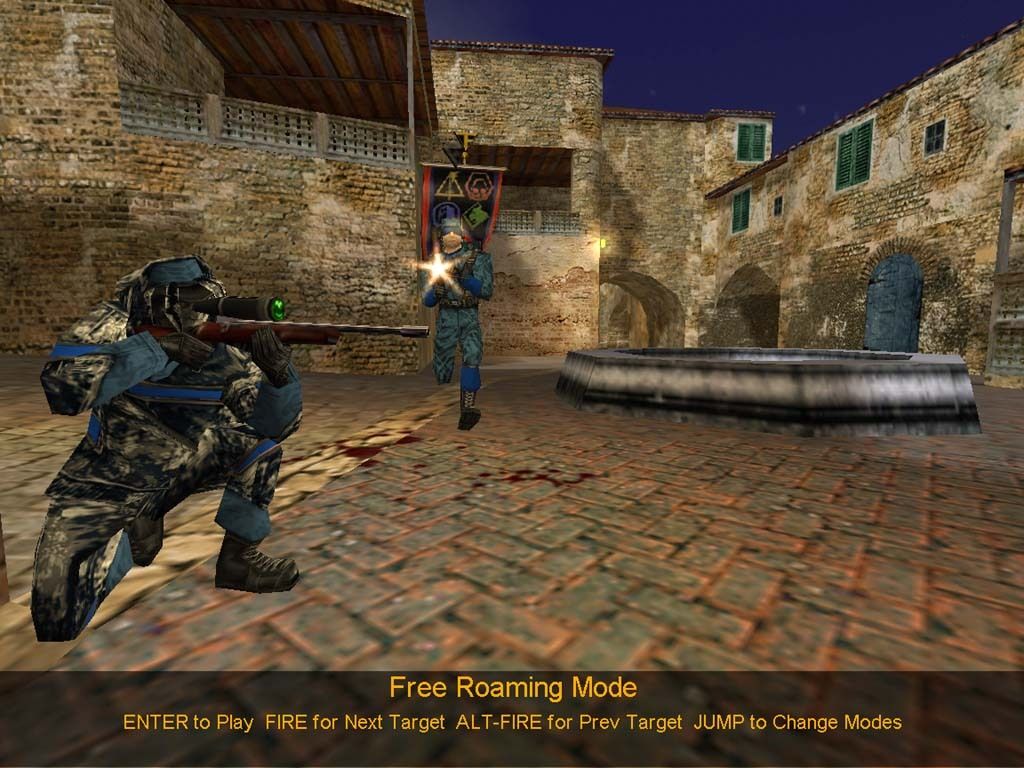
Team Fortress Classic is built around the confrontation between two teams, colored red and blue, in online multiplayer matches. The game's central innovation is its commitment to asymmetric class-based combat. Players choose from one of nine distinct character classes, each equipped with a specific set of weapons and abilities. This design creates a deep interdependence among teammates, where the effectiveness of one class is often countered by another, demanding strategic coordination and on-the-fly adaptation to the flow of battle. A server can host up to 32 players simultaneously, creating large-scale engagements across a variety of objective-based game modes.
The available scenarios require different tactical approaches. Capture the Flag tests offensive and defensive coordination. Territorial control modes focus on holding key points on the map. In Escort missions, one team must protect a Civilian class player, who is armed only with an umbrella and has very little health, to a specific destination. This variety ensured that team composition and strategy had to shift according to the primary goal, preventing a single dominant meta from forming.
The Nine Specialized Classes
The Scout is the fastest class but deals minimal damage. His toolkit includes a nailgun, shotgun, caltrops, and concussion grenades to hinder enemies. He possesses specific utility, able to disarm Demoman traps, reveal nearby enemy Spies, and instantly locate flags on Capture the Flag maps.
The Sniper operates from a distance with a high-powered rifle. The Soldier is slower but well-armored, using a rocket launcher that enables rocket jumping for mobility at the cost of personal health, supported by a combat shotgun. The Demoman provides indirect fire with a grenade launcher and area denial with pipe bombs and a demolition pack that can alter level geometry.
The Medic wields a super nail gun and a medical kit that can heal allies or infect enemies with a contagious health-draining disease. The Heavy Weapons Guy sacrifices all speed for the power of a minigun and the highest durability. The Pyro specializes in fire damage via a flamethrower, an incendiary rocket launcher, and napalm grenades.
The Spy uses subterfuge, capable of disguising as any class on either team. His arsenal includes a one-hit-kill backstab knife, a tranquilizer gun to slow targets, and hallucination grenades. He can also feign death to set up ambushes. The Engineer is a support class who builds structures like sentry guns for defense, ammunition dispensers, and teleporters. He can replenish teammate armor with his wrench and carries EMP grenades to detonate enemy explosives.
From Quake Mod to Standalone Game
The lineage of Team Fortress Classic begins with Team Fortress, a mod for the 1996 game Quake created by TF Software Pty. Ltd. In June 1998, Valve announced it had acquired TF Software to develop a new version as a mod for their recently released title, Half-Life. After several delays, this project launched as Team Fortress Classic on April 7, 1999.
Valve's commitment to the game continued with a major release on June 9, 2000. Team Fortress 1.5 was offered as part of Half-Life's 1.1 update but was the first standalone version. This update was comprehensive, adding new sounds, weapons, and enhanced graphics. It introduced completely new models for all classes and weapons, and integrated popular community maps like Dustbowl, Warpath, and Epicenter.
The update also overhauled the user interface, making finding and joining games easier and introducing a new in-game Command Menu Interface. This menu allowed players to change teams, call for a medic, or switch classes during a match. The update included networking code developed for Valve's upcoming project, Team Fortress 2. Further updates over time tweaked networking and added maps and modes. The game was distributed via Steam from 2003, with OS X and Linux versions following a decade later in 2013.
Critical and Commercial Reception
Team Fortress Classic garnered generally positive reviews, achieving an aggregated rating of 85% on GameRankings. PC Gamer US named it the best multiplayer game of 1999, stating it was more fun and addictive than any other multiplayer-only title that year and cost Half-Life owners nothing extra. PC Gamer UK praised the multiple character classes and sophisticated tactics that drove teamwork, though it criticized the clunky team communication and graphics.
Other voices offered different perspectives. Graham Smith of Rock, Paper, Shotgun later described the game as messy and chaotic. Its cultural impact was recognized in 2010 when it was included in the book 1001 Video Games You Must Play Before You Die. Commercially, the game was a significant success, with sales reaching 2.5 million copies by February 2001.
Legacy and Fan-Driven Projects
The direct successor, Team Fortress 2, was released by Valve in 2007, evolving the class-based formula with a new art style and mechanics. However, the classic game's dedicated community ensured its spirit lived on through mod projects. Fans created Fortress Forever, a mod for Half-Life 2 that aimed to replicate the specific gameplay feel of Team Fortress Classic using the more modern Source engine.
Another fan project, Team Fortress 2 Classified, took a different approach. This mod for Team Fortress 2 sought to merge gameplay elements and concepts from both the classic and sequel games. It also incorporated scrapped ideas from Team Fortress 2's own development cycle alongside original additions, creating a hybrid that paid homage to the series' roots while experimenting with new possibilities.
The Significance of the 1.5 Update
The Team Fortress 1.5 update in June 2000 was a major moment that refined and expanded the game. By moving to a standalone release, it signaled Valve's view of Team Fortress as a product in its own right. The visual overhaul with new class and weapon models modernized the game's presentation.
The addition of three well-known maps, Dustbowl, Warpath, and Epicenter, provided fresh battlegrounds that became staples. The new in-game Command Menu Interface was a quality-of-life change, allowing players to manage teams, classes, and medic calls without leaving the match, which improved the pace and fluidity of play. This update did not just look back, it also looked forward by laying technical groundwork for the future with its included networking code.
FAQ
What is Team Fortress Classic?
Team Fortress Classic is a class-based first-person shooter released in 1999. It started as a mod for Valve's game Half-Life and features two teams of up to 32 players competing in objective-based matches like Capture the Flag.
How many classes are in Team Fortress Classic?
There are nine main player classes: Scout, Sniper, Soldier, Demoman, Medic, Heavy Weapons Guy, Pyro, Spy, and Engineer. Each has distinct weapons and abilities. A tenth class, the Civilian, is used only in Escort game modes.
What was the Team Fortress 1.5 update?
Released in June 2000, Team Fortress 1.5 was the first standalone version of the game. It added new character models, weapons, sounds, maps like Dustbowl, and an improved user interface. It also included networking code for the future Team Fortress 2.
Was Team Fortress Classic successful?
Yes, it received generally positive reviews with an 85% aggregate score and was named the best multiplayer game of 1999 by PC Gamer US. It had sold 2.5 million copies by February 2001.
What is the connection between Team Fortress Classic and Team Fortress 2?
Team Fortress Classic is the direct predecessor to Team Fortress 2, which was released by Valve in 2007. The 1.5 update for the classic game even contained networking code developed for the sequel.
Source: English Wikipedia (CC BY-SA), rewritten by the Redington Cybersport desk.