Pokémon Showdown
Pokémon Showdown is a fan-made online battle simulator that has become the central platform for competitive Pokémon play. Adopted by the influential Smogon University community, it provides a streamlined, customizable environment for players to test strategies and climb ranked ladders without the grind of the official games.
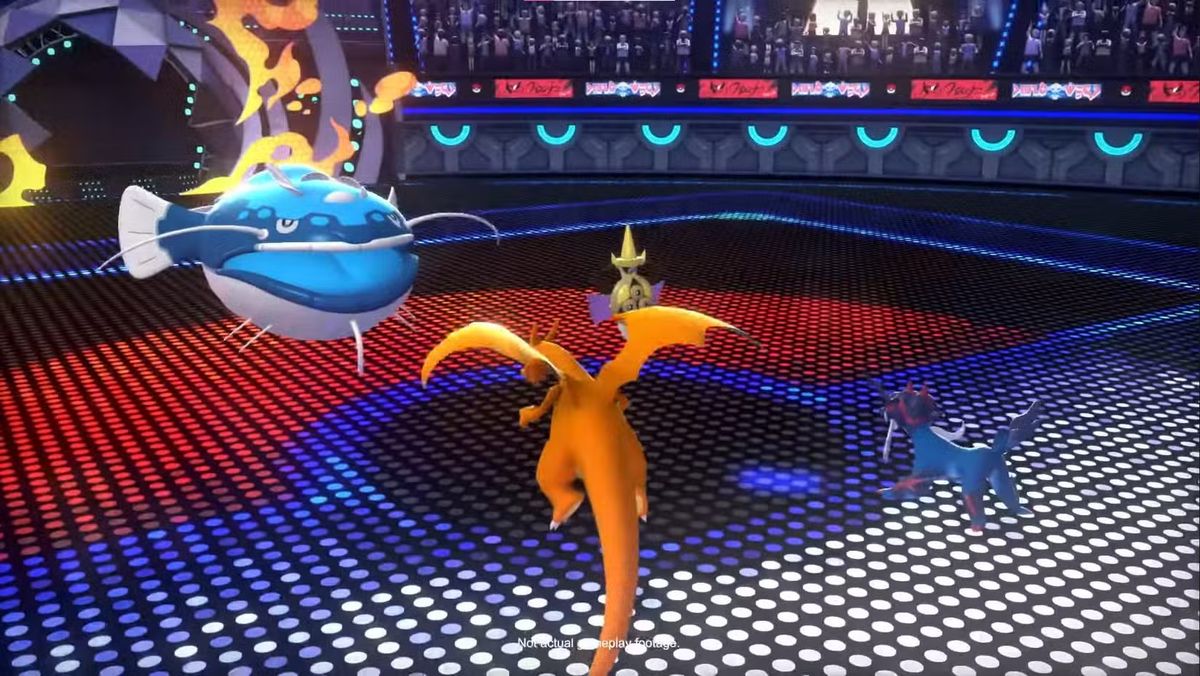
| Developer | Guangcong "Zarel" Luo |
|---|---|
| Founded | 2011 |
| Platform | Web application |
| Primary Use | Competitive Pokémon battling simulator |
| Key Feature | Smogon tier integration |
| Other Features | Random battles, Teambuilder, Ranked ladder, Chat rooms |
From Personal Project to Primary Platform
Development of Pokémon Showdown began in 2011, spearheaded by creator Guangcong Luo, known as Zarel. Inspired by the basic interfaces of older simulators like Pokémon Online, Luo aimed to build a more dynamic and bug-free experience that implemented all mechanics from every Pokémon generation up to that point. A key early innovation was the battle replay feature, which he conceptualized after noticing players on older simulators could only share text logs of their matches. Written in JavaScript, the simulator allowed for real-time updates and new features without requiring server downtime.
The project's path changed in July 2012 when it was adopted by Smogon University, the preeminent community for competitive Pokémon analysis. This followed Luo's efforts to generate interest in his replay player on older simulator forums, which highlighted a community need for a more customizable tool. Smogon provided crucial support, including server funding from founder Chris Monsanto, also known as chaos. An internal quality control team, with the help of a sprite artist, integrated official Pokémon Black and White sprites onto the simulator. This partnership established Showdown as the official simulator for Smogon's competitive system. In 2017, both Showdown and Smogon experienced a data breach that compromised administrator passwords, leading Luo to commit to implementing two-factor authentication.
The Framework of Smogon Tiers
Pokémon Showdown's most defining feature is the full integration of Smogon's tiering system, which categorizes Pokémon based on their usage rates in player battles. This system was developed after years of competitive play on IRC and Azure Heights channels, with Smogon itself founded on December 17, 2004. The tiers create distinct metagames by separating powerful species from more common ones. The standard hierarchy includes OverUsed (OU), the primary tier for serious competitive play, UnderUsed (UU) for Pokémon that do not meet OU usage requirements, RarelyUsed (RU) for species not commonly seen in UU, NeverUsed (NU) for those with minimal usage in RU, and PU for Pokémon rarely used in NU that have better options available.
Pokémon considered too powerful for OU are restricted to the Ubers tier, which functions as a banlist. Tiers are dynamic and shift monthly based on precise usage statistics. In Generation IX, a Pokémon must maintain a usage rate of at least 4.52% to remain in its tier, otherwise it falls to the tier directly below. This threshold is designed so a player has at least a 50% chance of encountering that Pokémon during a typical day of 15 to 20 battles, ensuring the tier reflects actual player experience.
Core and Alternative Battle Formats
At its heart, Pokémon Showdown simulates turn-based Pokémon battles between players across various formats. Beyond the standard Smogon tiers, the platform hosts popular alternative modes. The Random Battle format gives each player a team of six random, fully-evolved Pokémon. A specific rule difference here is the removal of Team Preview, the phase where players briefly see their opponent's species before a standard battle begins, adding a layer of immediate adaptation.
The Teambuilder is a fundamental tool that allows for deep customization. Players can select Pokémon alphabetically within a window, with choices restricted by the chosen format's rules. The tool allows selection of items, abilities, moves, Effort Values (EVs), and Individual Values (IVs), while blocking illegal combinations such as those for officially unreleased Pokémon. Teams are stored via browser cookies and can be imported and exported as text files. The Teambuilder also lets players name their teams and organize them into automatically generated folders for different tiers.
Rankings, Community, and Technical Systems
Each format on Showdown operates with a sophisticated ladder system for ranked play. The system uses several indicators to measure player skill. An Elo rating changes after every battle, increasing with wins and decreasing with losses, and directly influences matchmaking. A second value applies the Glicko rating system, which changes more slowly and accounts for a player's win-to-loss ratio to provide a more accurate representation of skill. A third metric, the Glicko X-Act Estimate, named after its developer, calculates an individual's probability of winning against a specific opponent. Players who achieve a rating of 1400 or above in a format will experience rank decay after 24 hours of no activity.
The platform also fosters interaction through multiple chat rooms. These include dedicated rooms for discussing each Smogon tier, as well as language-specific rooms where users can converse in French, German, and other languages, building a global community around the simulator.
Reception and Legal Ambiguity
Pokémon Showdown has received widespread praise from players and gaming outlets for its accessibility and depth. Reviewers have highlighted the Teambuilder as a major draw, noting how it allows for rapid strategy testing without the time investment required in the official games. Commentators have stated that almost every fan of the series can find something they enjoy on the simulator. It is often described as a superior tool for competitive practice due to its ease of use and fast matchmaking, with some noting it feels less intimidating than official platforms for newcomers.
However, its use of copyrighted Pokémon names and artwork has led to ongoing concerns about copyright infringement. Observers have noted that The Pokémon Company could have issued a takedown notice at any time, and the future of such simulators is considered less certain with the release of official competitive platforms. Creator Zarel has declined to comment on potential legal issues. Analysts have suggested that if the simulator's popularity grew significantly, The Pokémon Company might take action similar to Nintendo's approach against certain fan mods, labeling copyright as a major obstacle to Smogon's brand of competition becoming a full esport.
Academic Research and Cultural Appearances
The structured, data-rich environment of Pokémon Showdown has made it a consistent testbed for artificial intelligence research. Multiple academic projects have created AI agents that compete successfully on the ranked ladder. A notable 2021 project named Future Sight AI reached the top five percent of players by extrapolating all possibilities for future turns and using predictive learning to choose actions with the highest win probability. In 2024, a project from the Massachusetts Institute of Technology using a Monte Carlo tree search algorithm achieved a rating of 1693 Elo in the Generation IV Random Battle format. The Institute of Electrical and Electronics Engineers has also conducted studies involving AI on the platform in 2017 and 2019.
The simulator has also appeared in broader popular culture. In 2023, a contestant on the reality television show Love Is Blind claimed to be a nationally ranked Showdown player who had been banned for profanity. The official Showdown account later clarified via social media that while the contestant did have ladder rankings, they were not highly ranked, providing a public fact-check of the claim.
FAQ
What is Pokémon Showdown?
Pokémon Showdown is a fan-made online battle simulator used for competitive Pokémon play. It allows players to build custom teams and battle others using the mechanics from the main series games, and it is the official simulator for the Smogon University community.
Is Pokémon Showdown legal?
The simulator uses copyrighted Pokémon names and artwork, which has led to persistent concerns about copyright infringement. While The Pokémon Company has not taken action to shut it down, its legal future remains uncertain and operates without an official license.
What are Smogon tiers?
Smogon tiers are a community-created system that separates Pokémon into different competitive formats based on how often they are used. The main tiers are Ubers, OverUsed (OU), UnderUsed (UU), RarelyUsed (RU), NeverUsed (NU), and PU. This system aims to create balanced metagames.
What is a Random Battle?
Random Battle is a popular format on Pokémon Showdown where each player is automatically given a team of six random, fully-evolved Pokémon. It differs from standard play by removing the Team Preview phase, adding an element of surprise and adaptation.
How does the ranking ladder work?
Showdown uses a ranked ladder system for each format. It employs multiple ratings, including Elo for matchmaking and a more sophisticated Glicko-based rating that measures skill by considering win-loss ratios and victory probability. Rank can decay after a day of inactivity.
Source: English Wikipedia (CC BY-SA), rewritten by the Redington Cybersport desk.