Fight Night Round 3
Fight Night Round 3 is a boxing video game developed by EA Chicago and published by Electronic Arts. As the third entry in the Fight Night franchise, it was celebrated for its graphical leap and immersive mechanics, securing its place as a landmark sports title of its era.
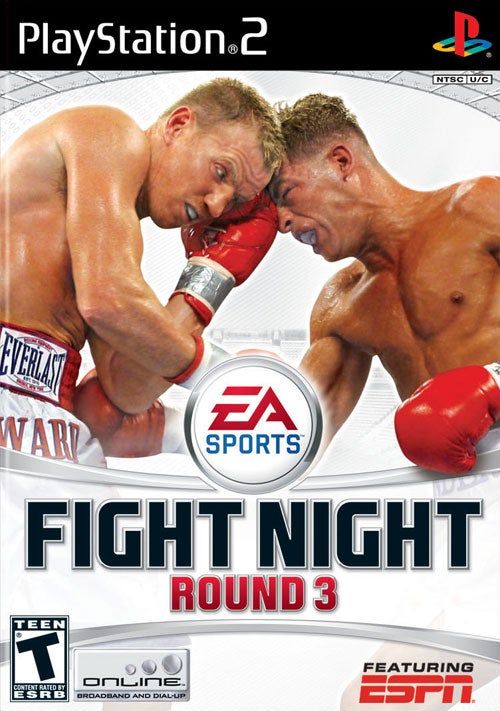
| Developer | EA Chicago |
|---|---|
| Publisher | Electronic Arts |
| Initial Release | February 20, 2006 |
| Platforms | Xbox, Xbox 360, PlayStation 2, PlayStation Portable, PlayStation 3, Mobile |
| Genre | Sports (Boxing) |
| Roster | 27 licensed fighters |
| Key Feature | First-person 'Get in the Ring' mode (PS3) |
| Major Awards | BAFTA (2006), Fighting Game of the Year (AIAS 2007) |
Core Gameplay and Design Philosophy
Fight Night Round 3 represented a deliberate shift towards visceral realism and strategic depth. The developers removed the default heads-up display for health and stamina, compelling players to assess their boxer's condition through visual tells. A fighter's slumped posture, slowed footwork, and swollen facial features became the primary indicators of fatigue and damage, demanding constant observation and tactical adjustment.
This philosophy extended to the new Impact Punch system. These were not merely powerful strikes but cinematic events that could visibly stagger an opponent, blur their vision, and dramatically shift momentum in a bout. The game encouraged a measured, defensive style where patient blocking, careful countering, and well-timed combinations were more effective than relentless aggression. Training mini-games, though sometimes criticized as dull, were designed to build the attributes necessary for this strategic approach. The roster of 27 real boxers supported open weight bouts, allowing for fantasy matchups across eras, such as James Toney versus Roy Jones Jr.
Career Mode and Narrative Elements
The career mode in Fight Night Round 3 framed progression around a boxer's fame as much as his skill. Players fought not just to climb rankings but to gain popularity, which unlocked sponsored fights and features on ESPN. This system integrated the game's much-criticized product placement, as brands like Under Armour and Everlast became markers of success. The career was punctuated by narrative-driven events designed to build rivalries.
Players could trigger press conference brawls and clashes during weigh-ins, creating personal stakes for upcoming fights. This focus on boxing's theatrical side was complemented by the ESPN Classic fights mode, which allowed players to recreate historic bouts. The game's atmosphere was further defined by its theme song, Never Gonna Get It by Sean Biggs featuring Akon and Topic, and detailed recreations of real venues like Madison Square Garden and the Staples Center.
Technical Achievement and Platform Differences
The graphical presentation of Fight Night Round 3 was a major point of acclaim. Reviewers noted the high level of detail in every boxer model, with advanced lighting effects and dynamic sweat adding to a powerful sense of realism. Critics stated the visuals would knock you on your rear end, with some calling them the best ever seen in a video game at the time. This technical achievement varied across platforms, with the seventh-generation Xbox 360 and PlayStation 3 versions offering the highest fidelity.
Significant differences existed between versions. The PlayStation 3 release was capable of a full first-person perspective through its Get in the Ring mode, placing players directly into the jockstrap of their created fighter. This version also omitted Evander Holyfield from the roster. Cover art differed, with Arturo Gatti and Micky Ward featured on PlayStation 2 and Xbox covers, while Oscar De La Hoya appeared on the Xbox 360 and PlayStation 3 boxes. The PSP version stood apart by receiving average critical reviews, in contrast to the favorable scores of other platforms.
Critical Acclaim and Award Recognition
Fight Night Round 3 received widespread critical praise. Maxim awarded the PS3 version a perfect ten, highlighting the first-person mode. IGN scored the mobile version eight out of ten, calling it a serious package for fight fans with a complex, devastating control scheme, though noting it appealed to a hardcore sliver of the audience. The A.V. Club gave the game an A, while Famitsu's panel awarded the PS3 version a 30 out of 40.
The game's award legacy is substantial. It made history by winning the first British Academy of Film & Television Arts (BAFTA) award ever given to a sports video game in 2006. At the 10th Annual Interactive Achievement Awards, the Academy of Interactive Arts & Sciences named it the Fighting Game of the Year and nominated it for Outstanding Achievement in Animation. IGN gave it the award for Best Offline Multiplayer on PlayStation 3 in 2006. Its enduring cultural status is confirmed by its inclusion in the book 1001 Video Games You Must Play Before You Die, a distinction no other Fight Night title holds.
Controversies and Lasting Community Impact
The game's aggressive product placement became a defining controversy. While athletic brands like Everlast and Under Armour were expected, integrations for Dodge cars and Burger King were seen as excessive and intrusive. The inclusion of the Burger King as a selectable trainer epitomized this approach, leading GameSpot to give the game its 2006 award for Most Despicable Use of In-Game Advertising. This criticism existed alongside notes about long load times and the repetitive nature of training mini-games.
Within the player community, Fight Night Round 3 developed a reputation for deep, competitive local multiplayer, a factor in its Best Offline Multiplayer award. However, later in its lifecycle, players discovered exploits that could undermine fair play, such as spamming jabs to an opponent's body. Despite these issues, the game is remembered fondly for its immersive atmosphere and strategic depth. Community discussions often compare later boxing games unfavorably to the experience it provided, with some players maintaining that its balance of style and substance has not been surpassed.
Legacy in the Fighting Game Genre
Fight Night Round 3 occupies a notable position in the history of sports and fighting games. It demonstrated that a sports simulation could prioritize cinematic immersion and atmospheric storytelling without sacrificing strategic depth. Its success validated EA's focus on graphical horsepower and realistic animation as key selling points for the genre. The game's BAFTA win gave sports video games greater recognition within major award circles.
The title also highlighted the challenges of cross-platform development in a console transition period, with feature disparities between the PlayStation 3 and other versions. Its commercial and critical success ensured the continuation of the Fight Night series, though its specific approach to in-game advertising served as a cautionary tale for the industry. For many players, it remains the high-water mark for virtual boxing, a game where the sting of a well-landed counter and the drama of the ring walk were delivered with unprecedented conviction.
FAQ
What is the most unique feature of the PlayStation 3 version of Fight Night Round 3?
The PlayStation 3 version is the only one to include a first-person perspective mode called Get in the Ring. This mode places players directly into the viewpoint of their boxer, with access to all the gameplay actions available in the standard third-person view.
How did Fight Night Round 3 change the way players monitor their boxer's health?
The game removed the default stamina and health meters from the screen. Instead, players must judge their boxer's condition by observing visual cues such as their stance, the speed of their movements, and the level of damage and swelling on their face.
Which real-world boxing venues are featured in the game?
Fight Night Round 3 includes detailed recreations of real-life boxing venues. Specifically named in the notes are the Staples Center in Los Angeles and Madison Square Garden in New York City.
Why did Fight Night Round 3 win an award for bad advertising?
The game won GameSpot's 2006 award for Most Despicable Use of In-Game Advertising due to its highly intrusive product placement. Critics singled out sponsorships from non-sports brands like Dodge and Burger King, with the Burger King character even appearing as a selectable trainer, as excessive and immersion-breaking.
What major historical first did Fight Night Round 3 achieve at the BAFTA awards?
In 2006, Fight Night Round 3 won the first ever British Academy of Film & Television Arts (BAFTA) award presented to a sports video game. This landmark win helped establish greater recognition for the sports genre within major award ceremonies.
Source: English Wikipedia (CC BY-SA), rewritten by the Redington Cybersport desk.