FIFA Street 2
FIFA Street 2 is the 2006 sequel to EA Sports' arcade street football series, bringing high-stakes four-a-side matches to gritty urban courts. The game is remembered for its deep trick system, career mode, and as a nostalgic title from the PlayStation 2 era.
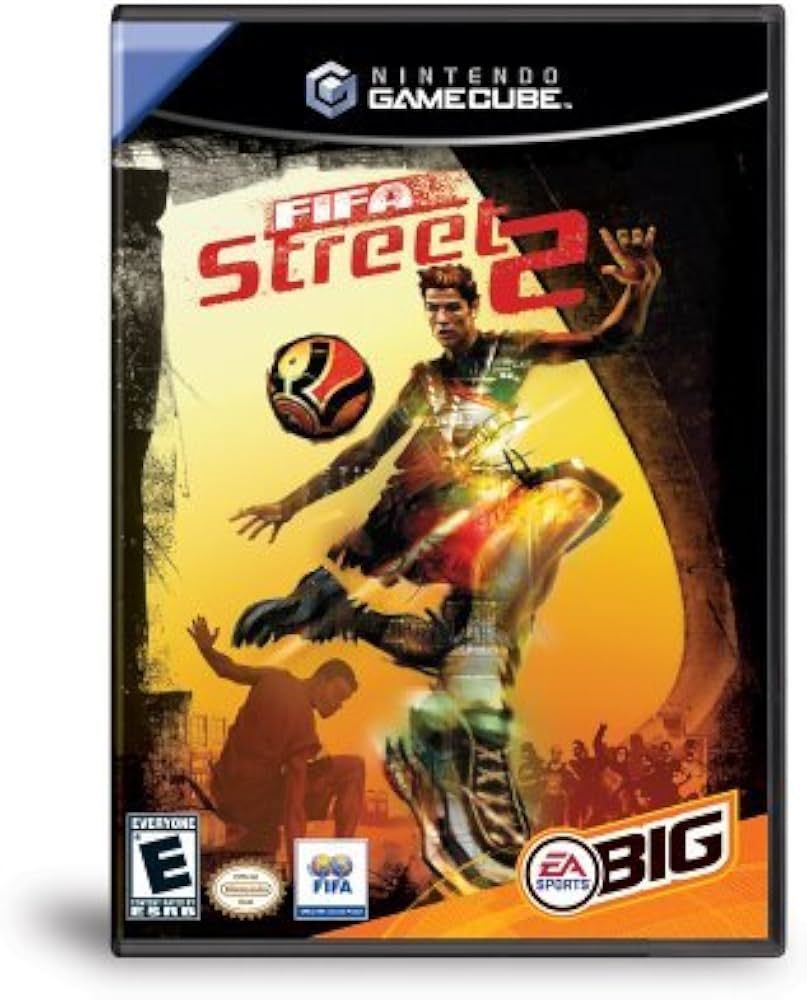
| Developer | EA Sports |
|---|---|
| Release Date | February 28, 2006 |
| Platforms | GameCube, PlayStation 2, Xbox, PlayStation Portable, Nintendo DS, mobile phones |
| Genre | Sports, Street Football, Arcade Soccer |
| Cover Athlete | Cristiano Ronaldo |
| Game Modes | Rule the Streets (Career), World Challenge, Exhibition |
| Teams | 20 national teams |
| Players | Over 320 pro superstars |
| Key Feature | Trick Stick beat system |
| Radio Host | Zane Lowe |
Gameplay and Core Mechanics
FIFA Street 2 is a street soccer game where the primary format is four-a-side matches. Players take control of stylized versions of national football teams. The objective of a match is not always to score the most goals. Matches can be won by reaching a set number of goals, accumulating a target score of points earned through performing tricks, or by having the highest score when a time limit expires. This focus on style and skill points differentiates it from traditional football simulations.
The central gameplay innovation is the Trick Stick beat system. This control scheme gives players an extensive arsenal of authentic and reputation-destroying moves. Mastery of the Trick Stick is essential for survival against top competition. The system is put to the test in dedicated one-on-one Skills Battles. In these encounters, both the attacking and defending player use the Trick Stick in a direct duel, trying to outmaneuver and counteract each other's tricks for ultimate bragging rights. Successfully chaining tricks can trigger Multiplier Trick moments, dramatically increasing a player's point tally.
Rule the Streets Career Mode
The flagship single-player experience is the Rule the Streets career mode. This mode tasks players with creating a custom footballer from scratch. This created player then competes in a series of tournaments set in urban courts around the world. The primary reward for success is earning Skill Bills, an in-game currency.
Skill Bills are used to purchase clothing and accessories to customize the player's appearance, and, more importantly, to upgrade the player's various skill ratings. As the created star improves their attributes and reputation, they progress from a rookie to captaining their own dedicated street soccer team. The ultimate goal is to perform well enough to earn an international call-up, representing a country on the global street football stage. The best players in the game, both real and created, have special moves that are often named after their nicknames.
Roster and Legends
The game includes a large roster of real-world football talent. It features more than 320 professional superstars representing 20 official national teams. This allows for matches like Portugal versus Spain or Italy versus Portugal using real players. In addition to these licensed pros, the game has a deeper selection of street masters. These characters are designed to reflect the individual culture and playing style of soccer from their respective part of the world, adding a layer of global street authenticity.
Beyond current stars, FIFA Street 2 includes several legends of soccer who are unlockable during gameplay. These icons include Brazilian maestro Zico, World Cup-winning captain Carlos Alberto Torres, and Ghanaian forward Abedi Pele. Unlocking and playing with these legends adds a historical dimension to the arcade action.
Presentation, Audio, and Fan Experience
FIFA Street 2 features a distinct audio-visual identity designed to match its street vibe. The game has its own in-game radio station, presented by Zane Lowe, formerly of BBC Radio 1. The soundtrack features music by artists such as Roots Manuva, Sway, Pendulum, Editors, and The Subways. This soundtrack was a notable part of the experience for many players, with some noting they later purchased songs like Jawbreaker from iTunes.
Visually, the game is known for its bright colors and exaggerated, stylish animations that emphasize tricks and flair. However, some players reported challenges with the camera angles during gameplay, noting that the ball could appear tiny and be difficult to track amidst the on-screen action and button mashing, which sometimes led to costly mistakes. For many fans, the game is a nostalgic favorite from the PlayStation 2 era, remembered fondly for its creative freedom and energetic style.
Critical Reception and Platform Differences
According to the review aggregator Metacritic, FIFA Street 2 received mixed reviews on home console platforms like the PlayStation 2, Xbox, and GameCube. Critics acknowledged it as an improvement on the first FIFA Street game. Publications like The A.V. Club gave it a B grade, but highlighted that defending against tricks could feel like a clumsy piece of physical comedy, where players might fall flat on their face. The Times awarded the PS2 and Xbox versions three stars out of five, concluding that it fell down in one vital aspect, the art of defending.
The reception for the handheld versions was significantly worse. The Nintendo DS version in particular was criticized for not including the innovations present in the console editions, such as the full Trick Stick system. Metacritic categorized its reviews as unfavorable. This created a clear divide, where the home console versions were seen as the definitive way to play, despite their flaws, while the portable versions were considered inferior ports.
Legacy and Place in the Series
FIFA Street 2 holds a specific place in the evolution of street football games. As the direct sequel to the original FIFA Street, it refined the formula with a deeper trick system and a more substantial career mode. The game's cover, featuring a young Cristiano Ronaldo, captured the era's rising star aligning with a style-focused football title.
For a dedicated fan base, FIFA Street 2 is often cited as the best game in the series. Players praise its focused gameplay, the satisfaction of building a player in Rule the Streets, and the sheer variety of tricks. Its release across six different platforms made it one of the most widely available arcade football games of its time, securing its presence in mid-2000s gaming culture even amidst its mixed critical appraisal.
FAQ
What is the main goal in a FIFA Street 2 match?
Matches can be won in several ways. The primary objectives are scoring a set number of goals, reaching a target point total earned by performing tricks, or having the highest score when a time limit runs out. This makes trick execution as important as scoring.
How do you improve your created player in Rule the Streets mode?
You improve your created player by competing in global tournaments to earn Skill Bills. This currency is used to buy clothing for customization and, crucially, to purchase upgrades that increase your player's skill ratings, allowing them to become a captain and an international star.
Which music artists are featured on the FIFA Street 2 soundtrack?
The in-game radio station, hosted by Zane Lowe, features music by Roots Manuva, Sway, Pendulum, Editors, and The Subways. The soundtrack was a memorable part of the game's atmosphere for many players.
Why was the Nintendo DS version of FIFA Street 2 poorly received?
The Nintendo DS version received unfavorable reviews because it did not include the key innovations and features found in the home console editions. Critics and players found it to be a stripped-down port that lacked the full Trick Stick beat system and depth of the main game.
What are Skills Battles in FIFA Street 2?
Skills Battles are one-on-one duels where both the attacking and defending player use the Trick Stick to perform and counteract tricks. It is a direct test of skill where players compete for bragging rights, and successful trick chains can trigger point multipliers.
Source: English Wikipedia (CC BY-SA), rewritten by the Redington Cybersport desk.