Veikkaus CPO Urges Lotteries to Focus on Customer Journeys at SBC Summit
Kirsi Lagus warned that operators not building customer journeys are already too late for the digital age.
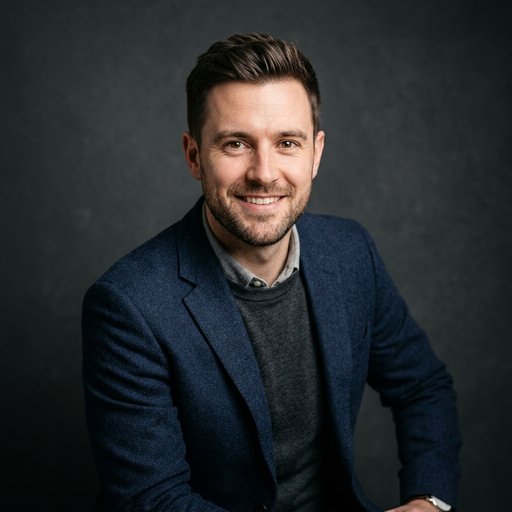
Kirsi Lagus, Chief Product Officer of Veikkaus, told the SBC Summit in Lisbon that lottery operators must propose the customer journey above all else to succeed in the modern, digital ecosystem.
"If you are not already building the customer journeys, you are already too late," she said.
"My advice to anybody would be instead of focusing on products, focus on customer journeys. That will be the key to success, putting the customers first."
Lotteries across the world are having to adjust their operations to the demands of the modern digital age, with Veikkaus entering the B2B realm of the iGaming industry via its Fennica subsidiary.
Another firm that has thrown itself into digitisation is Allwyn.
Savvas Iliopoulos, Responsible Gaming & Player Protection Expert at Allwyn Hellas, said more digitisation will occur over the next five years, but he is adamant that tech is not the be-all-end-all.
"Of course, AI helps us make our job better but it is not the solution. A model is powerful, but it is not perfect. The final decision needs to be taken by an expert. You need to build up the relationship between the customer and the company."
Prediction markets were also on the agenda, with Tom Waterhouse, Chief Investment Officer at Waterhouse VC, calling them "the hot industry right now".
"Before that it was sweepstakes, and before that fantasy and sports betting," Waterhouse said.
"We’ve looked at several businesses and the ability of them to pivot and become a prediction market business, and get funding. The big test will be if they can retain customers better than their competitors."
He added it is hard to know long-term if they can retain those customers, and what the regulatory landscape will look like.
Klen Kaljulaid, Partner at Yolo Investments, revealed that the firm "said no" to investments in Polymarket during multiple valuations of the global prediction giant.
Kaljulaid said that Yolo was put off the idea of investing in Polymarket because at the time it was effectively a "black market operator" active in "the most dangerous market, the US".
William Chambers, COO at Smarkets, said prediction market operators have to be prepared for "a lot of different outcomes due to uncertainties".
"What is really interesting and what won’t go away, irrespective of what the Supreme Court decides or any regulators decide, is this convergence between financial trading and some of these products that we historically thought about as gambling," he added.
On the potential of easing regulation on predictions in Europe, Chambers affirmed that Smarkets has been pioneering an all-but-the-same space in the betting exchange for over 15 years, and has always been a market leader in politics.
"From a regulatory perspective, it would be wonderful if a similar thing happened to what is happening in the US," he commented.
Paris Smith, the former CEO of Pinnacle, views AI as a "unavoidable element in determining all investments and valuations".
Its potential is emphasised to improve competitiveness and address legacy technology constraints to reduce expenditure.
"Now you can use AI agents for those hard deliveries and integrations," she said, adding this marked efficiency sees founders consequently raise less capital and retain more ownership of their companies.
Tom Waterhouse said cheaper development makes distribution more effective, yet for investors it places a greater scrutiny of valuations, "especially those in the USA".
He now questions "product durability and whether businesses possess advantages that survive the AI’s paradigm shift."
"We really like looking at businesses that either have got something that can’t be replicated through AI, or businesses that are able to build large distribution channels," he explained.
Waterhouse highlighted professional betting syndicates with proprietary datasets and models as attractive investments, describing them as an area "that has not been killed by AI just yet".
Mike Robinson, Head of Investor Relations at Yolo Investments, said AI has become a practical test of whether a proposed investment offers lasting value.
"Could AI do this, and could it be replaced like that?" Robinson asked, explaining that easily replicated products may struggle to mature into sustainable businesses.
Yolo’s interest centres on companies applying AI to improve operations, rather than investing specifically in AI laboratories.
Robinson said founders must explain: "What is it actually doing? What is it solving in the business?"
However, rapid innovation complicates investment decisions, with Robinson warning that "six months later, something new is going to come, and then our investment just sinks".
Peter Marcus, CEO of Savvy Hill Marketing and the former Entain executive who built the company’s ARC responsible gaming programme, had fiery words on the topic of gambling advertising.
"At what point are we doing to learn the lesson that if we go completely bonkers … that we need to control ourselves and not get advertising banned? Brazil is the latest," he said.
Governments have been blocking gambling advertising across the world, with Brazil taking the ultimate step of banning the market together, pending Congressional approval.
Marcus thinks the industry should bear some responsibility for this, and learn from it, though he does still defend advertising as one of the main benefits and incentives for regulated, licensed, and transparent gambling businesses.