Tougeki – Super Battle Opera
Tougeki, Super Battle Opera was an annual Japanese fighting game tournament hosted by Arcadia magazine. It was considered one of the world's most prestigious fighting game events alongside the Evolution Championship Series. The tournament ran from 2003 until it was suspended indefinitely in 2012.
| Also known as | Arcadia Cup Tournament |
|---|---|
| First held | 2003 |
| Last held | 2012 |
| Host | Arcadia magazine |
| Format | Single-elimination |
| Qualification | Regional arcade tournaments |
| Final venue | Tokyo (typically) |
| Status | Suspended indefinitely |
The Tournament Structure and Qualification
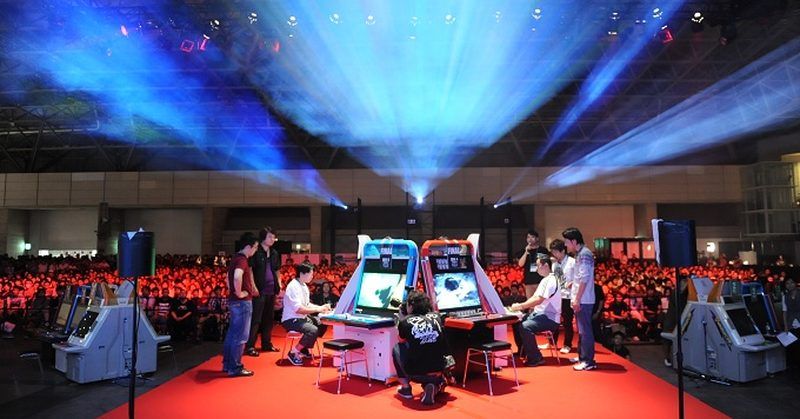
Tougeki, often called the Arcadia Cup Tournament, featured a different lineup of fighting games each year, selected by its organizers. The competition used a strict single-elimination format for all its matches, which could be for individual players or for teams of up to three. The path to the finals was a long process that began every April.
Qualification was spread over several months and used a two-tier system across Japan. Players first formed their teams and competed in local single-elimination tournaments held at arcades. The winners of these local events then advanced to larger regional playoffs. Only the champions of these regional playoffs earned the right to compete in the finals held in Tokyo, which were the main event referred to simply as Tougeki.
International Reach and Prestige
For close to ten years, Tougeki was important for players across the world. Alongside the Evolution Championship Series, it was viewed as one of the two most significant tournaments in the fighting game community. This global reputation was reinforced by the tournament's policy of inviting international competitors.
Special spots in the finals were reserved for players from America and Europe. The European representatives were chosen through a dedicated organization named Tougeki France. This inclusion of foreign talent made the Tokyo finals a major international competition, heightening the event's prestige and competitive intensity.
The 2012 Finals and Operational Difficulties
The twelfth Super Battle Opera in 2012 was held on August 4 and 5. It was integrated into a larger outdoor festival called GAME SUMMER FESTIVAL 2012 in Narita, Chiba, which also included tournaments for music games and shoot 'em up games. The fighting game lineup was diverse, featuring singles tournaments for Soulcalibur V, Ultimate Marvel vs. Capcom 3, and Persona 4 Arena. Team events were held for Tekken Tag Tournament 2 Unlimited, Aquapazza Version 2.0, Virtua Fighter 5 Final Showdown, Super Street Fighter IV: Arcade Edition, and Street Fighter III: 3rd Strike.
This move to an outdoor venue created major problems. Reports cited low attendance, extremely high temperatures, and glare on the tournament screens that affected visibility. Persistent network issues forced multiple tournament matches to be restarted from the beginning. Furthermore, the event ran longer than scheduled, causing many entrants to miss the last train of the day. With no other options, a number of participants had to sleep on the streets in Chiba. The event was streamed online on the niconico platform, available for a fee of 1500 Japanese Yen for a one-day pass or 2500 Yen for both days.
Event Culture and Official Recordings
At the finals, while some arcade machines were available for casual play, the primary focus was always on the official tournament brackets. The matches produced memorable moments that became part of fighting game history, such as the famous Umehara ga kimeta incident from the 2003 tournament.
After each finals, the matches were professionally documented. A few months following the event in Tokyo, the publisher Enterbrain, which owned Arcadia magazine, would release DVD box sets. These DVDs contained recordings of all playoff matches from the tournament. They were released in multiple volumes, with each disc dedicated to a single game's entire tournament bracket, serving as an official archive for the community.
Suspension and Legacy
The tournament was suspended indefinitely after the troubled 2012 event. No further Super Battle Opera tournaments were organized, marking the end of an annual institution that had run for a decade. The challenges of the 2012 outdoor festival, including its logistical failures and low turnout, contributed to the end of the event.
The legacy of Tougeki remains strong within the fighting game community. It is remembered as a Japanese tournament that set a standard for competition through its demanding qualification process and its role as a gathering point for the world's best players. Its matches continue to be studied and discussed, preserved through the official DVD releases and community archives.
FAQ
What was Tougeki – Super Battle Opera?
Tougeki – Super Battle Opera was an annual Japanese fighting game tournament hosted by Arcadia magazine. It was a prestigious multi-game event that ran from 2003 until it was suspended in 2012.
When and where was Tougeki held?
Qualification rounds started in April across Japan. The finals were typically held over two to three days in August, usually in Tokyo. The 2012 event was held outdoors in Narita, Chiba.
What games were played at Tougeki?
The game lineup changed every year. The 2012 finals featured Soulcalibur V, Ultimate Marvel vs. Capcom 3, Persona 4 Arena, Tekken Tag Tournament 2, Aquapazza, Virtua Fighter 5, Super Street Fighter IV, and Street Fighter III: 3rd Strike.
How did players qualify for Tougeki?
Players formed teams and competed in local single-elimination tournaments at arcades across Japan. Winners advanced to regional playoffs, and the winners of those playoffs earned a spot in the Tokyo finals. Special spots were also granted for American and European players.
Why did Tougeki end?
The tournament was suspended indefinitely after the 2012 event. The 2012 finals faced numerous logistical problems as an outdoor event, including heat, technical issues, and low attendance, though the official reason for the suspension was not specified in the available notes.
Source: English Wikipedia (CC BY-SA), rewritten by the Redington Cybersport desk.