MLG Major Championship: Columbus
The MLG Major Championship: Columbus, held in March and April 2016, was a landmark event in Counter-Strike: Global Offensive history. It was the first CS:GO Major hosted in North America, the first organized by Major League Gaming, and the first to feature a one-million-dollar prize pool.
| Also known as | MLG Columbus 2016 |
|---|---|
| Game | Counter-Strike: Global Offensive |
| First held | 2016 |
| Dates | March 29 to April 3, 2016 |
| Location | Nationwide Arena, Columbus, Ohio, United States |
| Organizer | Major League Gaming (MLG) |
| Prize pool | $1,000,000 |
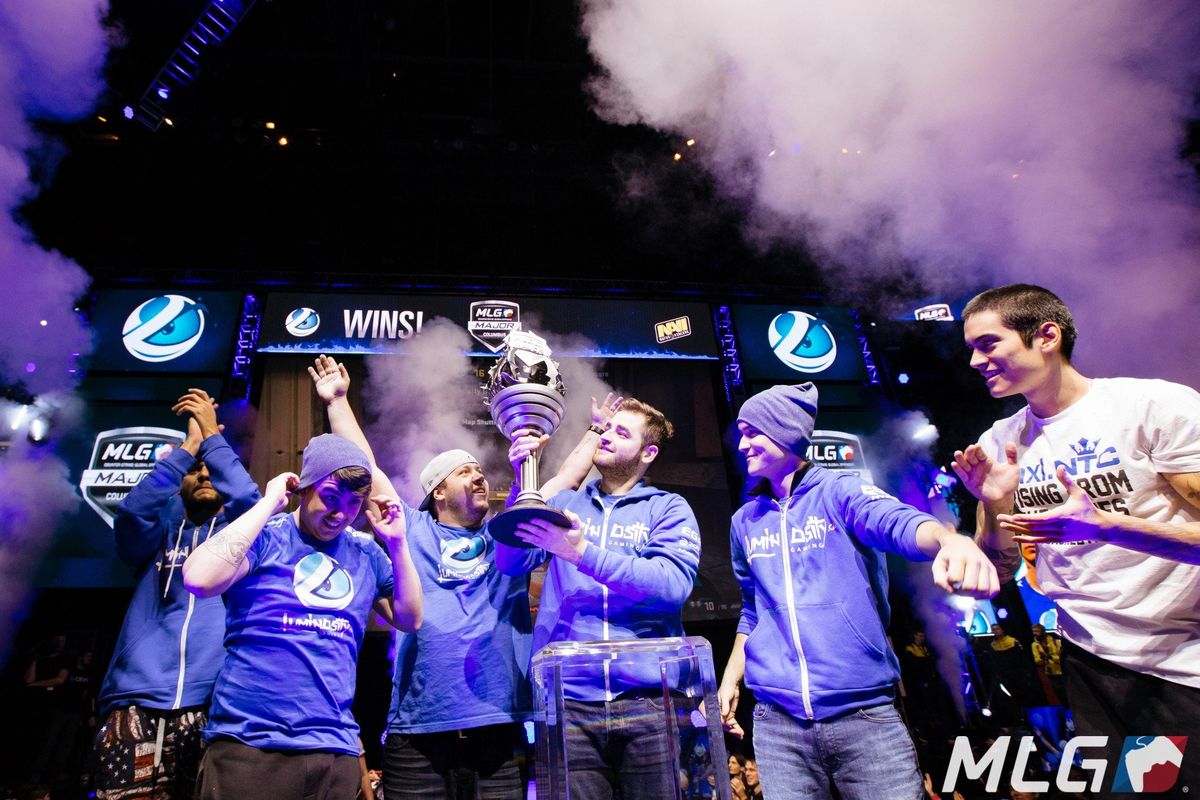
| Final champion | Luminosity Gaming |
| MVP | coldzera |
A Major Milestone
The MLG Major Championship: Columbus was the eighth CS:GO Major and represented several significant firsts. It broke the organizational monopoly of ESL and DreamHack, being the first Major run by Major League Gaming, who had previously run an exhibition at X Games Aspen 2015. It was also the first Major to take place on North American soil. Announced on February 23, 2016, the tournament set a new benchmark with a one-million-dollar prize pool, a first for Counter-Strike.
The event culminated with Luminosity Gaming, a Brazilian squad, defeating the leading European team Natus Vincere in the grand finals. This victory was historic, making Luminosity the first team from outside Europe to ever win a CS:GO Major title. Their run to claim fifty percent of the prize money demonstrated the rising strength of teams from the Americas.
Tournament Format and Map Pool
The tournament field featured sixteen teams. Eight were Legends, teams that had finished in the top eight at DreamHack Open Cluj-Napoca 2015, and received direct invitations. The other eight were Challengers from the MLG Columbus 2016 Main Qualifier. These sixteen teams were divided into four groups for the initial stage.
The group stage used the GSL format, named for the Global StarCraft II League. All initial matches were best-of-one. The highest seed played the lowest seed, and the second and third seeds played each other. The winners of those matches played to advance to the playoffs. The losers of the first matches then played, with the loser of that match eliminated. The two remaining teams played a best-of-three elimination match for the group's second playoff spot.
The playoffs were a single-elimination bracket for the eight qualifying teams, with every match played as a best-of-three series. The seven-map pool did not change from the previous Major. For best-of-one matches, teams alternated banning maps until five were banned, then one of the two remaining maps was randomly selected. In best-of-three series, each team banned one map, then picked one map for play, with a potential third map randomly chosen from the three left.
The Complex Qualification Path
Qualifying for the Major was a multi-stage global process. It began with four regional Minor championships. The Americas Minor winner earned a direct spot in the main qualifier, with the next three teams going to the Americas Last Chance Qualifier. The Asia Minor, held at Intel Extreme Masters Season X in Taipei, awarded two spots to the main qualifier. Notably, the team TyLoo was disqualified hours before this event started due to a player's prior cheating ban.
The CIS Minor and Europe Minor each sent one winner to the main qualifier, with their other bracket stage teams sent to the Europe and CIS Last Chance Qualifier. These Last Chance Qualifiers were played online, while the main Minors were on LAN. The Americas Last Chance sent one team forward, and the Europe and CIS Last Chance sent two.
The main qualifier itself featured sixteen teams. Eight spots were filled by the bottom eight teams from the Cluj-Napoca Major. The other eight came from the various regional qualifiers. These sixteen were divided into four groups, and the top two from each group secured the final Challenger spots at the Major in Columbus.
Teams and Group Stage
The eight Legend teams returning from Cluj-Napoca were Astralis, Fnatic, Luminosity Gaming, Natus Vincere, Ninjas in Pyjamas, and Virtus.pro. Counter Logic Gaming and Team Liquid were new Legends, having taken the spots from FaZe Clan and Team EnVyUs who failed to make the top eight. They were joined by eight Challenger teams from the qualifiers.
The groups were announced on March 10-11, 2016. Each group was seeded to contain a team who placed 1st-4th at the last Major, a team who placed 5th-8th, a team who went undefeated in the offline qualifiers, and a team who won one of the final decider matches in the offline qualifiers. The group stage determined which two teams from each group would advance to the single-elimination playoff bracket.
The Playoff Journey to the Title
The playoff bracket was announced on March 30, 2016. Each quarterfinal was seeded to pair a top seed from a group with a second seed from another group. In the quarterfinals, Natus Vincere defeated Ninjas in Pyjamas, Astralis overcame Fnatic, Team Liquid beat Counter Logic Gaming, and Luminosity Gaming defeated Virtus.pro.
The semifinals saw Natus Vincere continue their run by eliminating Astralis. The other semifinal featured Team Liquid against Luminosity Gaming, a match notable for having Team Liquid's coach, Björn 'THREAT' Pers, serve as a guest commentator. Luminosity won, setting up a grand final against Natus Vincere.
In the finals, cast by Anders Blume, Semmler, and moses, Luminosity Gaming completed their campaign with a clean 2-0 victory. Player Marcelo 'coldzera' David was named the Most Valuable Player of the entire event. This win meant Fnatic from Sweden still led all teams with three Majors, but the era of exclusive European champions was over.
Broadcast Production and Talent
The event was brought to a global audience via broadcasts on Twitch in multiple languages. The broadcast team was led by stage host Paul 'ReDeYe' Chaloner and desk host Scott 'SirScoots' Smith, with Chris Puckett conducting interviews. Analysis was provided by a panel including Robin 'Fifflaren' Johansson, Richard Lewis, Jason 'moses' O'Toole, Janko 'YNk' Paunović, and Duncan 'Thorin' Shields.
A team of commentators called the action, featuring Anders Blume, Semmler, James Bardolph, Daniel 'ddk' Kapadia, Henry 'HenryG' Greer, and Matthew 'Sadokist' Trivett. The in-game perspective was managed by observers Heather 'sapphiRe' Garozzo and Kevin 'kVIN_S' Swift. The talent lineup underscored the event's scale and MLG's production approach for their first Major.
FAQ
Who won MLG Columbus 2016?
Luminosity Gaming, a Brazilian team, won MLG Columbus 2016. They defeated Natus Vincere 2-0 in the grand finals to claim their first Major title and half of the one-million-dollar prize pool.
Why was MLG Columbus 2016 significant?
MLG Columbus 2016 was significant for several reasons. It was the first CS:GO Major held in North America, the first organized by Major League Gaming instead of ESL or DreamHack, and the first with a one-million-dollar prize pool. It also saw the first non-European team, Luminosity Gaming, win a Major.
What was the format of the MLG Columbus Major?
The tournament used a 16-team format. The group stage employed the GSL system with best-of-one matches, leading to an eight-team, single-elimination playoff bracket where all matches were best-of-three series.
How did teams qualify for MLG Columbus 2016?
Eight teams qualified as Legends by placing in the top eight at the previous Major. The other eight Challenger spots were earned through a global qualifying system, involving regional Minor tournaments and a final main qualifier event.
Who was the MVP of MLG Columbus 2016?
Marcelo 'coldzera' David of the champion team Luminosity Gaming was named the Most Valuable Player (MVP) of the MLG Columbus 2016 Major.
Source: English Wikipedia (CC BY-SA), rewritten by the Redington Cybersport desk.